
Whitby Photography – The Ultimate Guide to Photographing Whitby
Whitby is the jewel of the Yorkshire Coast and one of the most photogenic seaside towns in the United Kingdom. With its dramatic cliffs, historic harbour, iconic abbey, charming old streets and ever-changing coastal scenery, it has inspired photographers, artists and visitors for generations. Whether you're visiting for the first time or returning once again with your camera, Whitby offers countless opportunities to capture spectacular images throughout the year.
One of the things that makes Whitby so special is how dramatically it changes with the seasons. During parts of the year, the sun both rises and sets over the North Sea, creating unforgettable displays of colour across the harbour, beaches and famous landmarks. Its exposed position on Yorkshire's rugged coastline also makes Whitby one of the best places to witness dramatic storms, powerful waves and atmospheric skies. When winter snow arrives, the town is transformed into a magical landscape, while autumn brings rich golden colours to parks and surrounding woodland. In spring and summer, Whitby bursts into colour thanks to the fantastic work of the local Whitby in Bloom volunteers, whose floral displays brighten many parts of the town, including the famous 199 Steps, creating one of Whitby's most colourful and photographed scenes.

Having spent almost 20 years photographing Whitby in every season, I have come to appreciate just how much the weather, tides, light and time of day can influence a photograph. Some locations are at their best at sunrise, others come alive during sunset, while many reveal an entirely different character in mist, rain, snow or under dramatic storm clouds. Throughout this guide, I'll share the knowledge, techniques and local advice I've picked up over thousands of visits, helping you make the most of your own photography while discovering some of Whitby's best-known and lesser-known viewpoints.
We'll explore many of Whitby's most famous photography locations, including Whitby Abbey, the 199 Steps, Whitby Harbour, the Swing Bridge, Tate Hill Pier, West Cliff, the Whalebones, Saltwick Bay, Sandsend and many more. You'll find advice on the best times to photograph each location, where to stand for the finest viewpoints, seasonal highlights, practical tips and maps to help you find them with ease.
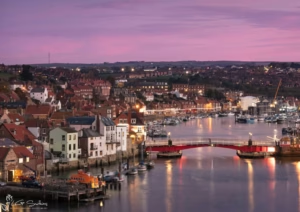
Whitby's Swing Bridge
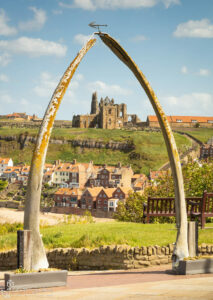
Whitby Whalebones
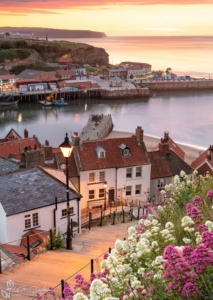
199 Steps
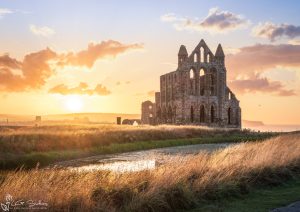
Whitby Abbey View Point
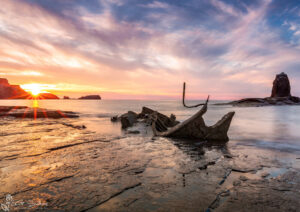
Saltwick Bay
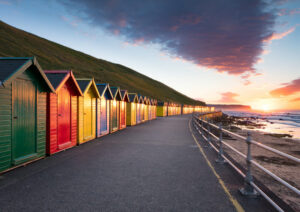
Whitby Beach Huts ( Seasonal )
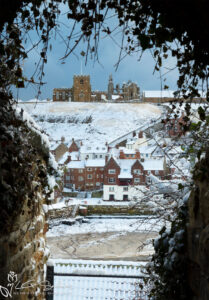
Khyber Pass
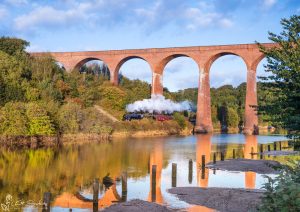
Larpool Viaduct View Point
Endeavour Wharf
The New Bridge View Point
The map above highlights some of Whitby's most popular photography locations, viewpoints and iconic landmarks. While some of the pins mark the exact places where photographs are taken, others identify the famous subjects themselves, helping you find many of Whitby's best-known sights with ease. Use the map as a guide while exploring the town, then continue reading for photography tips, the best times to visit each location, and advice gathered from almost 20 years of photographing Whitby.
Whitby Abbey Photography
Whitby Abbey is one of the most photographed landmarks on the Yorkshire Coast and has inspired photographers, artists and visitors for generations. Standing proudly on the East Cliff overlooking Whitby Harbour, its dramatic silhouette dominates the skyline and makes it one of the town's most recognisable and iconic sights. Whether viewed at sunrise, sunset, beneath stormy skies or covered in snow, Whitby Abbey offers endless photographic opportunities throughout the year.
Steeped in history, the abbey is perhaps best known for its association with Bram Stoker's famous novel, Dracula, helping to cement Whitby's reputation as one of Britain's most atmospheric coastal towns. It has also attracted countless photographers over the years, including the renowned Victorian photographer Frank Sutcliffe, whose remarkable images captured both the abbey and everyday life in Whitby. Today, the abbey continues to inspire photographers and painters from around the world.
Over almost 20 years of photographing Whitby, I have captured the abbey in every season and under a wide variety of weather conditions. Below, you'll find a selection of my favourite photographs, along with advice on the best viewpoints, the ideal times to visit and tips to help you capture your own memorable images of this remarkable landmark.
Whitby Abbey in the Snow
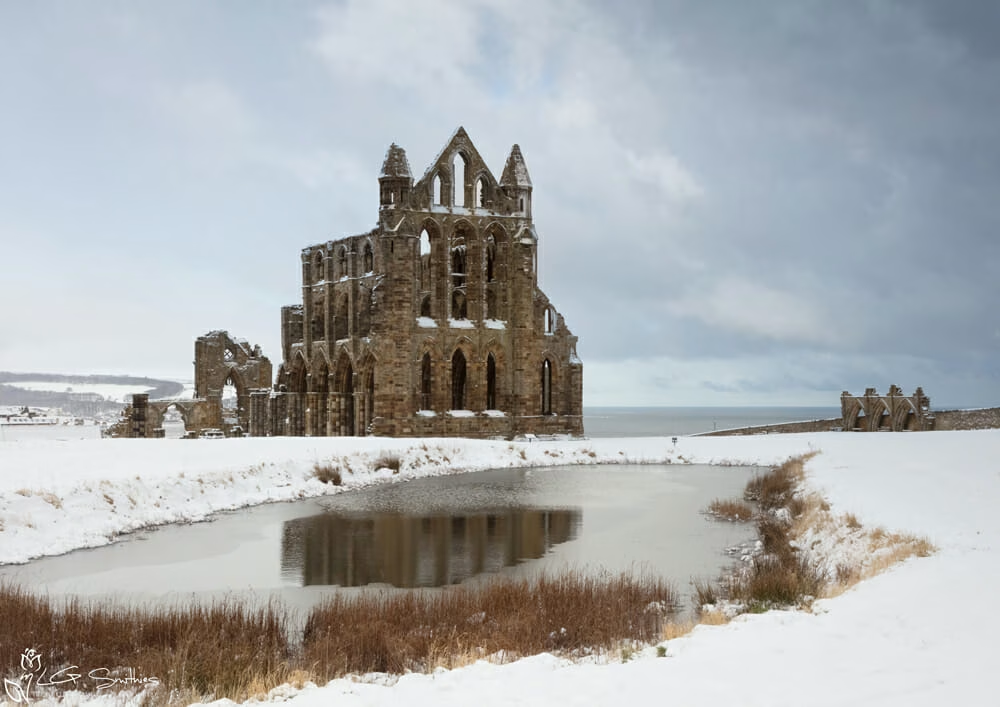
One of my favourite viewpoints of Whitby Abbey is from the public footpath on the headland directly in front of the ruins. From here, you can appreciate the full scale of the abbey as it stands proudly above the East Cliff, overlooking the town and harbour below. This elevated viewpoint is particularly rewarding after fresh snowfall, when the white blanket covering the surrounding landscape contrasts beautifully with the ancient stonework. Snow is relatively uncommon in Whitby, making these conditions all the more special and creating one of the town's most memorable photographic opportunities.
Whitby Abbey in Spring
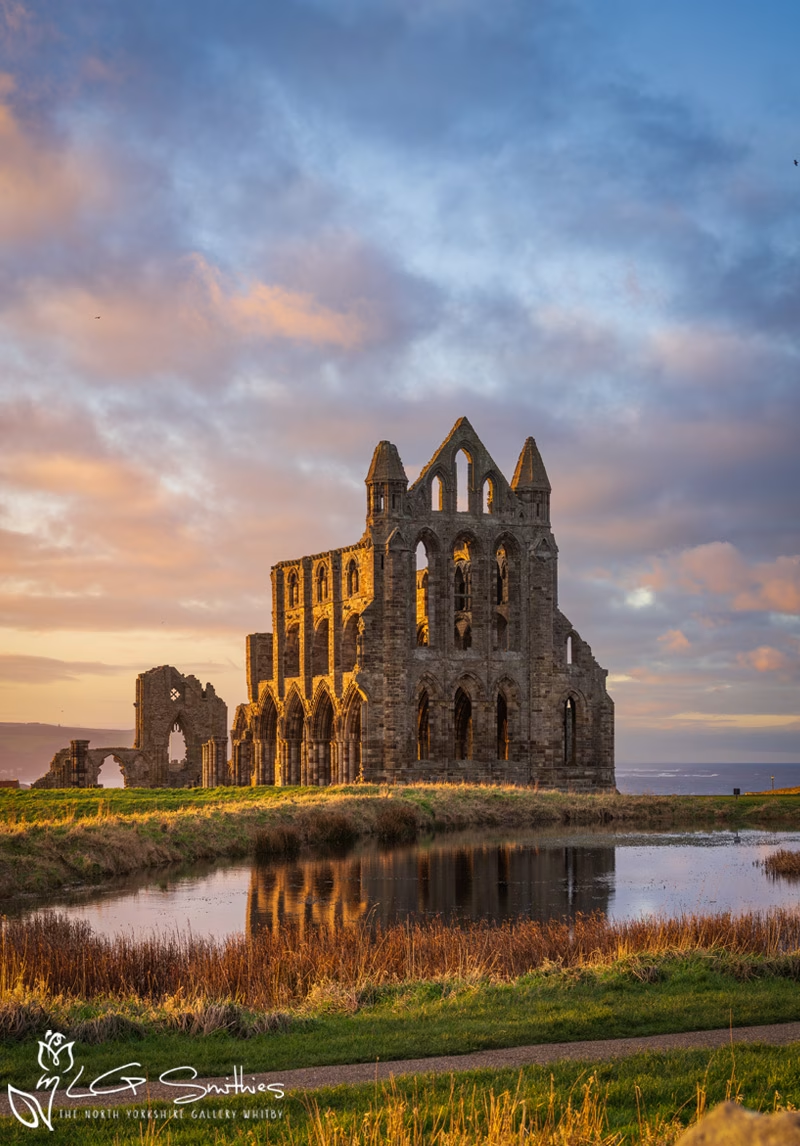
This photograph was taken from the public footpath in front of Whitby Abbey, one of the finest viewpoints for capturing the ruins as the sun begins to set during late winter and spring. At this time of year, the low evening sun often catches the western side of the abbey, bathing the ancient stonework in warm golden light while colourful clouds glow behind it. The combination of soft spring light, dramatic skies and the abbey's commanding position on the cliff creates a striking and atmospheric scene.
I particularly like this image because it captures the transition from winter into spring, when the light can be every bit as spectacular as during the colder months but with longer evenings and more comfortable conditions for photographers. If you're hoping to photograph Whitby Abbey at its most dramatic, this viewpoint is well worth visiting on an evening when the forecast promises broken cloud and a colourful sunset.

Whitby Abbey in Summer
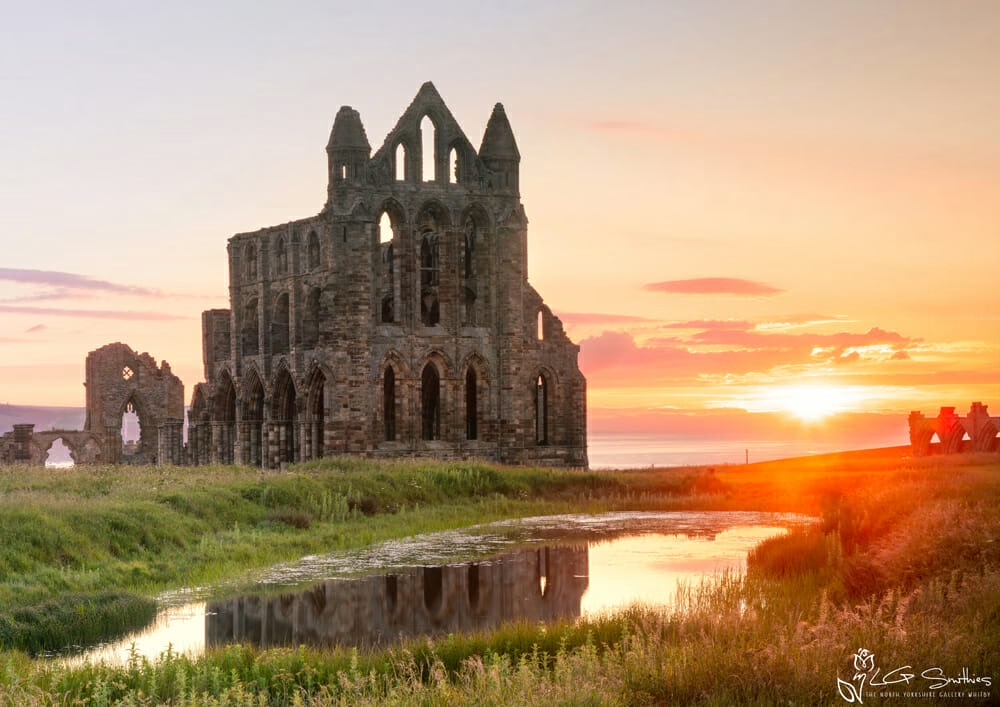
The same viewpoint from the public footpath in front of Whitby Abbey is also one of the best places to photograph the abbey during the summer months. As the sun sets further to the north-west, it gradually moves towards Sandsend, allowing you to capture the abbey beautifully lit with the colourful evening sky stretching across the horizon. On calm evenings, the small pond in the foreground can also provide a wonderful reflection, adding extra depth and interest to the composition.
Summer sunsets from this location can be spectacular, particularly when high cloud catches the last light of the day. The combination of the illuminated abbey, reflections in the pond and the glowing sky towards Sandsend makes this one of my favourite places to photograph Whitby on a warm summer evening.
Whitby Abbey at Night
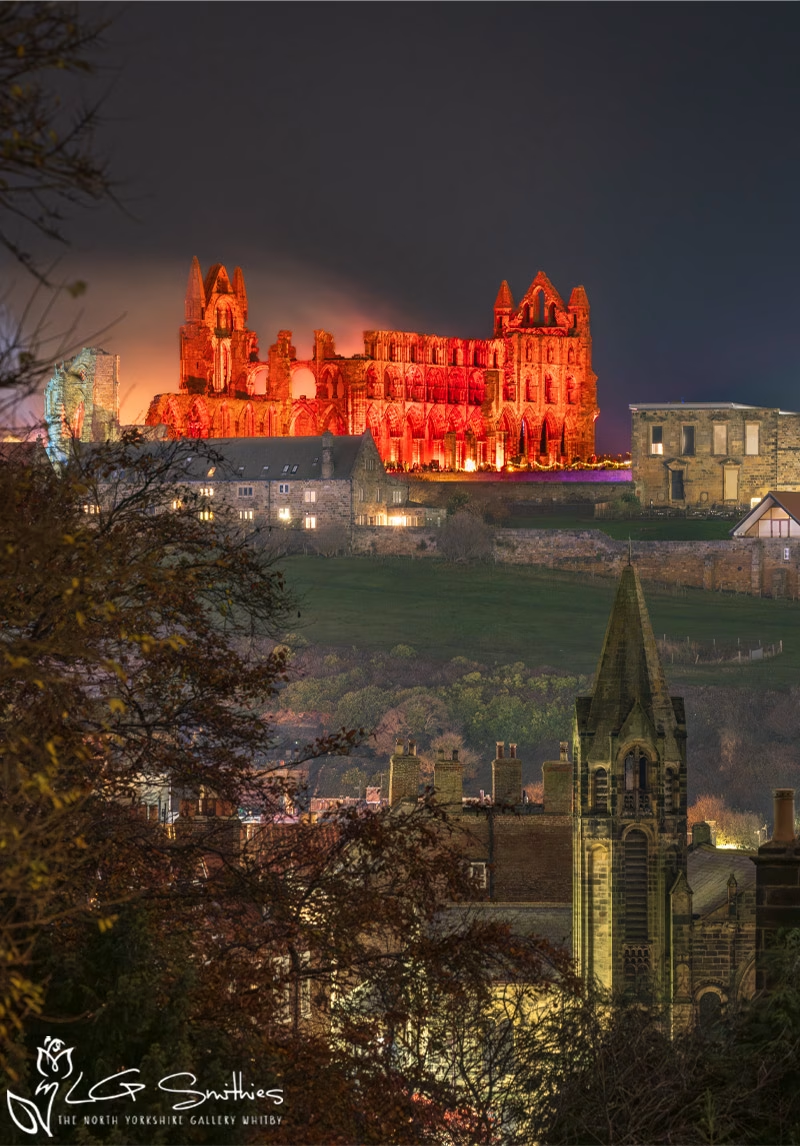
Photographing Whitby Abbey at night reveals a completely different side to this iconic landmark. This autumn image was taken from the opposite side of Whitby, looking back across the town towards the abbey as the famous Whitby Abbey illuminations light up the ancient ruins. The warm floodlighting highlights the abbey's magnificent architecture, creating a dramatic contrast against the dark night sky and the lights of the town below.
This has always been one of my favourite views of Whitby. The illuminated abbey has an unmistakable atmosphere, with its haunting silhouette overlooking the harbour and reminding many people of its famous connection with Bram Stoker's Dracula. It's a scene that perfectly captures the mysterious character of Whitby after dark and demonstrates why the abbey remains one of Yorkshire's most photographed landmarks, both by day and by night.
Whitby Abbey from New Bridge
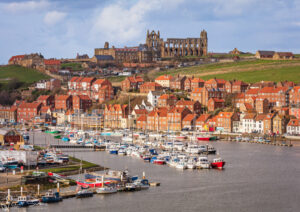
The view of Whitby Abbey from New Bridge is one of the finest ways to capture both the historic harbour and the abbey in a single photograph. Looking across the marina towards the East Cliff, this viewpoint brings together the colourful fishing boats, harbour waters and the magnificent ruins of Whitby Abbey, creating a classic scene that perfectly captures the character of the town.
This location is at its best from the afternoon through to late afternoon, when the sunlight illuminates both the harbour and the abbey, bringing out the rich colours of the boats, buildings and ancient stonework. With the marina full of boats and the abbey standing proudly above the town, it's a viewpoint that never fails to impress and is one I return to time and time again throughout the year.

Whitby Abbey from the Khyber Pass Tunnel
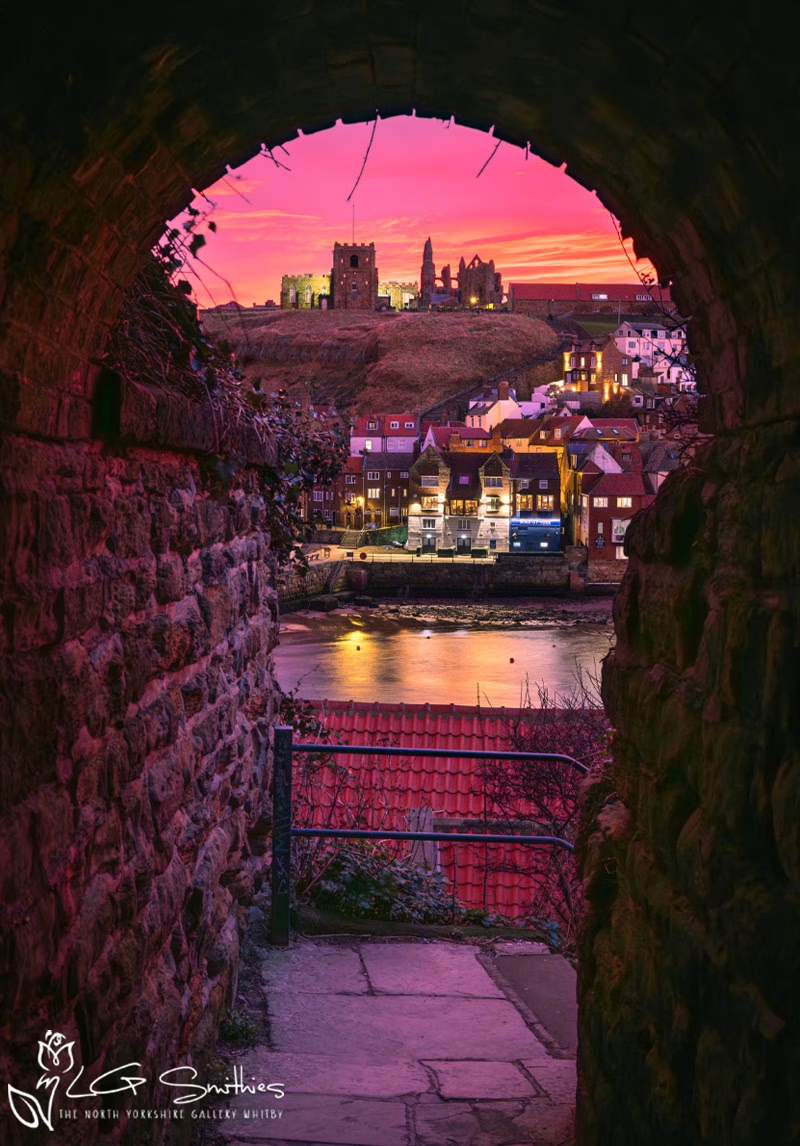
This photograph was taken from inside the Khyber Pass Tunnel, also known locally as the Screaming Tunnel, one of Whitby's most recognisable and atmospheric viewpoints. Looking through the tunnel towards Whitby Abbey creates a natural frame around the ancient ruins, drawing your eye towards one of the town's most iconic landmarks. It's a composition that works throughout the year but is particularly rewarding during the winter months.
In winter, the sun rises behind or close to the abbey from this viewpoint, filling the sky with beautiful morning colours as the first light illuminates the ancient stonework. The contrast between the dark tunnel and the glowing sunrise beyond creates a striking image, making this one of my favourite places to photograph Whitby Abbey. If you're hoping to capture this scene yourself, an early start on a clear winter morning is well worth the effort.
Whitby Abbey During a Thunderstorm
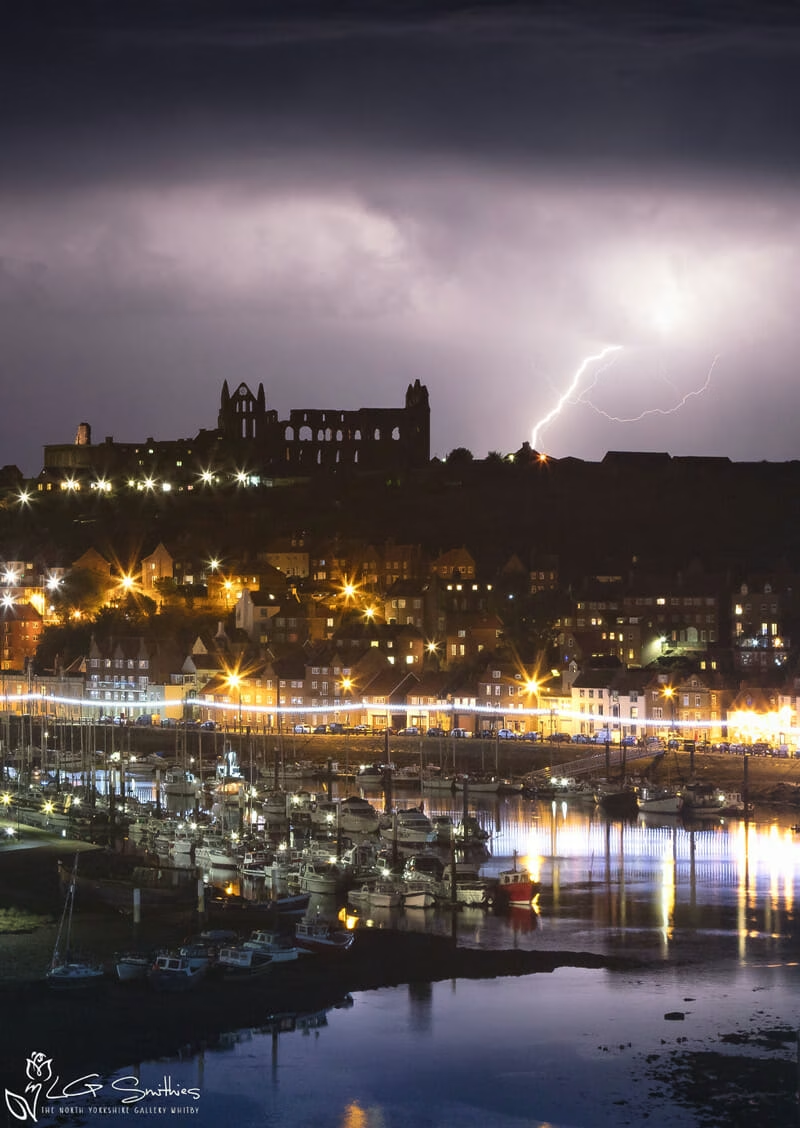
This is one of the most dramatic photographs I have ever taken of Whitby Abbey. Captured at night during a thunderstorm, it shows a bolt of lightning striking in the distance beyond the marina, with Whitby Abbey standing prominently on the East Cliff beneath the stormy sky. The combination of the illuminated abbey, the town lights and the lightning created a truly unforgettable scene.
This photograph reflects the conditions I experienced on that particular evening and is shared as part of my own photographic journey rather than as a recommendation for others to photograph thunderstorms. Storms can be unpredictable and potentially dangerous, so anyone considering photographing extreme weather should always assess the conditions carefully, follow official weather advice and put their personal safety first. No photograph is ever worth taking unnecessary risks for.
Whitby Abbey at Moonset
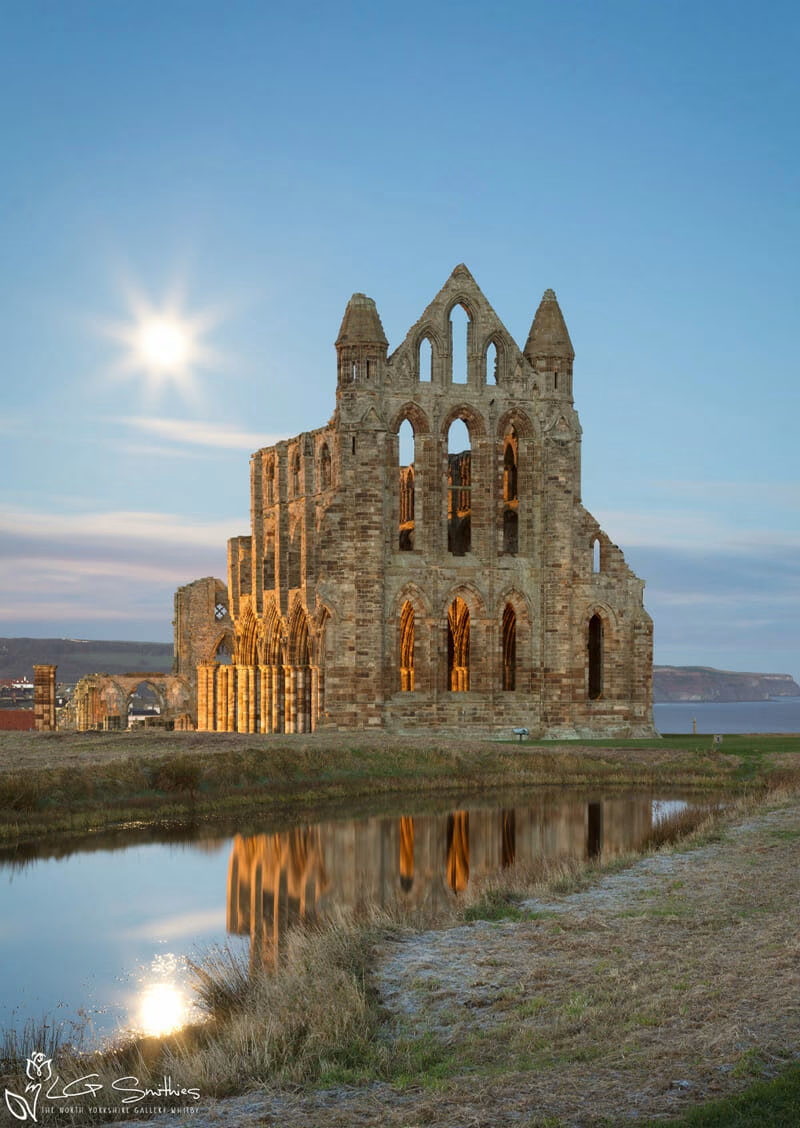
Moonrises and moonsets can create some of the most memorable photographs of Whitby Abbey, and this image captures the moon setting behind the ancient ruins from the public footpath overlooking the pond in front of the abbey. This viewpoint is one of my favourites, offering an uninterrupted view across to the East Cliff while the pond in the foreground adds interest to the composition.
Capturing a moonset like this requires careful planning, as the position of the moon changes throughout the year. When the timing and weather come together, the result can be a truly spectacular photograph, with the moon appearing to sink behind the abbey as dawn begins to break. It's one of those moments that makes an early start worthwhile and demonstrates just how rewarding Whitby can be for photographers willing to plan ahead.

📷 Photographer's Tip
Don't overlook moonsets. Most photographers plan for moonrises, but a full moon setting behind a landmark can be just as spectacular. This photograph of Whitby Abbey was taken at moonset, proving that some of the most rewarding opportunities happen just before sunrise. It might mean getting out of bed a little earlier, but when the conditions come together, the results are well worth the effort.
Whitby Abbey from Sandsend In Black And White
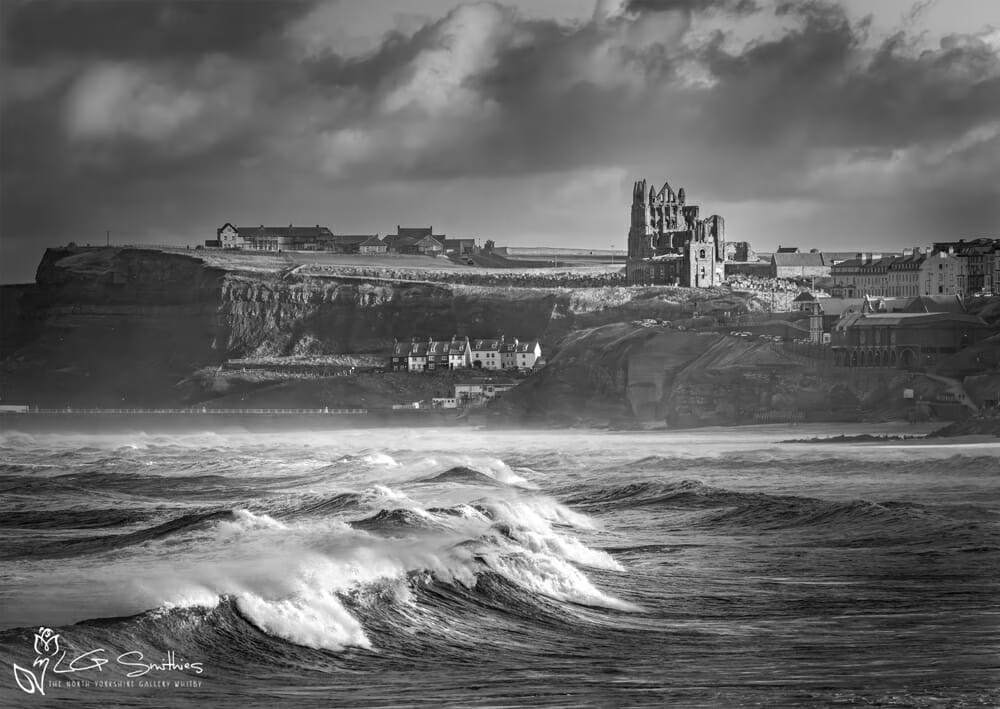
This photograph was taken from Sandsend using a long telephoto lens, looking back across the sea towards Whitby Abbey. It's one of the most spectacular and unusual views of the abbey, and one that often surprises people. The compression created by a long lens makes the abbey appear much closer than it really is, leading many people to assume the image has been digitally altered. In reality, this is exactly how the scene appears when photographed with the right equipment from the right location.
I think this is one of the finest views of Whitby Abbey, particularly during rough weather. As the waves crash in the foreground and storm clouds gather over the coast, the ancient ruins stand proudly above the town, creating a dramatic and unforgettable scene. It's a viewpoint that requires a longer lens than most of the others featured in this guide, but the results can be exceptional and show Whitby from a perspective that many visitors never experience.
📷 Photographer's Tip
Don't overlook black and white. Some photographs, particularly dramatic coastal scenes and stormy weather, can often have far more impact without colour. I often convert these images to black and white before carefully using dodging and burning techniques to control the light and draw attention to the most important parts of the scene. It's an approach inspired by photographers such as Ansel Adams, whose mastery of light and contrast continues to influence landscape photography today.
Whitby Abbey Framed by the Whalebones
Another of my favourite places to photograph Whitby Abbey is from the famous Whitby Whalebones on West Cliff. This viewpoint uses the whalebones to create a natural frame around the abbey, producing one of Whitby's most recognisable and photographed compositions. It's a view that works throughout the year but is particularly impressive on clear winter mornings or after dark when the abbey is illuminated.
The photograph below was taken during a winter sunrise, with the first light of the day illuminating Whitby Abbey while the whalebones frame the scene perfectly. The warm morning colours, combined with this unique foreground, create a striking composition that captures two of Whitby's most iconic landmarks in a single image. It's a viewpoint I return to time and time again and one I'd highly recommend to anyone visiting Whitby with a camera.

Frequently Asked Questions About Photographing Whitby Abbey
Where is the best place to photograph Whitby Abbey?
In my opinion, the best viewpoint is from the public footpath in front of Whitby Abbey, looking across the pond towards the east side of the ruins. This location provides an uninterrupted view of the abbey and, on calm days, beautiful reflections in the water. If you photograph from outside the wall, you may need to hold your camera above head height to achieve the best composition, so a camera with a tilting or articulating screen is particularly useful. If you visit the abbey itself, there is a footpath within the grounds beside the pond that offers an even better perspective without having to photograph over the wall.
When is the best time to photograph Whitby Abbey?
Whitby Abbey can be photographed throughout the year, but each season offers something different. For me, winter provides the most dramatic conditions, particularly at sunrise when viewed from West Cliff, the Whalebones or the Khyber Pass Tunnel. During the summer, the best light is often found in the afternoon from New Bridge or during sunset from the footpath beside the abbey, where the evening light illuminates the stonework beautifully. Towards the end of October, the Whitby Abbey Illuminations create another fantastic opportunity, with the floodlit ruins visible from many viewpoints across the town.
Can you photograph Whitby Abbey at sunrise?
Yes. I think Whitby Abbey is at its finest during winter sunrises rather than in summer. At this time of year, the rising sun illuminates the abbey from the east, creating beautiful warm colours. My favourite sunrise viewpoints are from West Cliff, framed by the Whitby Whalebones, or through the Khyber Pass Tunnel, where the tunnel naturally frames the abbey.
Is Whitby Abbey good for sunset photography?
Absolutely. One of my favourite sunset locations is the public footpath in front of the abbey, where the low evening sun lights up the western side of the ruins. During the summer months, the sun sets further towards Sandsend, often producing colourful skies and beautiful reflections in the pond. The combination of warm light and dramatic clouds can make this one of the best times to photograph the abbey.
Where can I photograph Whitby Abbey at night?
Whitby Abbey is particularly impressive after dark during the Whitby Abbey Illuminations, usually held in the autumn. The illuminated ruins can be photographed from several locations around Whitby, including West Cliff, the harbour, New Bridge and other elevated viewpoints across the town, creating dramatic night-time photographs.
Can you photograph Whitby Abbey in the snow?
Yes, and I think fresh snowfall creates some of the most beautiful images of Whitby Abbey. Snow is relatively uncommon in Whitby, so when it does arrive it transforms the landscape. My favourite location is the public footpath overlooking the pond, where the snow-covered foreground contrasts beautifully with the ancient stonework of the abbey.
Can you photograph Whitby Abbey from Sandsend?
Yes. One of the most spectacular views of Whitby Abbey can be photographed from Sandsend using a long telephoto lens. This viewpoint compresses the scene, making the abbey appear much closer than it really is. I particularly enjoy photographing it during rough weather, when the crashing waves in the foreground add drama while the abbey dominates the skyline in the distance.
Why is Whitby Abbey so famous?
Whitby Abbey is famous for its remarkable history, its dramatic position overlooking the Yorkshire Coast and its connection with Bram Stoker's novel Dracula. The abbey has overlooked Whitby for centuries, survived Viking raids, suffered damage during the English Civil War and was later shelled during the First World War. Today, it remains one of Yorkshire's most recognisable landmarks and one of the most photographed historic buildings in the country.
Can I buy photographs of Whitby Abbey?
Yes. Every photograph of Whitby Abbey featured on this page has been taken by me over almost 20 years of photographing Whitby. They are available to purchase from the North Yorkshire Gallery as canvas prints, framed prints, photographic prints, panoramic prints, wall art and a wide range of Yorkshire gifts.
Whitby Abbey Prints and Canvases
Every photograph of Whitby Abbey featured in this guide has been taken by me over almost 20 years of photographing one of Yorkshire's most iconic landmarks. From colourful summer sunsets and dramatic winter snow scenes to moonrises, storms and the famous Whitby Abbey Illuminations, these images are available as premium canvas prints, framed prints, photographic prints, panoramic prints, wall art and a range of unique Yorkshire gifts.
Browse the collection below to discover your favourite photograph of Whitby Abbey and bring this historic landmark into your home.
Buy Whitby Abbey Prints
Love these photographs of Whitby Abbey? Every image featured above is available to buy as a premium canvas print, framed print, photographic print, panoramic print, wall art and a range of Yorkshire gifts. Browse the collection below to find your favourite Whitby Abbey photograph.
199 Steps Whitby Photography
The 199 Steps are one of Whitby's most famous landmarks and, in my opinion, one of the most iconic photography locations in England. Rising from the historic streets below to the clifftop overlooking Whitby Harbour, they have become synonymous with the town itself. For photographers, the view from the steps across the rooftops, harbour and coastline is unforgettable, while the steps themselves provide one of the most recognisable scenes anywhere on the Yorkshire Coast.
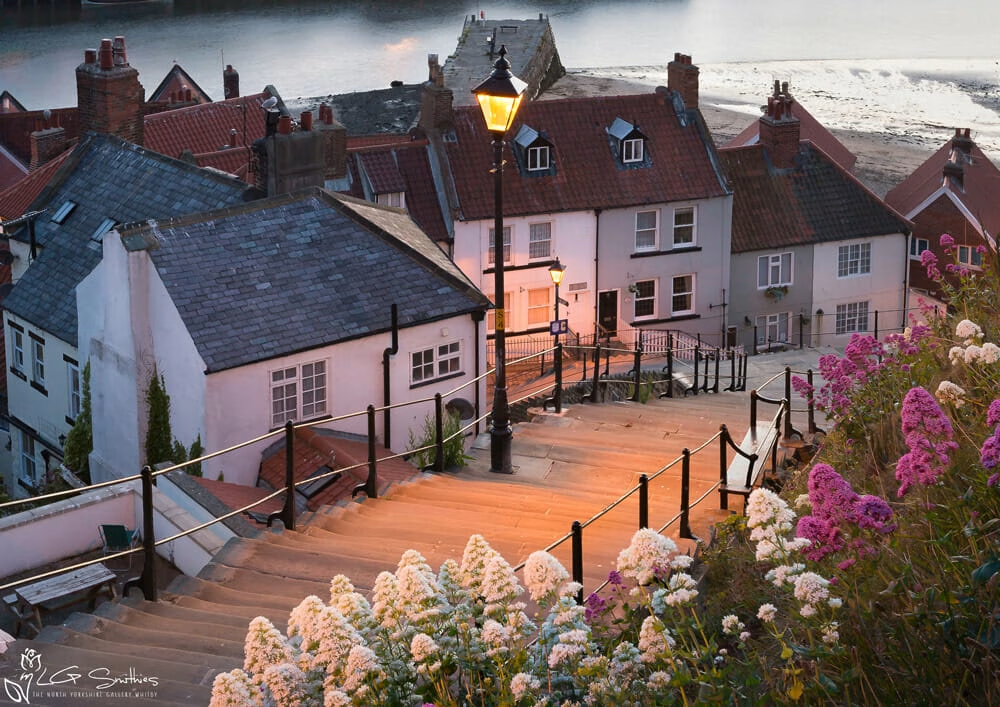
The steps are also steeped in history and folklore. They are closely associated with Bram Stoker's Dracula, with the mysterious black dog believed to have raced up the steps after the wreck of the Demeter before disappearing towards Whitby Abbey. This connection has helped make the 199 Steps famous around the world, attracting visitors, photographers and Dracula enthusiasts to Whitby throughout the year. The photograph below, taken during a summer sunset with the colourful Whitby in Bloom displays lining the steps and the sun setting over the sea, captures what I believe is one of the finest views of the 199 Steps and perfectly demonstrates why this location is loved by photographers from around the world.
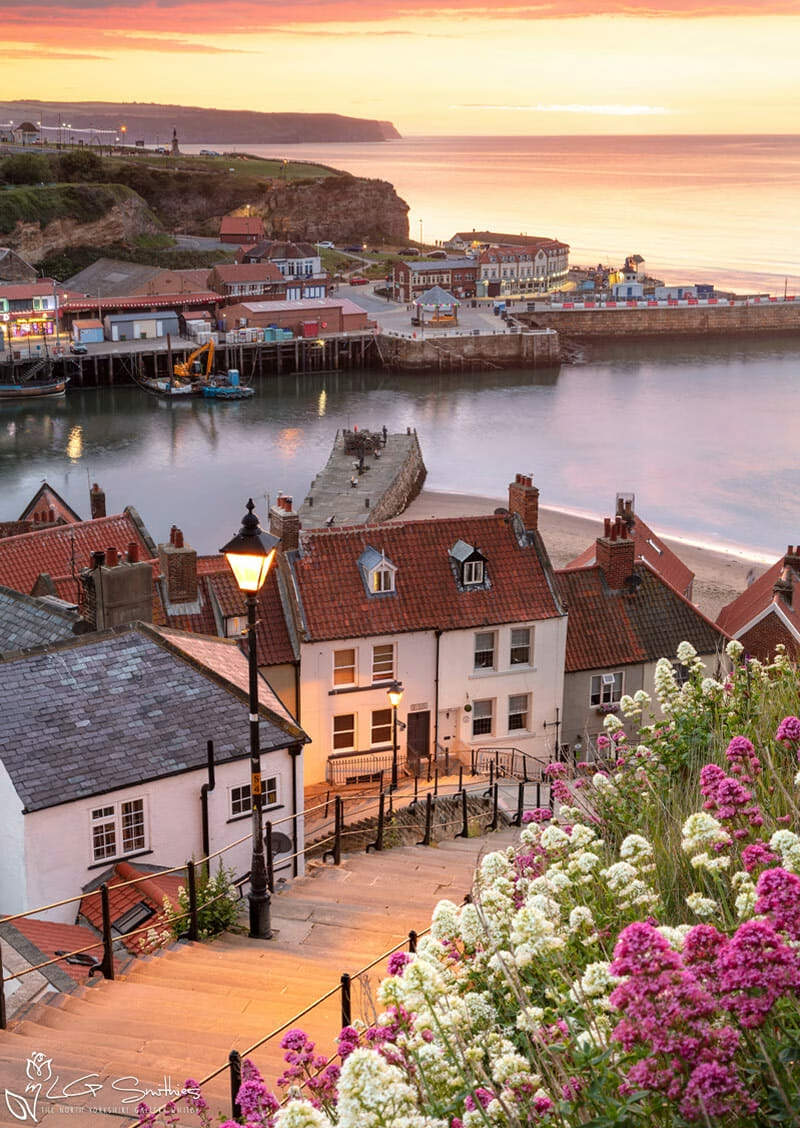
For me, the classic view from the top of the steps, looking down towards Henrietta Street, Church Street and across Whitby Harbour, is one of the most iconic photographs in Yorkshire. It captures everything that makes Whitby so special, from its historic cottages and winding streets to the bustling harbour and dramatic coastline beyond. I genuinely believe this view ranks alongside some of England's most recognisable landmarks, instantly evoking memories of Whitby whenever people see it.
Although the 199 Steps can be photographed in every season, I think they are at their finest during the summer months, when the colourful displays created by Whitby in Bloom line both sides of the steps and the evening sun lights the scene beautifully. Having photographed this location for almost 20 years, it remains one of my favourite places in Whitby and one I return to time and time again, always finding something new to capture.
199 Steps Photography in Spring
Although spring doesn't always produce the spectacular sunrises and sunsets that other seasons offer, it remains an excellent time to photograph Whitby's famous 199 Steps. The quieter streets make it much easier to compose the classic view from halfway up the steps, looking down towards Church Street, Henrietta Street and across Whitby Harbour. This timeless viewpoint, with the traditional lamppost in the foreground and the harbour beyond, is one of the most iconic photographs in Yorkshire and perfectly captures the character of Whitby.
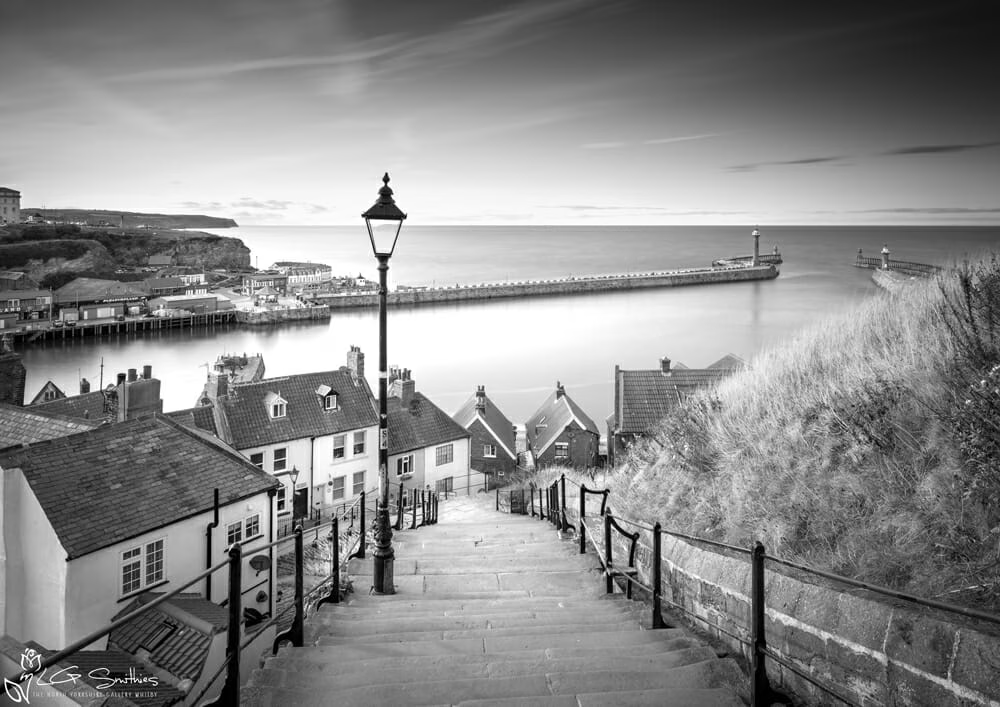
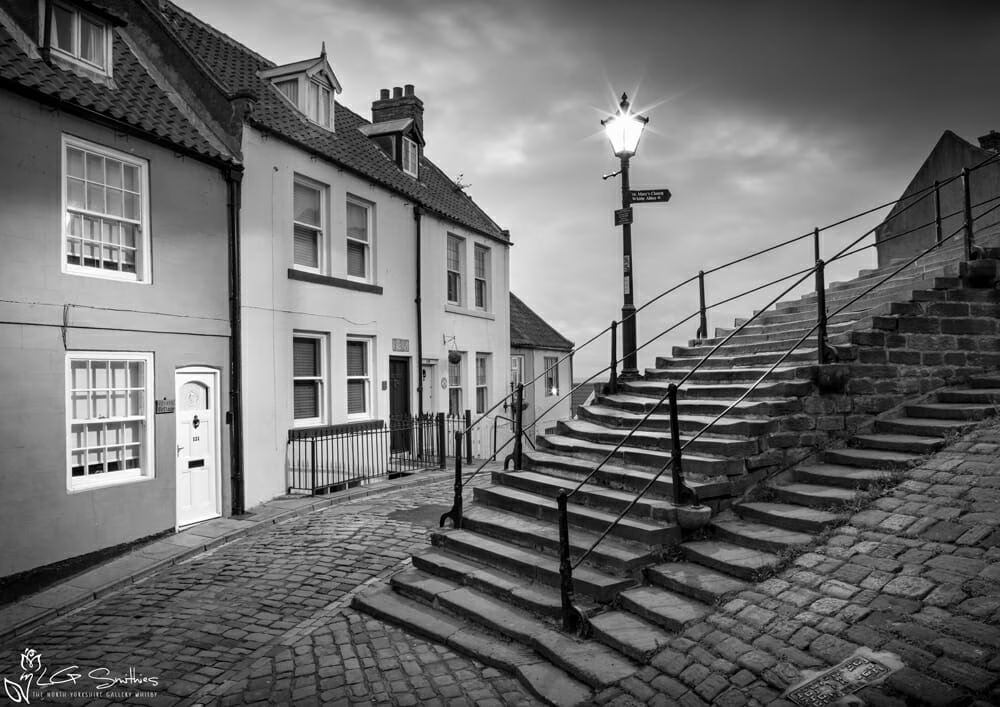
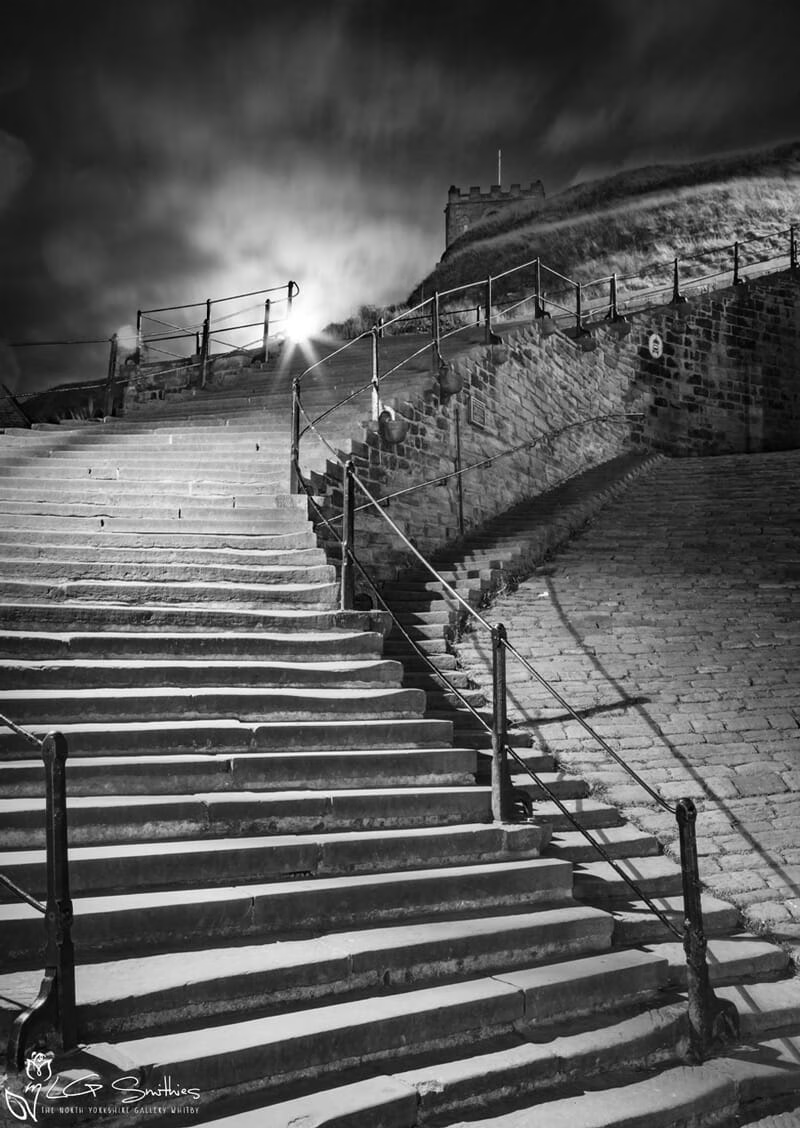
Spring is also one of my favourite times to experiment with black and white photography. With fewer visitors on the steps and around the cobbled streets, it's much easier to create atmospheric images, particularly during the evening. The photograph below was taken at night from the bottom of the 199 Steps, where the historic cobbles, stone buildings and dramatic lighting combine beautifully in black and white. While spring may not offer the colourful flower displays of summer, it provides a peaceful atmosphere and excellent conditions for creating timeless monochrome photographs of this famous landmark.
Spring Sunset Over the 199 Steps
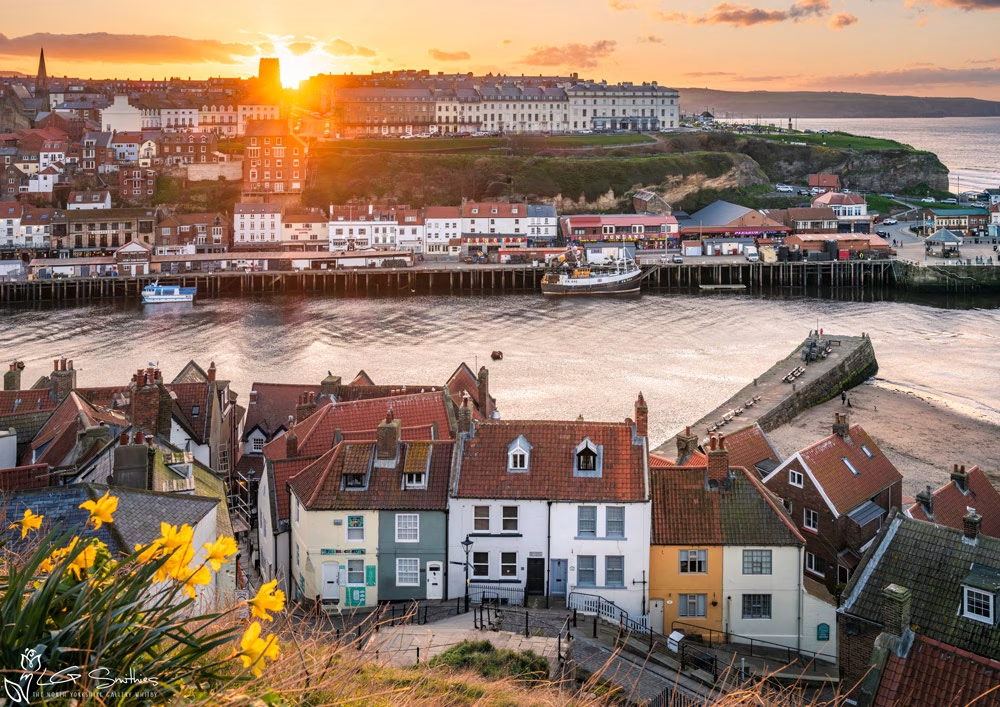
One of my favourite spring viewpoints of the 199 Steps is from the churchyard above, looking through the daffodils towards the steps as the evening sun begins to set over the western side of Whitby. At this time of year, the daffodils provide a beautiful natural foreground, adding vibrant colour and a real sense of the changing seasons to the photograph.
This viewpoint perfectly demonstrates why spring can still be a rewarding time to photograph the 199 Steps. As the warm evening light falls across the rooftops and historic streets below, the combination of colourful spring flowers, the famous steps and the golden sunset creates a beautiful scene that celebrates one of Whitby's most iconic landmarks.
199 Steps in Summer
Summer is, in my opinion, the very best time of year to photograph Whitby's famous 199 Steps. The colourful displays created by Whitby in Bloom line both sides of the steps, transforming an already iconic viewpoint into one of the most beautiful scenes on the Yorkshire Coast. Combined with the evening sun setting over the sea, the warm light creates perfect conditions for photographing one of Whitby's most recognisable landmarks.
The photograph below has become one of my best-known images of the 199 Steps and was chosen for the front cover of my 2027 Whitby Calendar. Taken from the classic viewpoint beside the historic lamppost, it looks down the steps towards Church Street and Whitby Harbour, with the sun setting over the sea in the distance. For me, this is the definitive photograph of the 199 Steps and one of the most iconic views anywhere in Yorkshire.
199 Steps at Dusk
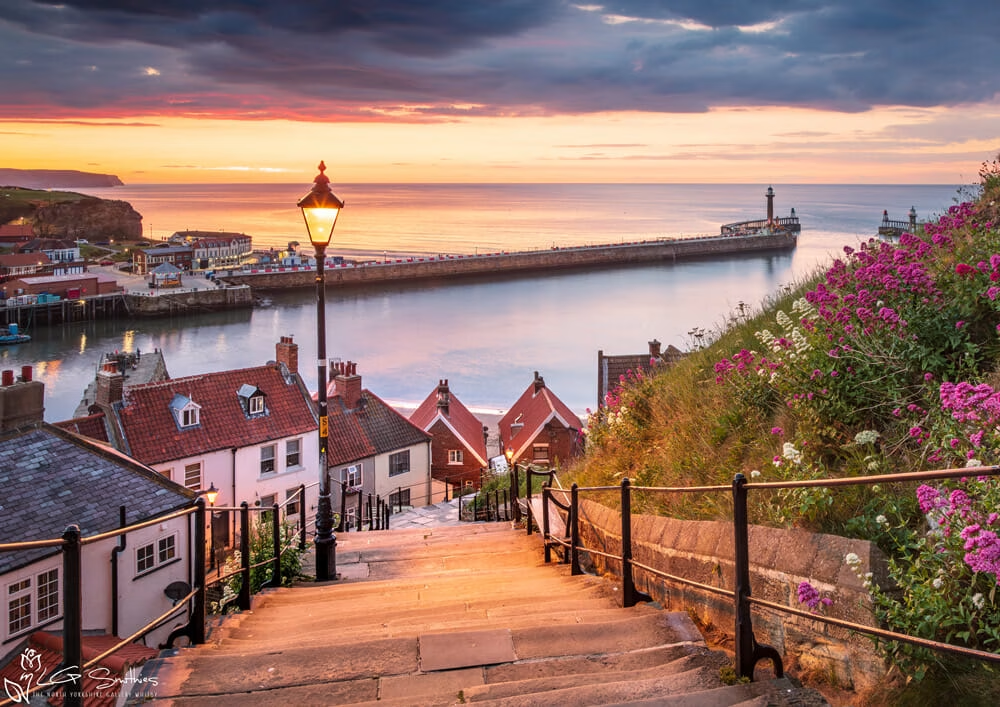
The same viewpoint takes on a completely different character once the sun has disappeared below the horizon. In fact, some of the most spectacular colours often appear after sunset, as the remaining light reflects from the clouds and fills the sky with rich oranges, reds and pinks. This is a perfect example of why it's always worth staying a little longer after the sun has gone down rather than packing your camera away too early.
The photograph below was taken just after sunset on a summer evening, with the colourful flower displays still framing the steps while the saturated colours of the twilight sky provide a stunning backdrop over Whitby Harbour. Comparing this image with the previous photograph shows just how dramatically the scene can change in only a few minutes, creating two completely different but equally beautiful photographs from exactly the same viewpoint.
Summer Dusk Over the 199 Steps
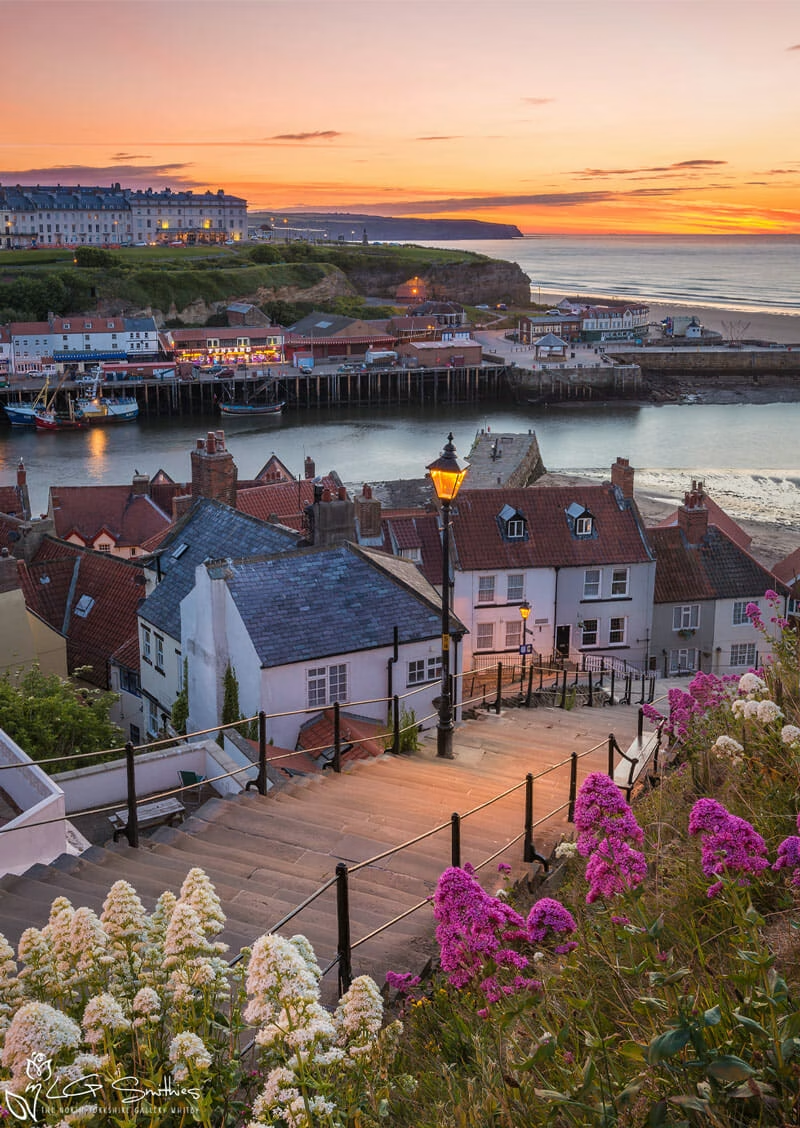
This portrait photograph was taken from the same classic viewpoint on a summer evening, shortly after the sun had set. Looking down the famous 199 Steps towards Church Street and across Whitby Harbour, the historic lamppost, colourful flower displays and glowing twilight sky combine to create one of Whitby's most recognisable views. The rich colours that develop after sunset often make this one of the most rewarding times to photograph the steps.
Although this photograph was taken several years ago, it remains one of my favourite images of the 199 Steps. It proved extremely popular and was featured on the front cover of the Whitby Advertiser as well as several other publications and magazines. It perfectly demonstrates why this iconic viewpoint has become one of the defining images of Whitby and the Yorkshire Coast.
The 199 Steps on a Summer Night
The 199 Steps continue to provide wonderful photographic opportunities long after the sun has set. On a warm summer evening, the famous Victorian-style lamppost casts a welcoming glow across the stone steps, while the colourful flower displays remain visible, adding warmth and character to the scene. Looking down towards Church Street and across Whitby Harbour, the lights of the old town create a classic and unmistakably Whitby view.
Summer nights are one of my favourite times to photograph the 199 Steps. The combination of the illuminated lamppost, colourful flowers, historic stone steps and the peaceful evening atmosphere creates a cosy and timeless image that perfectly captures the charm of Whitby after dark.
The 199 Steps at Night After Rain
This photograph shows the classic view of Whitby's 199 Steps after rainfall, looking down towards Church Street, Whitby Harbour and the sea beyond. Although many people avoid going out with a camera when it's been raining, I often find that wet conditions can actually improve a photograph. The rain darkens the stonework and cobbles, increases the contrast and creates subtle reflections that add depth and atmosphere to the scene.
Night photography works particularly well after rain because the lights from the historic lamppost and surrounding buildings are reflected in the wet surfaces, giving the photograph a richer and more dramatic appearance. It's a good reminder that poor weather doesn't always mean poor photography, and some of my favourite images of Whitby have been taken just after the rain has stopped.
📷 Photographer's Tip
Don't let a little rain put you off heading out with your camera. If you can keep your equipment dry, wet roads, pavements and rocks often produce much more striking photographs than dry conditions. Rain enhances colours, increases contrast and creates beautiful reflections, adding atmosphere and depth that simply aren't there on a dry day. Some of my favourite photographs have been taken just after, or even during, a rain shower.
Moonrise Over the 199 Steps
Moonrise photography requires careful planning and a little patience. To capture the moon in exactly the right position, you need to know where it will rise and be standing in the correct location before it appears above the horizon. Timing is everything, as once the sky becomes completely dark it can be much more difficult to balance the brightness of the moon with the surrounding scene and retain detail in both.
The photograph below was taken from the foot of the 199 Steps just as the moon rose above St Mary's Church. Looking up towards the steps, with the moon emerging over the rooftops, created one of my favourite night-time photographs of Whitby. The atmosphere is wonderfully dramatic, with the ancient steps, historic church and glowing moon combining to create a scene that wouldn't look out of place in the pages of Bram Stoker's Dracula.
The 199 Steps in Winter from the Khyber Pass Tunnel
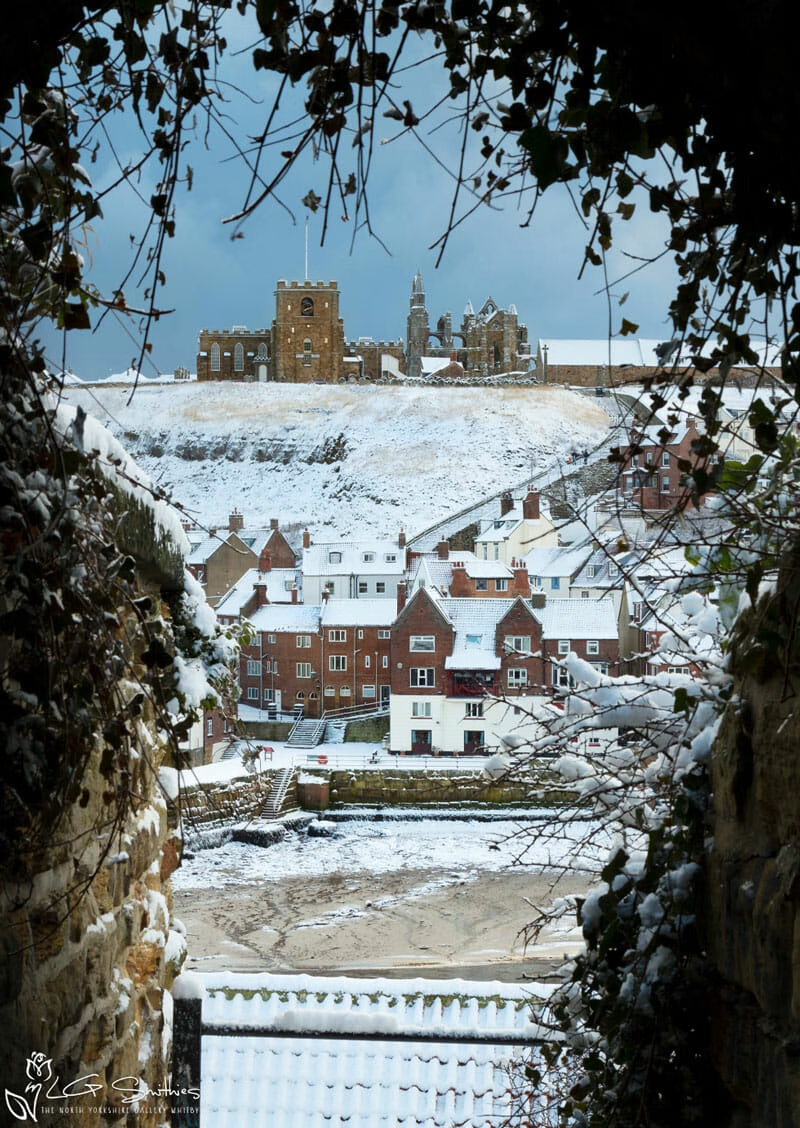
This photograph offers a completely different perspective of Whitby's famous 199 Steps. Taken from inside the Khyber Pass Tunnel, also known locally as the Screaming Tunnel, it looks down towards Tate Hill before leading your eye up to the snow-covered 199 Steps in the distance. A fresh blanket of snow transforms the scene, highlighting the rooftops, historic buildings and the famous steps as they climb towards St Mary's Church.
This viewpoint demonstrates that the 199 Steps don't always have to be the main subject of the photograph to make an impact. From the Khyber Pass Tunnel, they become an important feature within a much wider composition that captures the character of Whitby's old town. It's one of my favourite winter viewpoints and another example of how the steps can be photographed from many different angles throughout the town.
The 199 Steps in Winter Snow
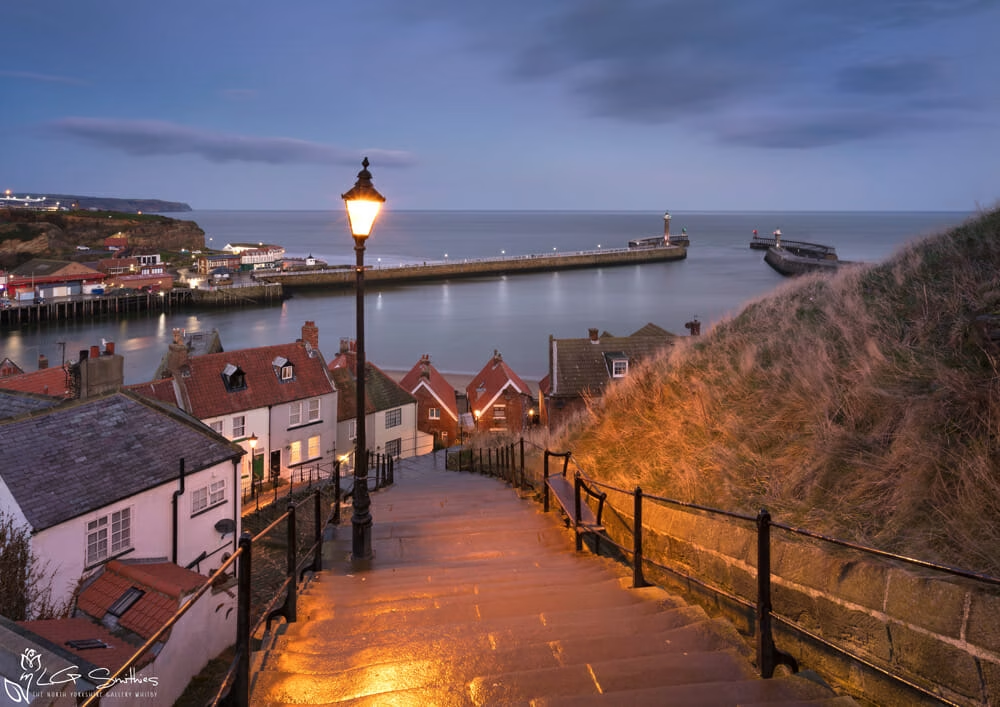
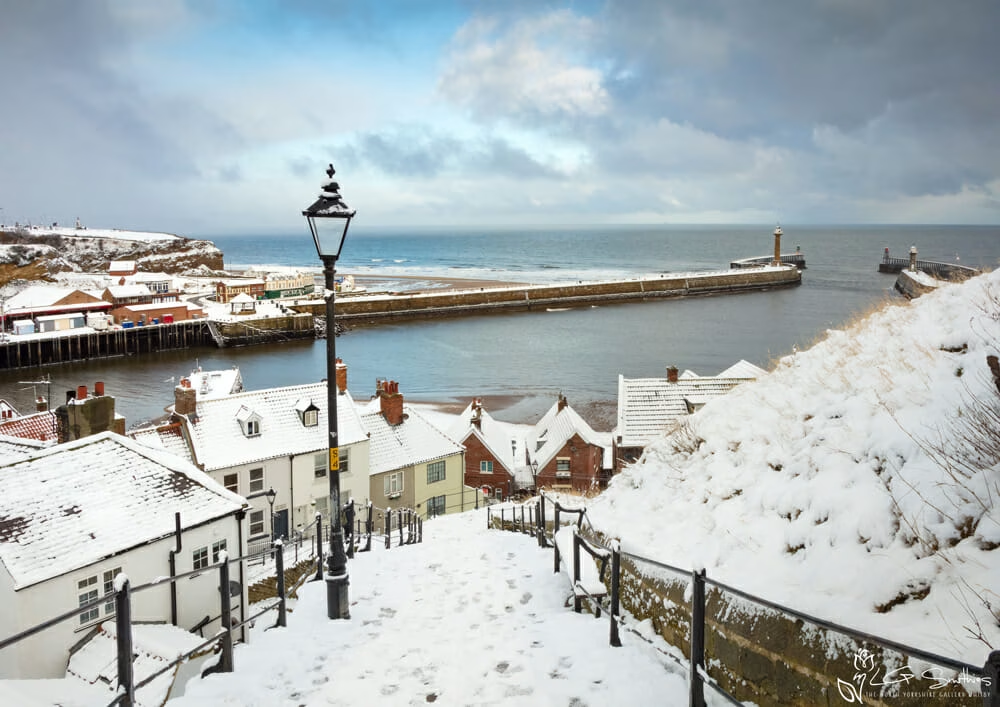
A fresh blanket of snow transforms the 199 Steps into one of Whitby's most magical winter scenes. Taken from the classic viewpoint, with the embankment on one side, the historic lamppost on the other and the steps leading down towards Church Street, Whitby Harbour and the sea beyond, this photograph perfectly captures the beauty of Whitby after snowfall. Snowfall is relatively uncommon in Whitby, making scenes like this all the more special when the right conditions arrive.
This has become one of my most successful photographs of Whitby and is often described as the perfect Christmas card scene. Over the years it has appeared on Christmas cards, light-up bottles and many other products, becoming one of the most recognisable winter images I have taken. I believe it captures the atmosphere of Whitby in winter better than almost any other photograph, showing why the 199 Steps remain one of the town's most iconic photography locations.
The 199 Steps from Khyber Pass
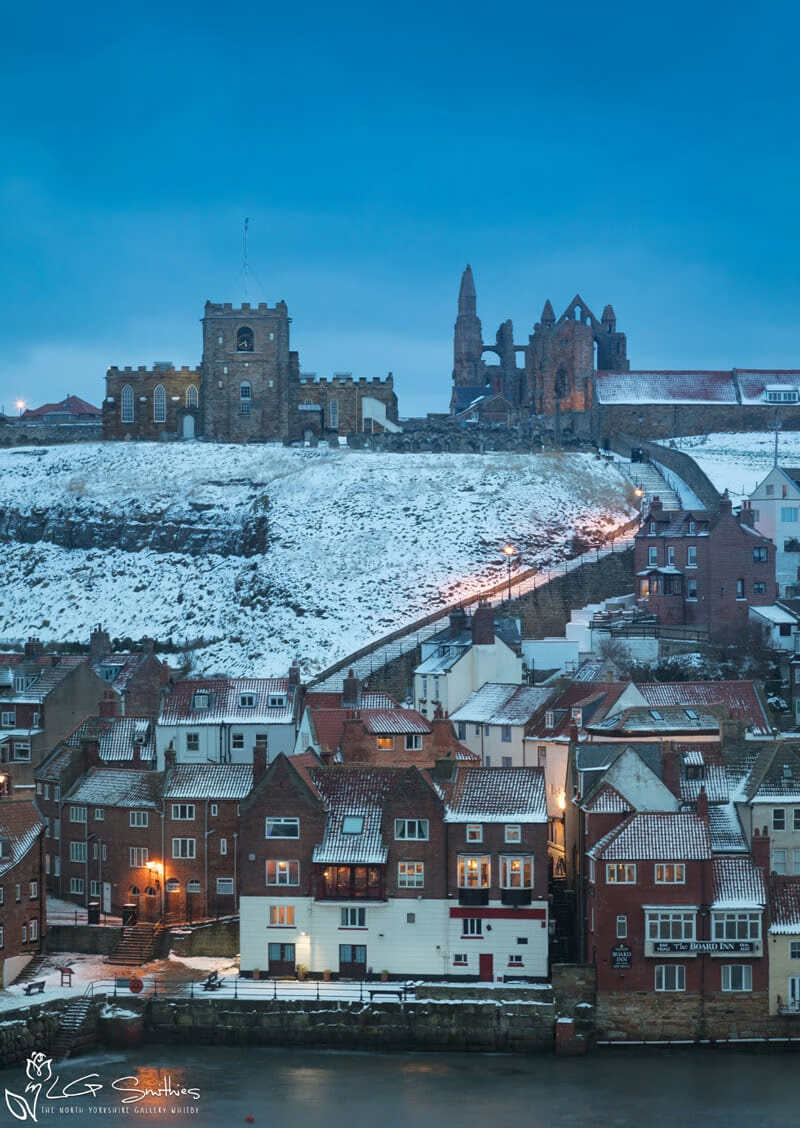
This winter photograph was taken from above the Khyber Pass Tunnel, looking across towards Tate Hill and the East Cliff. Rather than focusing solely on the 199 Steps, it captures several of Whitby's most famous landmarks in a single composition, including Tate Hill, the snow-covered 199 Steps and Whitby Abbey standing proudly above them. A fresh covering of snow ties the whole scene together, creating one of Whitby's most picturesque winter views.
I like this photograph because it shows that the 199 Steps don't always have to be the main subject to make an impact. From this side of Whitby, they become an important feature within a much wider landscape, demonstrating another excellent viewpoint for photographing this iconic landmark. It also highlights how rewarding winter photography can be, with the snow adding brightness, texture and atmosphere to one of Whitby's most recognisable scenes.
Frequently Asked Questions About the 199 Steps
What are the 199 Steps in Whitby?
The 199 Steps are the famous stone steps that lead from the junction of Church Street and Henrietta Street up to the Church of St Mary's on Whitby's East Cliff. From there, the footpath continues on to the magnificent Whitby Abbey. The steps have become one of Whitby's most recognisable landmarks and attract thousands of visitors every year for their history, spectacular views and outstanding photographic opportunities.
Why are the 199 Steps so famous?
The 199 Steps are famous for several reasons. They are closely linked with Bram Stoker's Dracula, have featured in countless photographs, paintings and films, and provide one of the finest viewpoints over Whitby Harbour. Today, they are regarded as one of the most iconic landmarks on the Yorkshire Coast.
What is the connection between the 199 Steps and Dracula?
According to Bram Stoker's Dracula, the vampire arrived in Whitby aboard the Demeter. After the ship ran aground, Dracula escaped in the form of a large black dog and raced up the 199 Steps towards Whitby Abbey, making the steps one of the most famous literary locations in England.
Where is the best place to photograph the 199 Steps?
In my opinion, the best viewpoint is from about halfway up the steps. From here, using a fairly wide-angle lens, you can include the historic lamppost, the embankment, the full length of the steps, Church Street, Whitby Harbour and the sea beyond, creating what I believe is the classic photograph of the 199 Steps.
When is the best time to photograph the 199 Steps?
For me, the very best time is around the summer solstice at sunset. At this time of year, the sun sets at its furthest point over the sea, while the colourful displays created by Whitby in Bloom are usually looking their very best. The combination of flowers, warm evening light and the famous view over Whitby Harbour makes this one of the finest photography opportunities in the town.
Do you have any tips for photographing the 199 Steps?
Yes. During summer evenings the steps can become very busy, so patience is often rewarded. A photographer friend of mine deliberately timed his visit during an international football tournament, knowing many people would be watching the match in local pubs. The result was a much quieter scene and an excellent photograph. Thinking about local events and choosing quieter times can often make a huge difference.
Are the 199 Steps good to photograph after rain?
Absolutely. I often enjoy photographing the steps after rain because the wet stonework and cobbles become much darker, creating stronger contrast and subtle reflections. Combined with the glow from the historic lamppost at night, these conditions can produce some wonderfully atmospheric photographs.
Can you photograph the 199 Steps with the moon?
Yes. Moonrises can create spectacular images of the 199 Steps, although they require careful planning. I've photographed the moon rising from the foot of the steps as it appeared above St Mary's Church, and another excellent viewpoint is from Khyber Pass, where the moon can sometimes rise beyond the steps and East Cliff.
What lens is best for photographing the 199 Steps?
A wide-angle lens is usually the best choice for the classic viewpoint, allowing you to capture the steps, the historic lamppost, Whitby Harbour and the surrounding town all within a single composition.
Are the 199 Steps difficult to climb?
The 199 Steps are free to visit and are not especially difficult to climb, although there are naturally quite a few of them. You'll notice benches positioned at intervals along the route. These are known as coffin benches and were originally provided to allow coffin bearers to rest while carrying coffins from the town up to St Mary's Churchyard.
Can I buy photographs of the 199 Steps?
Yes. Every photograph of the 199 Steps featured on this page has been taken by me over almost 20 years of photographing Whitby. They are available to purchase from the North Yorkshire Gallery as canvas prints, framed prints, photographic prints, panoramic prints, wall art and a range of Yorkshire gifts. You can also visit our gallery on Church Street in Whitby, just a short walk from the foot of the 199 Steps.
199 Steps Prints and Canvases
Every photograph of the 199 Steps featured in this guide has been taken by me over almost 20 years of photographing Whitby and is available to purchase from the North Yorkshire Gallery. Whether you prefer a premium canvas print, framed print, photographic print, panoramic print or one of our unique Yorkshire gifts, you'll find a wide selection of images captured in every season, from colourful summer sunsets and dramatic moonrises to snowy winter mornings and atmospheric night scenes.
Browse the collection below to find your favourite photograph of Whitby's iconic 199 Steps and bring a little of Whitby into your home.
Find your favourite photograph of Whitby's iconic 199 Steps below and choose from our premium canvas prints, framed prints, photographic prints, panoramic prints and unique Yorkshire gifts, all professionally produced by the North Yorkshire Gallery.
Whitby Whalebones Photography
The Whitby Whalebones are one of the town's most recognisable landmarks and one of the finest places to photograph Whitby. Standing proudly on West Cliff beside the famous statue of Captain James Cook, the iconic Whalebone Arch commemorates Whitby's historic whaling industry and frames some of the most spectacular views across Whitby Harbour, the East Cliff and Whitby Abbey. It has become an essential stop for photographers and visitors alike, offering countless opportunities throughout the year.
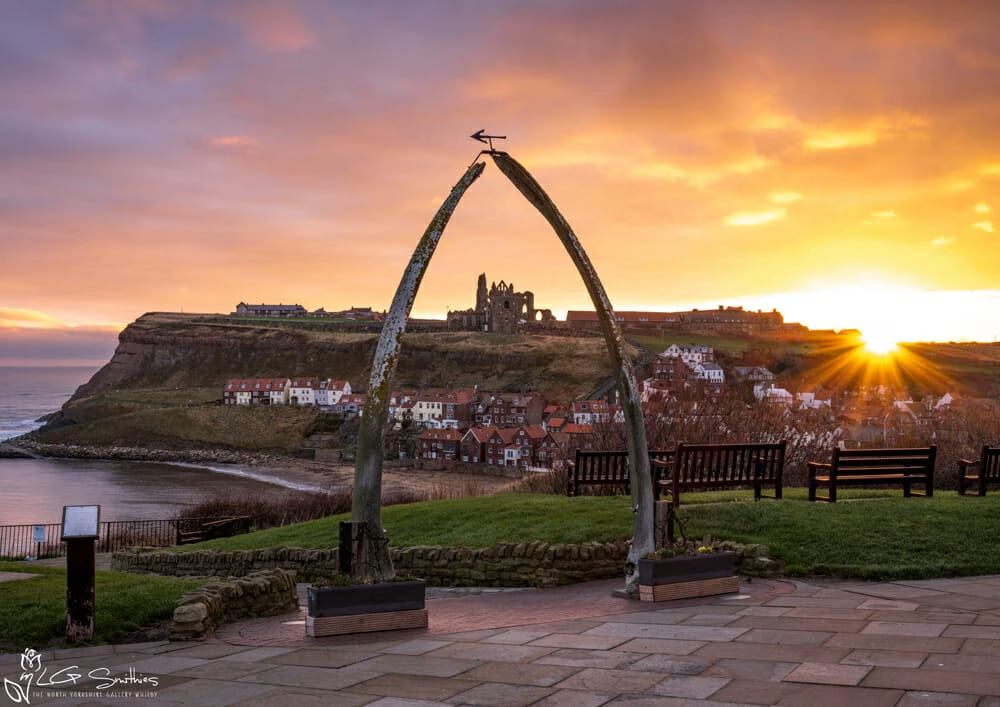
Having photographed the Whitby Whalebones for almost 20 years, I've captured them in every season and under almost every weather condition imaginable. From colourful summer sunsets and dramatic winter sunrises to snow, moonrises, storms and the famous Whitby Abbey Illuminations, the Whalebones provide an ever-changing foreground to some of Whitby's most iconic views. Below, I'll showcase some of my favourite photographs while sharing practical advice on the best viewpoints, lighting, seasons and weather conditions to help you capture your own memorable images.
Every photograph featured in this guide is also available to purchase as a premium canvas print, framed print, photographic print, panoramic print, wall art and a range of Yorkshire gifts from the North Yorkshire Gallery.
Whitby Whalebones at Dawn in Winter
For me, the very best time to photograph the Whitby Whalebones is around the winter solstice, with a month or two either side also producing excellent conditions. Standing in front of the Whalebone Arch and looking towards Whitby Abbey, the low winter sun rises over the East Cliff, often filling the sky with spectacular colour while perfectly framing the abbey within the whalebones. This is one of the most iconic photography opportunities in Whitby and a viewpoint I return to every winter.
The photograph below captures one of my favourite winter dawn scenes. The sunrise is almost perfectly aligned behind the Whalebone Arch, filling the sky with rich reds, purples and orange tones as the first light of the day spreads across Whitby. This is exactly the type of composition I aim for when photographing the Whalebones in winter. Dawn is undoubtedly the best time to capture this view, and one of the advantages of photographing it at this time of year is that sunrise occurs at much more sociable hours than during the summer months. As the year progresses towards the summer solstice, the sunrise gradually moves further to the right, creating a completely different composition from the same viewpoint.

Whitby Whalebones in Spring
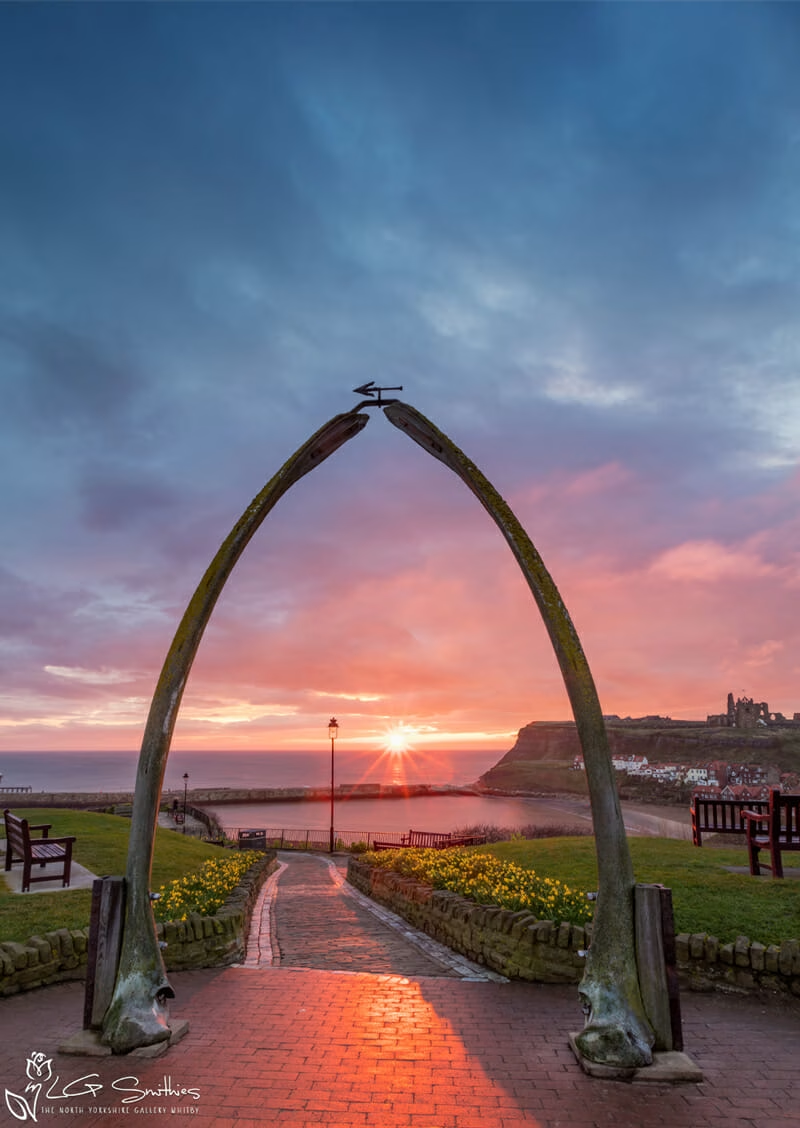
As winter gives way to spring, the position of the rising sun gradually changes, creating a completely different photography opportunity at the Whitby Whalebones. Instead of framing Whitby Abbey within the arch, the sun now rises much closer to the centre of the Whalebones, making it possible to capture a spectacular sunrise over the North Sea. Although the abbey can no longer be framed in the same way as during the winter months, this changing angle creates an equally rewarding composition.
The photograph below shows a beautiful spring sunrise, with the path leading away from the Whalebones drawing your eye towards the glowing horizon. The rising sun fills the sky with warm colours as it climbs above the North Sea, demonstrating how the changing seasons continually transform one of Whitby's most iconic photography locations. It's another reminder that returning to the same viewpoint throughout the year can produce completely different photographs.
Whitby Whalebones in Summer
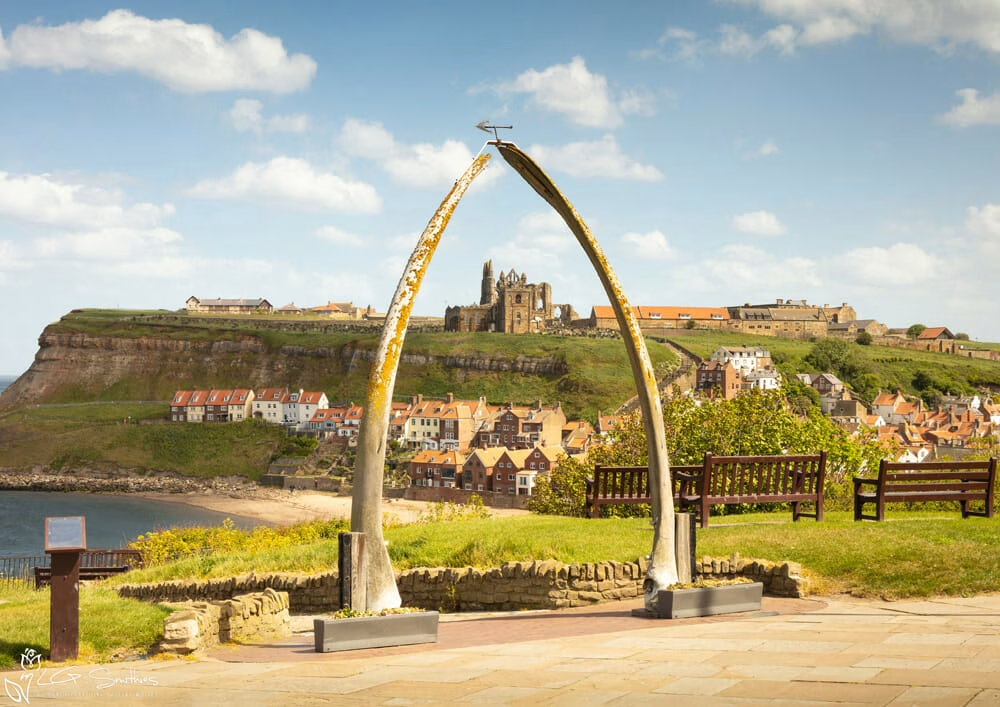
Summer offers a different style of photography at the Whitby Whalebones. Unlike the winter months, when dramatic dawn colours often fill the sky behind the arch, summer doesn't usually provide the same sunrise alignment or colourful backdrop. Although you can occasionally be rewarded with a spectacular sunset that lights up Whitby Abbey, I generally find the best photographs during summer are taken throughout the afternoon.
One of the biggest advantages of summer photography is the higher position of the sun. During the winter months, the Royal Hotel often casts a shadow across the Whalebones from the classic viewpoint, but in summer the sun sits much higher in the sky, keeping both the Whalebones and Whitby Abbey beautifully illuminated for much of the afternoon. The photograph below shows how the warm daylight highlights both landmarks, making summer an excellent time to capture this iconic Whitby scene in crisp, even light.
Black and White Photography of the Whitby Whalebones
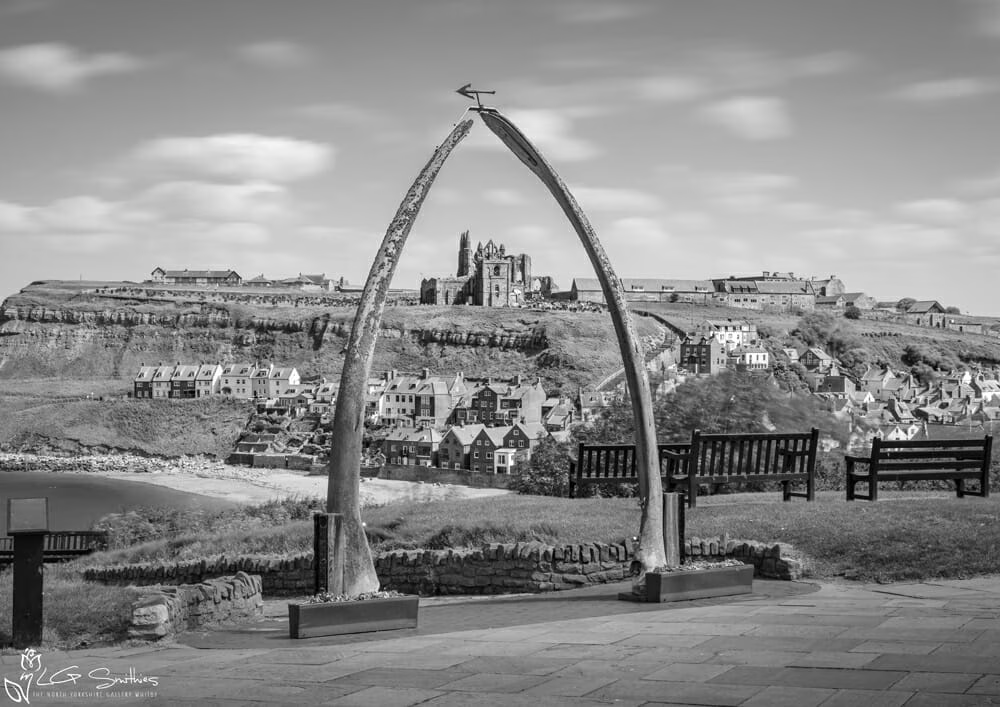
The Whitby Whalebones also lend themselves beautifully to black and white photography, particularly during the summer months when the light is more even throughout the day. I often find that well-lit scenes work exceptionally well in monochrome, allowing the shape of the Whalebones, Whitby Abbey and the surrounding landscape to become the main focus without the distraction of colour. Summer is also an excellent time to experiment with long exposure photography, and the photograph below was taken using a long exposure of around 30 seconds.
Another reason I enjoy photographing the Whalebones in summer is the cloud formations that often develop on warm days. Broken, scattered cloud naturally creates areas of light and shadow across the landscape, almost as though nature is doing the dodging and burning for you. The photograph below is a perfect example of this, with the dramatic cloud patterns adding depth, texture and contrast to the black and white image while beautifully complementing the timeless character of the Whalebones and Whitby Abbey.
Whitby Whalebones and Rainbows
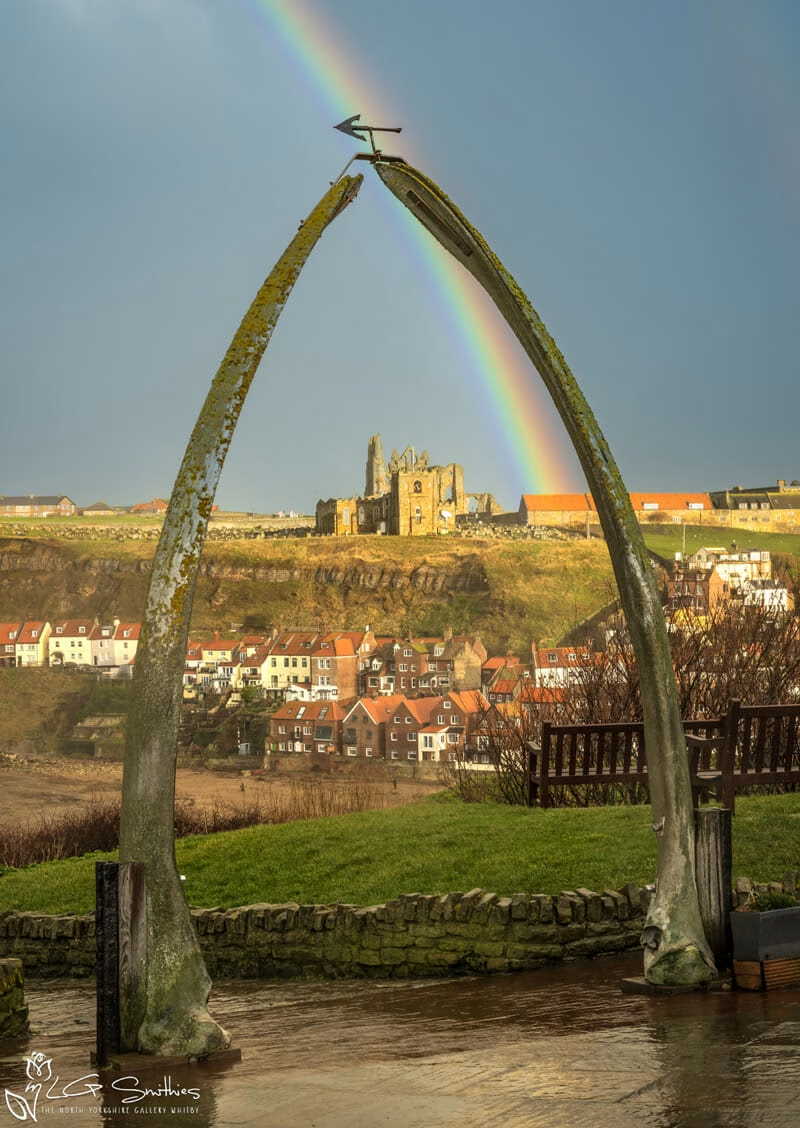
The classic view of the Whitby Whalebones can become even more spectacular after a passing summer rain shower. Living and photographing on the Yorkshire Coast has taught me that if you're out with your camera during the summer, it's worth embracing the weather rather than trying to avoid it. Showers often clear just as quickly as they arrive, and when the sun breaks through afterwards there's always the possibility of being rewarded with a rainbow.
The photograph below captures one of those memorable moments, with a rainbow arching above the Whalebones while Whitby Abbey stands framed beneath the arch. It's a reminder that some of the best photographs are taken immediately after unsettled weather, when the combination of sunshine, lingering showers and dramatic skies creates conditions that simply can't be planned. Patience often pays off, and on the Yorkshire Coast you're never too far away from the next rainbow.
Whitby Whalebones in Autumn
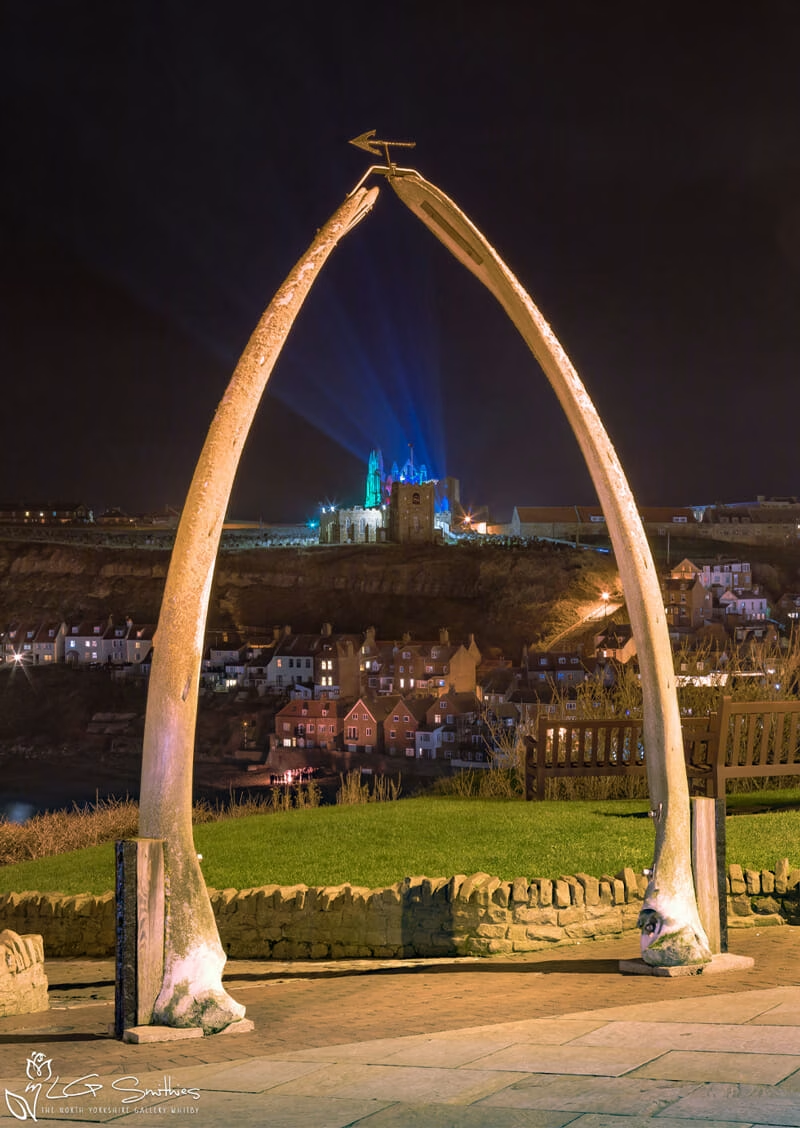
As autumn arrives, the sunrise gradually moves back into a more favourable position for photographing the Whitby Whalebones, bringing back the opportunity to capture beautiful dawn colours behind the arch. However, for me, the highlight of autumn photography isn't the sunrise—it's the famous Whitby Abbey Illuminations. Held towards the end of October each year, the illuminated abbey creates one of the most spectacular night-time photography opportunities anywhere on the Yorkshire Coast.
The photograph below captures one of my favourite autumn scenes, with the Whitby Whalebones naturally framing the illuminated Whitby Abbey. The floodlit ruins glow against the night sky while the Whalebone Arch provides a perfect foreground, creating one of Whitby's most iconic compositions. If you're visiting Whitby during the Abbey Illuminations, this is a viewpoint that should be at the very top of your photography list.
Winter Sunrise at the Whitby Whalebones
As the year moves back towards winter, the Whitby Whalebones once again become one of the very best places in Whitby to photograph sunrise. The position of the rising sun gradually returns to where it beautifully complements the Whalebone Arch and Whitby Abbey, often producing spectacular displays of colour across the sky. These later months of the year regularly provide some of the finest dawn photography conditions on the Yorkshire Coast.
The photograph below captures one of those unforgettable mornings, with deep blues, vibrant reds and warm orange tones filling the sky as the sun rises over Whitby. The River Esk reflects the early morning colours while Whitby Abbey sits perfectly framed by the Whalebones, creating one of the most iconic and rewarding sunrise photographs the town has to offer.
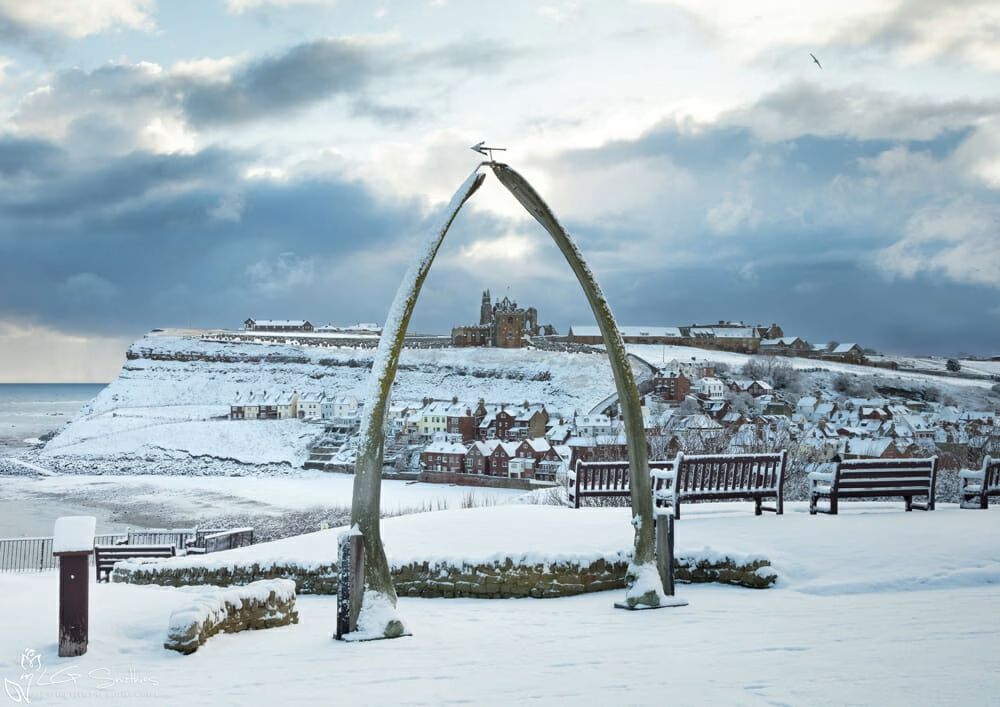
Whitby Whalebones in Winter Snow
Winter is one of the most rewarding seasons for photographing the Whitby Whalebones, particularly if you're fortunate enough to experience fresh snowfall. Although significant snow doesn't arrive every year, when it does it completely transforms West Cliff, turning one of Whitby's most famous landmarks into a beautiful winter scene. The white snow contrasts perfectly with the dark Whalebones, while Whitby Abbey and the surrounding coastline provide a stunning backdrop.
The photograph below captures the Whitby Whalebones after a fresh fall of snow, demonstrating just how magical this location can become during winter. Snow softens the landscape, adds brightness to the scene and creates a timeless photograph that is only possible when the conditions come together. If you're lucky enough to be in Whitby after fresh snowfall, the Whalebones should be one of the first places you visit with your camera.
Moonrise at the Whitby Whalebones
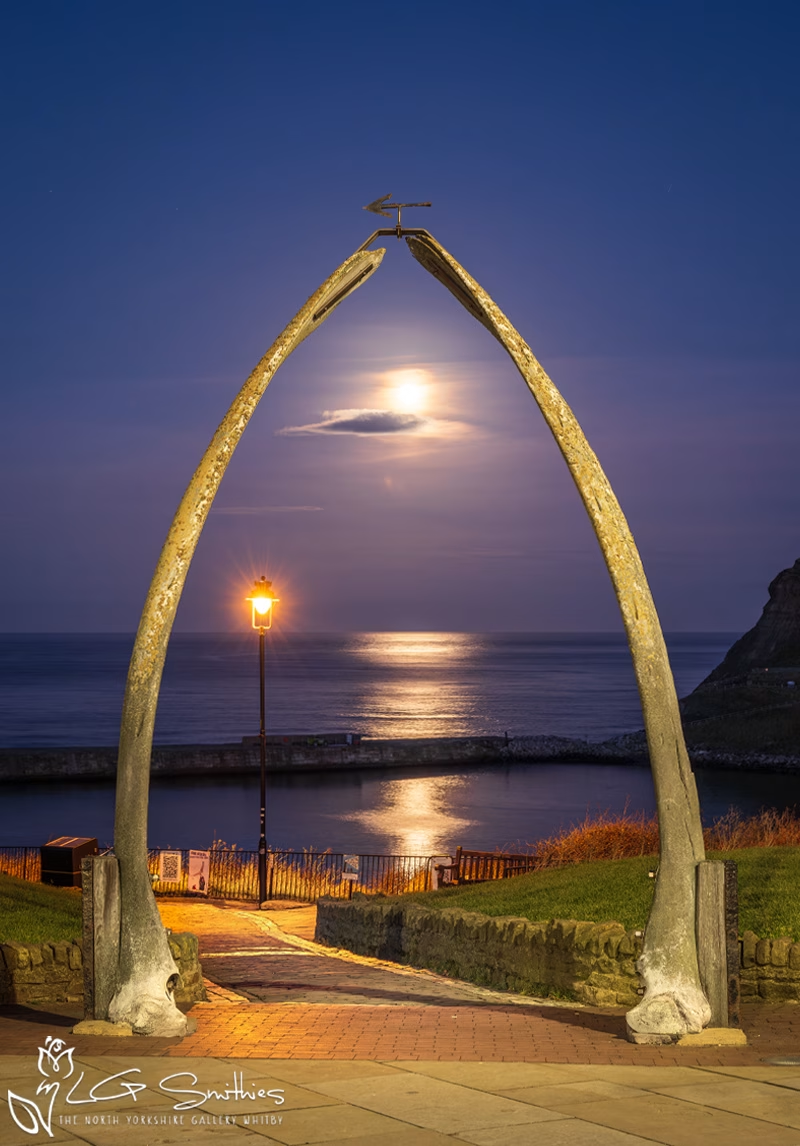
The Whitby Whalebones are also one of the best places in the town to photograph a moonrise. Like photographing the sunrise, capturing the moon in exactly the right position takes careful planning, as you need to know precisely where it will rise and be in position before it appears above the horizon. When everything comes together, however, the results can be spectacular.
The photograph below captures the moon rising through the Whalebone Arch above the North Sea, with its shimmering reflection stretching across the water towards Whitby. It's one of my favourite moonrise compositions and demonstrates just how rewarding this location can be after dark. With a little planning and the right conditions, the Whalebones provide a truly unforgettable setting for night photography.
Moonrise Above the Whitby Whalebones
This photograph demonstrates that patience can be just as important as camera equipment when photographing the Whitby Whalebones. Moonrises are popular events, and it's not unusual for other visitors to notice someone with a camera and become curious about what they're photographing. Quite often, people will wander into the composition without realising they're blocking the shot. It's simply part of photographing in a busy public place, so patience and good timing are essential.
One tip I'd offer is to have your composition planned in advance but avoid setting up too early if you're photographing a moonrise. If you stand waiting for a long time, it's natural for people to become curious and gather in front of your camera. Instead, arrive prepared, know exactly where the moon will rise and set up when the moment is approaching. The photograph below shows the moon perfectly positioned above the Whalebones, with its reflection shimmering across the North Sea. It remains one of my favourite moonrise photographs from Whitby and proved incredibly popular on social media, where it was shared by the North York Moors National Park and by Whitby's own superstar, Beth Mead.

A Unique View of the Whitby Whalebones
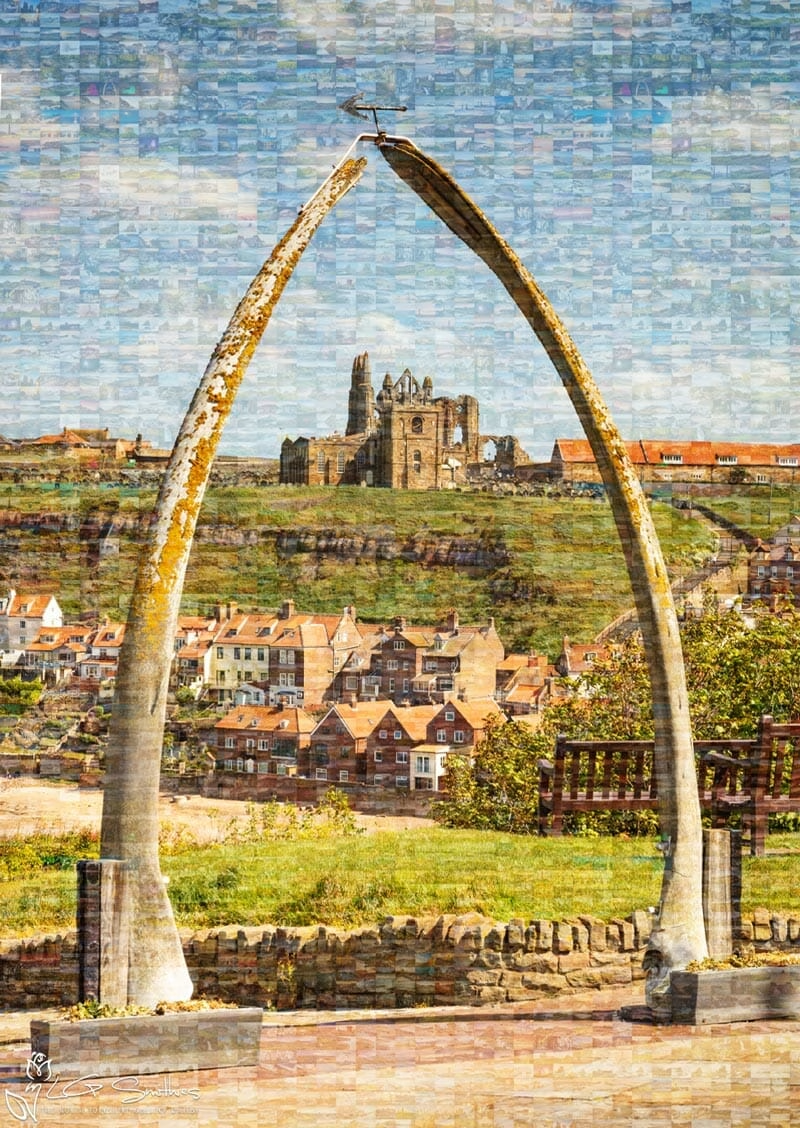
Although this isn't a traditional photograph of the Whitby Whalebones, it's one of the most unusual pieces I've created. The image is made up of thousands of my North Yorkshire photographs, carefully combined using a mosaic technique to reveal the famous Whalebone Arch. From a distance, the individual images merge together to create the iconic outline of the Whalebones, while a closer look reveals hundreds of different scenes from across Yorkshire.
The artwork below celebrates not only one of Whitby's most recognisable landmarks but also the incredible variety of landscapes, coastlines, villages and historic locations that make North Yorkshire so special. It's a unique interpretation of the Whalebones and a reminder that one iconic image can be created from thousands of photographic memories collected over many years.
Frequently Asked Questions About the Whitby Whalebones
Where are the Whitby Whalebones?
The Whitby Whalebones are situated on West Cliff, overlooking Whitby Harbour and the North Sea, just above the Khyber Pass. Standing beside the statue of Captain James Cook, they offer one of the finest viewpoints in Whitby and are one of the town's most photographed landmarks.
Why are the Whitby Whalebones so famous?
The Whitby Whalebones commemorate Whitby's historic whaling industry, which played an important role in the town's past. The arrow mounted above the Whalebones points north towards the old whaling grounds, serving as a reminder of Whitby's maritime heritage and its connections with Arctic whaling.
Where is the best place to photograph the Whitby Whalebones?
In my opinion, the best place to photograph the Whalebones is from directly in front of them, looking towards Whitby Abbey. From this position, the Whalebone Arch naturally frames the abbey, creating one of Whitby's most iconic photographs. Another excellent viewpoint is slightly to the right of the Whalebones, looking out over the North Sea, where you can photograph spectacular sunrises and moonrises framed by the arch.
When is the best time to photograph the Whitby Whalebones?
For me, the best time is during the winter months at sunrise. Around the winter solstice, the rising sun beautifully illuminates the sky behind Whitby Abbey while the Whalebones naturally frame the scene. Autumn is another excellent time to visit, particularly during the Whitby Abbey Illuminations when the floodlit abbey creates a spectacular night-time composition.
Are the Whitby Whalebones better at sunrise or sunset?
I personally prefer sunrise. During the winter months, the sunrise aligns perfectly with Whitby Abbey, producing some of the most dramatic colours you'll see all year. Sunset can also produce attractive photographs, but I think the Whalebones really come into their own at dawn when the sky glows behind the abbey.
Can you photograph Whitby Abbey through the Whalebones?
Yes, and it's one of Whitby's most iconic photographs. Standing directly in front of the Whalebones allows you to frame Whitby Abbey within the arch. This composition works throughout the year but is particularly impressive during winter sunrises and the Whitby Abbey Illuminations.
Can you photograph moonrises from the Whitby Whalebones?
Absolutely. The Whalebones are one of my favourite places in Whitby to photograph moonrises. Using a longer telephoto lens allows you to compress the scene, making the moon appear much larger as it rises above the North Sea or above the Whalebones themselves. These photographs require careful planning, but the results can be spectacular.
What camera lens is best for photographing the Whitby Whalebones?
For the classic composition looking towards Whitby Abbey, I recommend using a wide-angle lens to capture the Whalebones, Whitby Abbey and the surrounding landscape in a single photograph. For moonrises and more distant compositions, a telephoto lens is a much better choice, helping to compress the scene and make the moon appear larger in relation to the Whalebones.
Do you have any tips for photographing the Whitby Whalebones?
Planning is everything. Check where the sun or moon will rise before you visit so you can position yourself correctly. The Whalebones are one of Whitby's most popular photography locations, so patience is often required, especially during sunrise and moonrise. If possible, arrive early in the morning before the crowds build up, and be prepared to wait for people to move naturally through the scene rather than rushing your photograph.
Where can I park to photograph the Whitby Whalebones?
Parking is available on West Cliff, just a short walk from the Whalebones. Some parking is free at certain times of the day or year, but these arrangements can change, so it's always worth checking the signs before leaving your vehicle. Parking enforcement in Whitby is well known for being strict, so taking a moment to confirm the restrictions can save you an expensive surprise.
Where can I buy photographs of the Whitby Whalebones?
Every photograph of the Whitby Whalebones featured on this page has been taken by me over almost 20 years of photographing Whitby. They are available to purchase directly from this website as premium canvas prints, framed prints, photographic prints, panoramic prints, wall art and a wide range of Yorkshire gifts.
If you're visiting Whitby, why not come and see them in person? Simply cross the Swing Bridge into Whitby's historic old town, where you'll find the North Yorkshire Gallery on Church Street, just a short walk from the Whalebones themselves. Whether you're looking for a striking canvas print, a beautifully framed photograph or a unique Yorkshire gift, we'd be delighted to welcome you to the gallery.

Whitby Whalebones Prints and Canvases
Every photograph of the Whitby Whalebones featured in this guide has been taken by me over almost 20 years of photographing Whitby and is available to purchase from the North Yorkshire Gallery. Whether you're looking for a premium canvas print, framed print, photographic print, panoramic print, wall art or one of our unique Yorkshire gifts, you'll find a wide selection of Whalebones photographs captured throughout the seasons, from colourful winter sunrises and moonrises to dramatic snow scenes and the famous Whitby Abbey Illuminations.
Browse the collection below to discover your favourite photograph of the Whitby Whalebones and bring one of Whitby's most iconic landmarks into your home.
Discover our collection of Whitby Whalebones canvas prints, framed prints, photographic prints, panoramic prints and Yorkshire gifts below, and find the perfect photograph to remember your visit to Whitby
Whitby Piers Photography
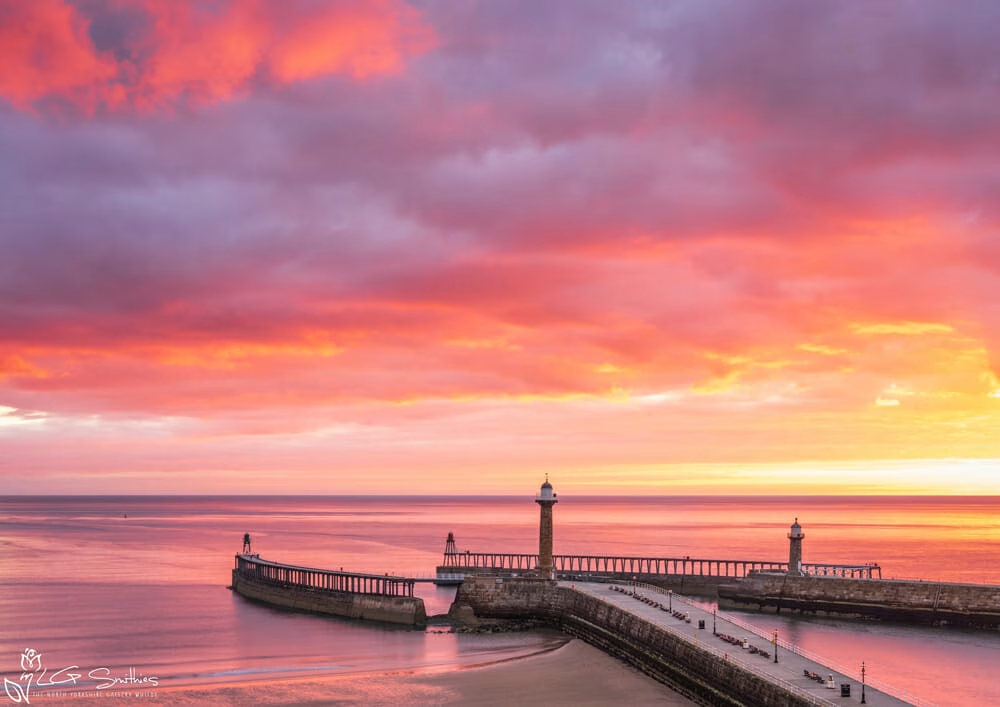
Whitby's two historic piers have protected the harbour for generations and are among the town's most recognisable landmarks. Stretching out into the North Sea on either side of the harbour entrance, the East Pier and West Pier have witnessed everything from violent storms and fishing fleets returning home to spectacular sunrises and colourful sunsets. In recent years, both piers have benefited from restored extensions, and after many years of being inaccessible, the East Pier extension has reopened, allowing visitors to once again walk right to the end of both pier extensions and enjoy some of the finest coastal views in Whitby.
Having photographed Whitby's piers for almost 20 years, I've captured them in every season and under a wide range of weather conditions. Whether you're interested in dramatic waves crashing over the sea walls, peaceful summer evenings, colourful dawns, long-exposure seascapes or winter snow, the piers offer endless photographic opportunities throughout the year. Below, I'll share some of my favourite photographs, explain the best viewpoints, the ideal times to visit and offer practical advice to help you capture the very best images of Whitby's famous piers.
Every photograph featured in this guide is also available to purchase as a premium canvas print, framed print, photographic print, panoramic print, wall art and a range of Yorkshire gifts from the North Yorkshire Gallery.
Whitby Piers in Winter
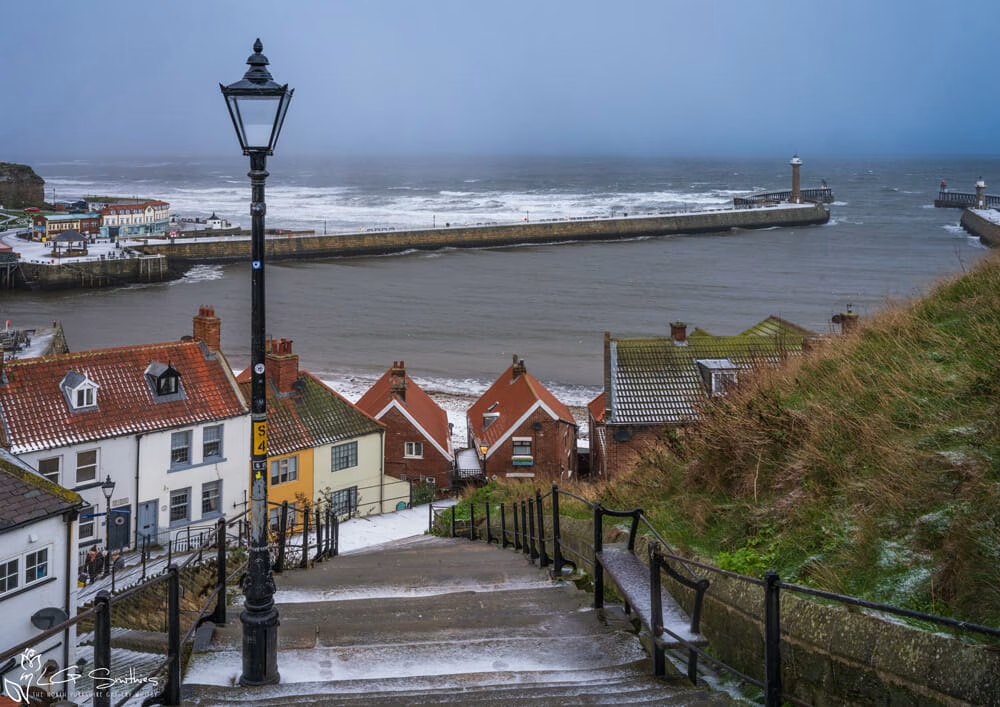
Winter can produce some of the most atmospheric photographs of Whitby's piers, particularly after a fresh fall of snow. One of my favourite viewpoints is the classic view from the 199 Steps, where a wide-angle lens allows you to include not only the famous steps but also Whitby Harbour, the harbour entrance and both pier extensions in the same composition. It's a wonderful way of capturing several of Whitby's most iconic landmarks within a single photograph.
The photograph below was taken shortly after a light snowfall and perfectly demonstrates this viewpoint. The snow-covered 199 Steps lead your eye through the scene towards Whitby Harbour, while both the East and West Pier extensions frame the entrance to the North Sea in the distance. It's a composition that works particularly well in winter, showing how a little snowfall can transform an already iconic view into a classic Whitby winter photograph.
Sunrise Over Whitby from the West Pier
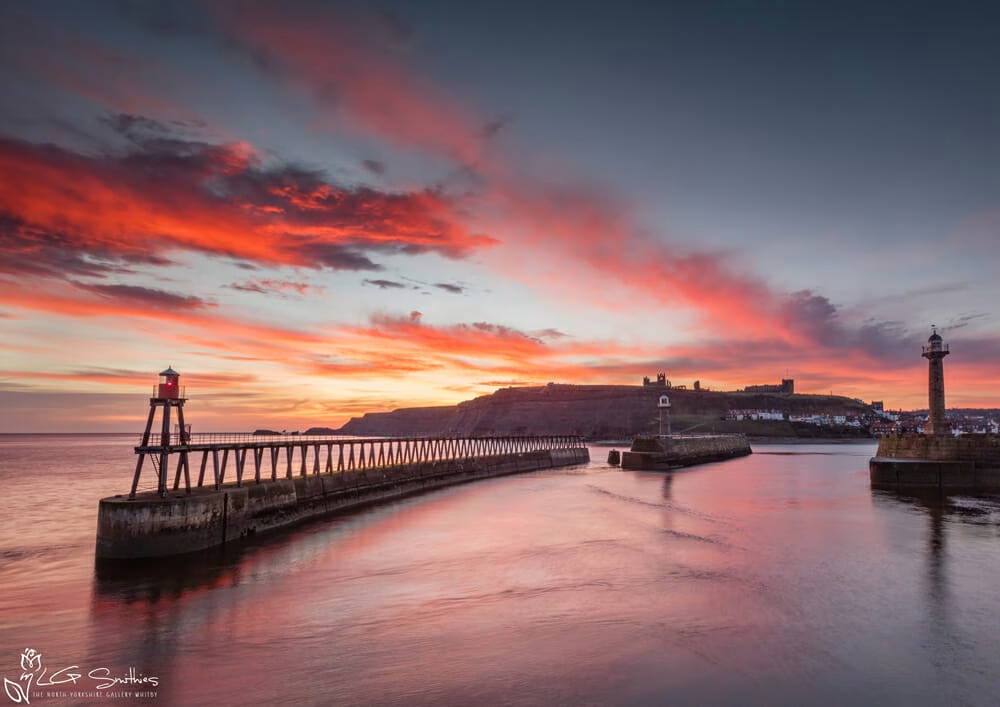
One of my favourite winter photography locations is the West Pier, looking back across the harbour entrance towards the East Pier and Whitby itself. During the winter months, the sun rises from behind the East Cliff and Whitby Abbey, often filling the dawn sky with spectacular reds, oranges and purples before the sun appears above the horizon. From this viewpoint, both piers naturally lead your eye back towards the town, creating one of Whitby's most beautiful sunrise compositions.
The photograph below captures exactly why this is such a rewarding winter location. Looking from the West Pier towards the East Pier, the colourful dawn sky glows behind Whitby Abbey and the East Cliff, while the harbour entrance and both pier extensions create strong leading lines into the scene. It's one of the finest places in Whitby to photograph a winter sunrise and a viewpoint I'd highly recommend to anyone visiting the town with a camera.
Whitby Piers in Early Spring
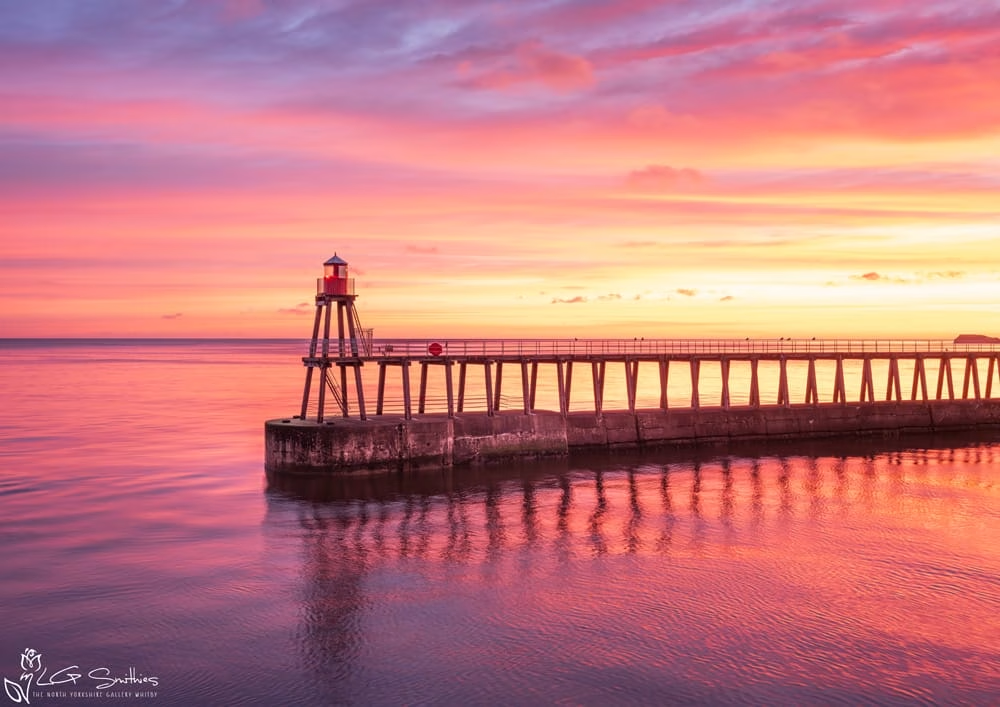
The same viewpoint continues to produce beautiful photographs as winter gives way to early spring. Although the sunrise gradually moves further out towards the North Sea, the dawn colours can still be spectacular when viewed from the West Pier looking back towards the East Pier and Whitby. The changing position of the sun creates a slightly different composition, but the combination of the harbour entrance, both pier extensions and the historic skyline remains every bit as rewarding.
The photograph below shows this classic spring viewpoint, looking from the West Pier across to the East Pier with Whitby rising behind. The soft morning colours illuminate the sky as the sun begins to edge closer to the sea, creating a peaceful and atmospheric scene. It's another excellent example of how returning to the same location throughout the year can produce completely different photographs as the seasons and the light continue to change.
Summer Photography on Whitby's West Pier Extension
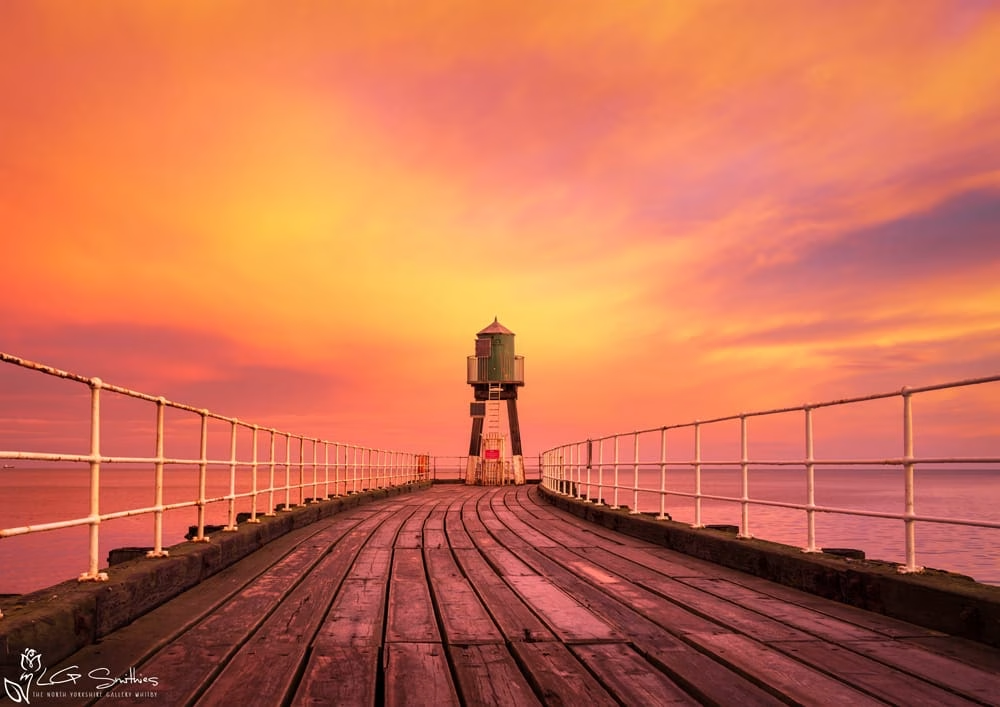
One of my favourite places to photograph Whitby's piers during the summer is from the West Pier extension itself. Looking along the length of the extension, the huge oak timbers that form the deck create strong leading lines towards the end of the pier, while the traditional white cast iron railings add character and help frame the composition. It's a simple photograph, but one that really captures the craftsmanship and history of Whitby's famous piers.
The photograph below shows this classic summer viewpoint from the West Pier extension. The warm evening light and colourful sky beyond the end of the pier add depth and atmosphere, while the rich textures of the weathered oak timbers contrast beautifully with the white railings. It's a composition that works particularly well during the summer months, when the longer evenings often produce colourful skies over the North Sea and create one of the most attractive photographs of Whitby's historic pier.
Sunrise Over Whitby Piers from West Cliff
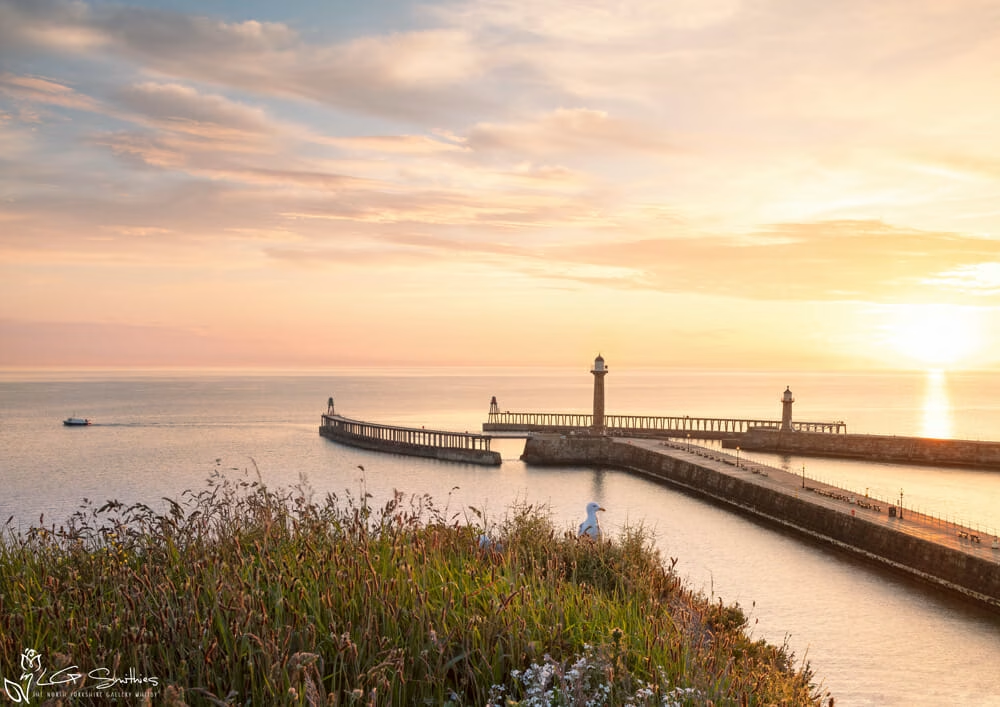
Another wonderful place to photograph Whitby's piers during the summer is from West Cliff, close to the Captain Cook statue and the famous Whitby Whalebones. From this elevated viewpoint, you can look down across the harbour entrance as the sun rises over the North Sea, creating beautiful morning colours that perfectly complement the East and West Piers. It's a peaceful location in the early hours and one that offers a completely different perspective from photographing the piers at sea level.
The photograph below captures one of those memorable summer mornings. The rising sun fills the sky with warm colour as it climbs above the sea, while Whitby's two piers stretch out into the North Sea beneath the colourful dawn sky. If you look closely, you'll also spot a curious seagull sitting quietly in the long grass, seemingly watching me as I waited for the perfect light. Little moments like this are one of the reasons I enjoy photographing Whitby at sunrise, when the town is still waking up and nature often becomes part of the photograph.
Summer Sunset Over Whitby Piers
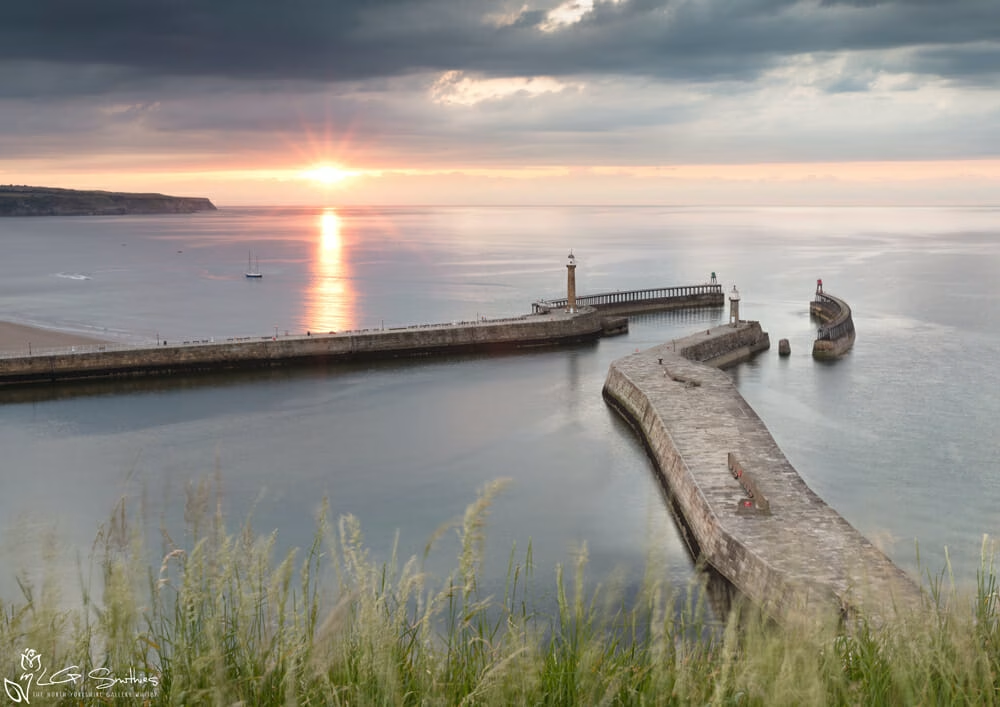
One of the finest summer viewpoints of Whitby's piers is from the footpath that leads through St Mary's Churchyard towards the edge of the East Cliff, above Henrietta Street. From this elevated position, you're rewarded with a spectacular panoramic view across the harbour entrance, the East and West Piers and the Yorkshire coastline stretching away towards Sandsend and Kettleness. It's a viewpoint that really comes into its own during the summer months.
The photograph below captures this beautiful summer sunset, with the sun setting out over the sea beyond Whitby's piers. From this location, the warm evening light illuminates the coastline while the piers lead your eye towards the glowing horizon. This composition is only possible during the summer, when the sun sets far enough to the north-west to align perfectly with the view from St Mary's Churchyard. It's one of my favourite places to photograph Whitby's piers and well worth the walk up to the churchyard on a clear summer evening.
Whitby Piers in Autumn
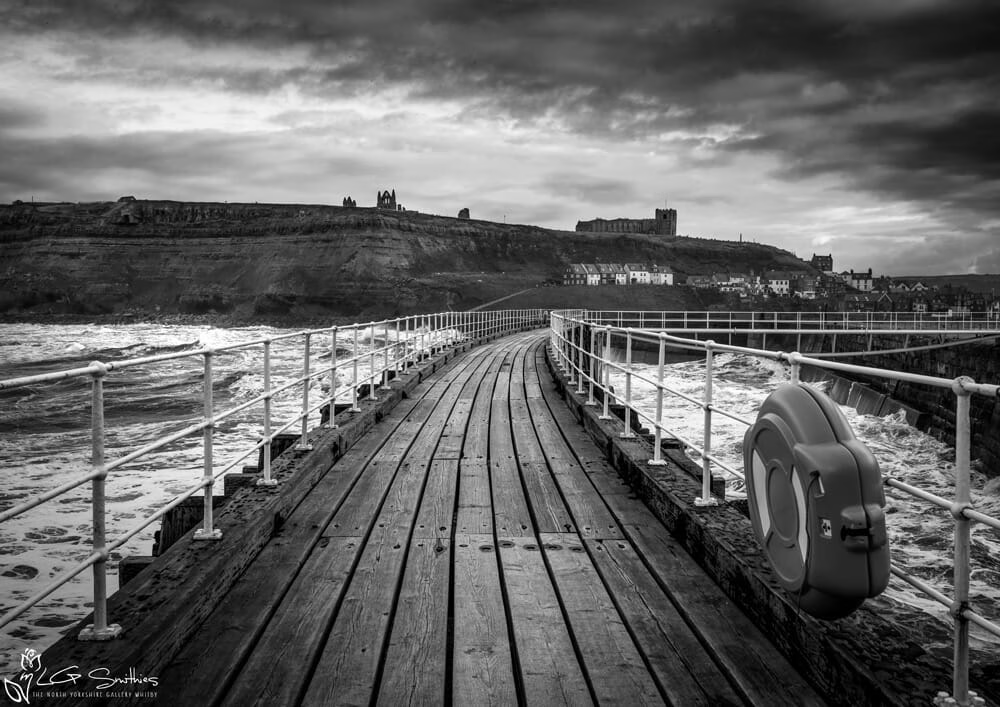
Autumn sees the return of more energetic seas around Whitby, creating excellent opportunities for dramatic coastal photography. As the weather becomes more unsettled, waves begin breaking against the piers once again, adding movement and atmosphere to photographs. If you're photographing during these conditions, always put safety first. The council will often close sections of the piers during severe weather, and these restrictions should always be respected. Even when the piers remain open, it's important to stay well away from large waves and never take unnecessary risks for the sake of a photograph.
The photograph below was taken from the East Pier extension, looking back towards Whitby as waves crash against the harbour walls beneath Whitby Abbey. This black and white image demonstrates just how effective monochrome photography can be during stormy conditions. I think rough seas have a timeless, nostalgic quality when photographed in black and white, allowing the textures of the waves, the dramatic skies and the strength of the piers to become the focus. You don't need a major storm to create photographs like this—often a brisk autumn sea with moderate waves is all that's required to capture the character and power of Whitby's famous piers.
Whitby Piers in Winter Snow
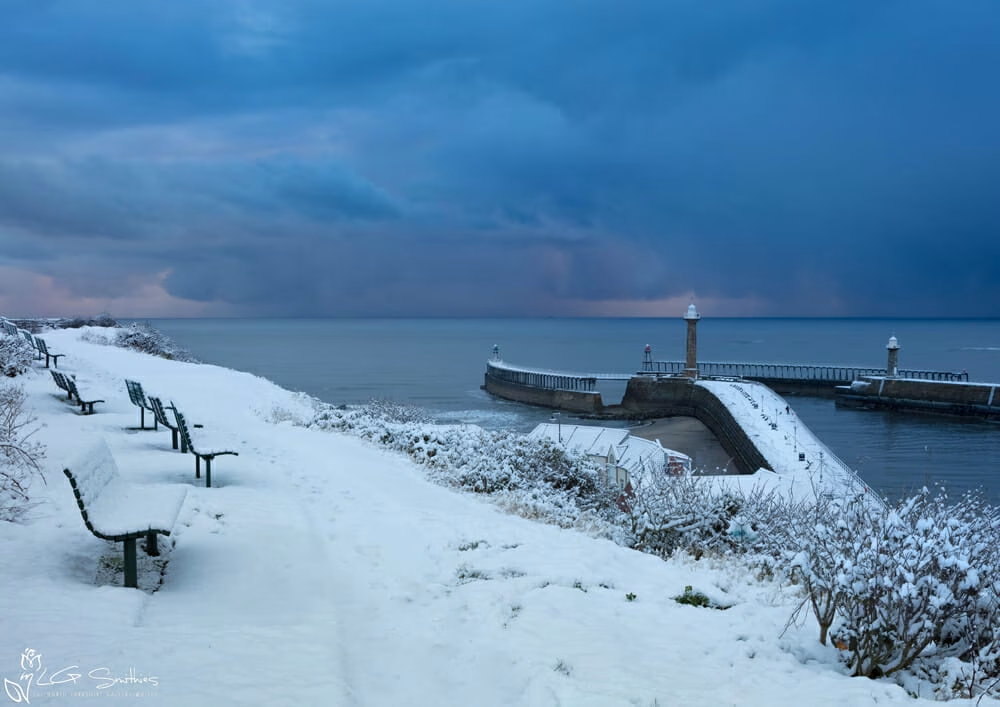
Whenever snow arrives on the Yorkshire Coast, I always try to make the most of it. Fresh snowfall rarely lasts long in Whitby, so when the conditions come together it's worth getting out with your camera as soon as possible. Snow completely transforms the coastline, softening the landscape and giving familiar locations a magical, almost Christmas card feel that simply can't be captured at any other time of year.
The photograph below was taken from above the Khyber Pass, looking across towards Whitby's piers after a fresh blanket of snow. From this elevated viewpoint, the snow-covered rooftops, harbour entrance and both pier extensions combine to create a beautiful winter scene that perfectly captures the atmosphere of Whitby in the snow. It's one of my favourite winter viewpoints and a good example of why I always take advantage of snowfall whenever it arrives on the coast.
Moonrise Over Whitby's West Pier
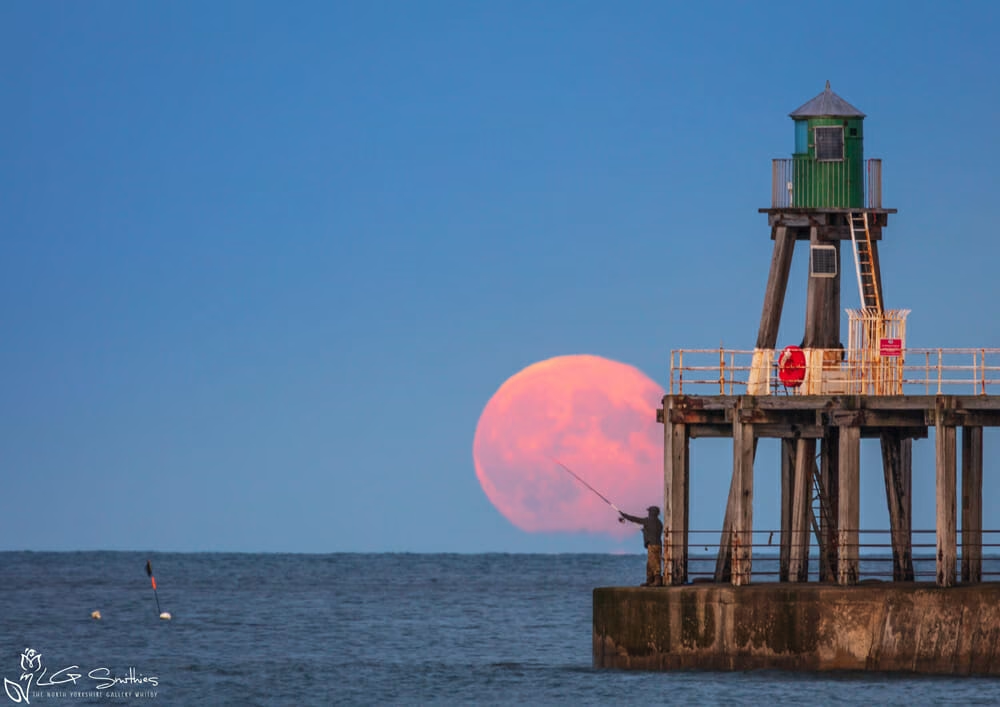
This photograph demonstrates just what's possible with a little planning, the right equipment and a fair amount of patience. Moonrise photography is all about timing, positioning yourself in exactly the right place and using a long telephoto lens to compress the scene, making the moon appear much larger against the landscape. When everything comes together, the results can be truly spectacular.
The photograph below captures the moon rising in perfect alignment with Whitby's West Pier extension. As the moon climbs above the horizon, its enormous size is emphasised by the compressed perspective of the telephoto lens. Then came a wonderful piece of good fortune—a lone angler wandered onto the pier at exactly the right moment, silhouetted perfectly against the rising moon. Judging by the time of year and the activity on the pier, he was probably spinning for mackerel on a summer evening. Although that element of the photograph was pure luck, it's a great example of how careful planning often creates the opportunity, while a little good fortune can turn a very good photograph into a truly memorable one. It's exactly the sort of knowledge and experience I'm hoping to share throughout this guide, helping you understand not just where to stand, but when to be there and why.
Whitby Piers Prints and Canvases
Every photograph featured in this Whitby Piers photography guide has been taken by me over almost 20 years of photographing Whitby. My collection includes colourful sunrises, dramatic sunsets, peaceful moonrises, rough seas, winter snow scenes, black and white photographs and panoramic coastal views, all captured from some of the finest viewpoints around Whitby. Whether you're looking for a premium canvas print, framed print, photographic print, panoramic print, wall art or one of our Yorkshire gifts, you'll find a wide selection celebrating Whitby's famous East and West Piers throughout the seasons.
Browse our Whitby Piers collection below and discover your favourite photograph, available as beautifully handcrafted wall art to bring a little of the Yorkshire Coast into your home.
Discover our collection of Whitby Piers canvas prints, framed prints, panoramic prints and photographic prints below, and find the perfect view of Whitby's famous East and West Piers for your home or office.
Frequently Asked Questions About Whitby Piers Photography
Where are Whitby's piers?
Whitby's East and West Piers stand at the entrance to Whitby Harbour, where the River Esk meets the North Sea. Dating back hundreds of years, they were built to protect the harbour from storms and continue to play an important role today while also being two of Whitby's most recognisable landmarks.
Why are Whitby's piers so famous?
Whitby's piers are famous for their maritime history, their striking appearance and the protection they have provided to the harbour for centuries. They are also one of the most photographed locations in Whitby, offering spectacular views of the harbour, Whitby Abbey, the lighthouse and the Yorkshire coastline.
Where is the best place to photograph Whitby's piers?
There are many excellent viewpoints. Some of my favourites are West Cliff, the East Cliff near St Mary's Church, and the piers themselves. Each location offers a different perspective, whether you're looking back towards Whitby Harbour or out across the North Sea.
When is the best time to photograph Whitby's piers?
Every season offers something different. Winter produces beautiful sunrise photographs, spring brings softer light, summer offers colourful sunsets and long evenings, while autumn is perfect for dramatic seas, storms and colourful skies.
Can you photograph sunrise from Whitby's piers?
Yes. My favourite sunrise photographs are taken during the winter months from the West Pier, looking back across the East Pier towards Whitby. Around the winter solstice, the sun rises behind Whitby Abbey and the East Cliff, filling the sky with beautiful colours and creating one of the finest sunrise views in the town. Later in the season, the same viewpoint produces equally impressive photographs, with the East Pier extension silhouetted against colourful dawn skies.
Can you photograph sunset from Whitby's piers?
Absolutely. My favourite sunset viewpoint is from the footpath through St Mary's Churchyard, looking across both piers towards Sandsend and Kettleness. Around the summer solstice, the sun sets over the North Sea beyond the harbour entrance, creating one of Whitby's finest summer sunset photographs.
Are Whitby's piers good for long-exposure photography?
Yes. The sea around Whitby's piers is ideal for long-exposure photography, especially when there is movement in the water. I particularly enjoy converting these photographs into black and white, as I think rough seas have a timeless quality. One thing to bear in mind is that boats entering or leaving the harbour will move during long exposures, so it's often worth waiting for a quiet moment.
Can you photograph moonrises from Whitby's piers?
Yes. With careful planning, it's possible to align the moon perfectly with the pier extensions. A telephoto lens helps compress the scene, making the moon appear much larger and creating some spectacular night-time photographs.
Are Whitby's piers good for storm photography?
Definitely, but safety should always come first. I would never recommend going onto the piers themselves during severe weather. Instead, photograph them from safe viewpoints such as the top of Henrietta Street or West Cliff, where you can capture waves crashing over the piers and harbour entrance without putting yourself at unnecessary risk. I also think storm photographs often work exceptionally well in black and white.
Can you photograph Whitby's piers in the snow?
Yes, and they're absolutely beautiful after fresh snowfall. Snow on the Yorkshire Coast is relatively rare and usually doesn't last long, so if you're lucky enough to experience it, make the most of the opportunity while it lasts.
What camera lens is best for photographing Whitby's piers?
There isn't a single best lens. Wide-angle lenses are ideal for landscapes and harbour scenes, while longer lenses are perfect for moonrises, distant details and compressing the perspective. The right lens depends entirely on the photograph you're trying to create.
Where can I park to photograph Whitby's piers?
There are several convenient parking locations around Whitby. I usually use the parking on West Cliff or the English Heritage car park near Whitby Abbey, both of which provide easy access to many of my favourite viewpoints.
Can you photograph Whitby Regatta from the piers?
Yes. Whitby Regatta provides fantastic photography opportunities, particularly during the evening fireworks display. Looking back towards the town with the fireworks exploding above the harbour creates one of the most colourful and exciting photographs of the year.
Can you photograph Whitby Harbour from the piers?
Absolutely. Since the restoration of the East Pier extension, you can once again walk to the end of both piers and enjoy fantastic views back towards Whitby Harbour, the marina, the Swing Bridge and the fishing fleet. It's one of the best places to appreciate the scale and beauty of the harbour.
Why do photographers love Whitby's piers?
For me, it's because there are very few places quite like Whitby. The combination of the historic harbour, the East and West Piers, the fishing boats, Whitby Abbey and the dramatic Yorkshire coastline creates endless photographic opportunities throughout the year. No matter how many times I visit, there's always something new to photograph.
Where can I buy photographs of Whitby's piers?
Every photograph featured in this guide has been taken by me over almost 20 years of photographing Whitby. They are available to purchase directly from this website or by visiting the North Yorkshire Gallery on Church Street in Whitby. The collection includes sunrise, sunset, moonrise, snowfall, storm and Regatta photographs, available as premium canvas prints, framed prints, photographic prints, panoramic prints, wall art and a wide range of Yorkshire gifts.
Whitby Swing Bridge Photography
Whitby Swing Bridge is one of the town's most recognisable landmarks and has connected the east and west sides of the harbour for generations. Watching the bridge open to allow fishing boats, yachts and other vessels to pass through remains one of Whitby's most popular attractions, with visitors gathering throughout the day to watch this impressive piece of engineering in action. It has become an iconic feature of the harbour and a favourite subject for photographers in every season.
Having photographed Whitby Swing Bridge for almost 20 years, I've discovered that some viewpoints stand out above the rest. There are countless ways to photograph the bridge, from elevated viewpoints across Whitby, from the harbour itself or by standing directly on Church Street looking along the bridge. However, in my opinion, the two finest locations are from Khyber Pass and Endeavour Wharf. Each viewpoint offers a completely different perspective and comes into its own at different times of the year as the light changes with the seasons.
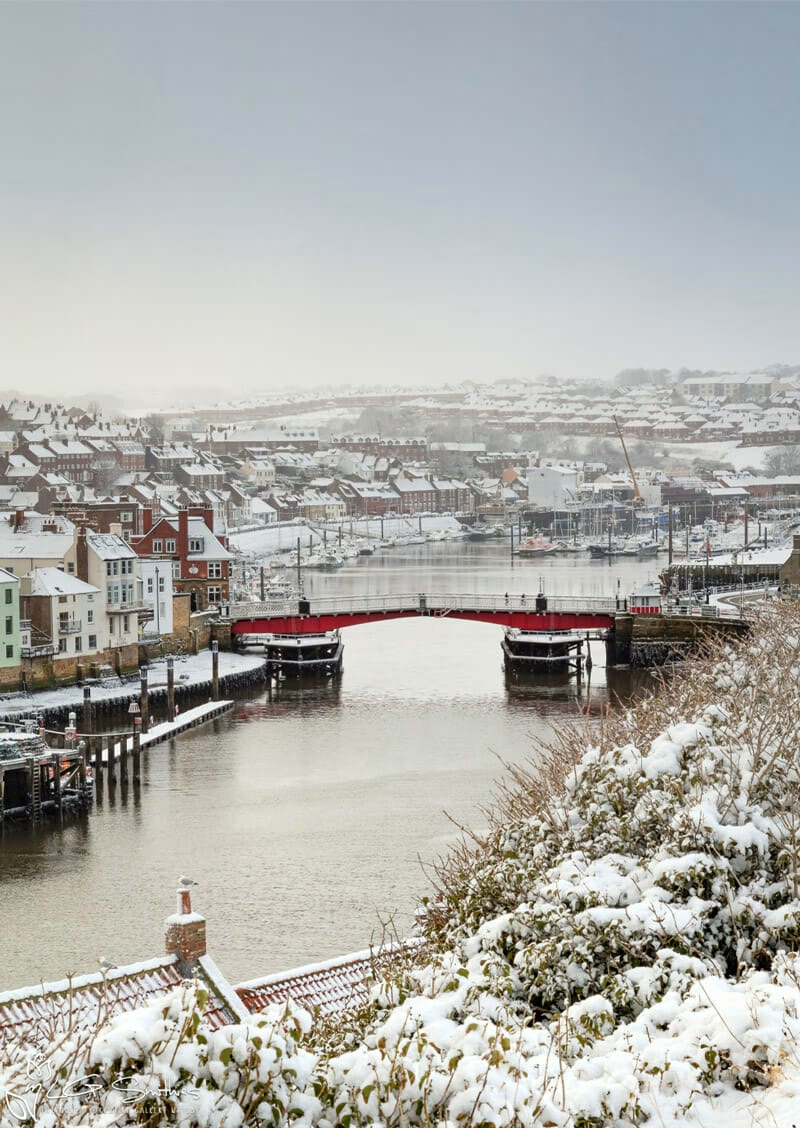
Below, I'll show you some of my favourite photographs of Whitby Swing Bridge, explain why these viewpoints work so well and share practical advice on the best times of year, lighting conditions and camera positions to help you capture this iconic Whitby landmark for yourself. Every photograph featured is also available to purchase as a premium canvas print, framed print, photographic print, panoramic print, wall art and a range of Yorkshire gifts from the North Yorkshire Gallery.
Winter Sunrise at Whitby Swing Bridge
One of my favourite photographs of Whitby Swing Bridge can only really be captured around the winter solstice. This viewpoint is taken from the Khyber Pass, looking across Whitby Harbour towards the Swing Bridge as the sun rises behind the East Cliff. At this time of year, the position of the sunrise is almost perfect, filling the sky with beautiful reds, oranges and purples while illuminating the harbour and surrounding buildings. It's one of the finest winter sunrise compositions in Whitby.
The photograph below shows exactly why this viewpoint is so special. Taken from the Khyber Pass, the colourful winter sunrise provides a stunning backdrop to Whitby Swing Bridge and the harbour below. As the year progresses towards spring and summer, the sunrise gradually moves further out towards the North Sea, meaning this particular composition is no longer possible. If you want to capture this classic Whitby sunrise, the weeks around the winter solstice are undoubtedly the best time to visit.
Whitby Swing Bridge at Night
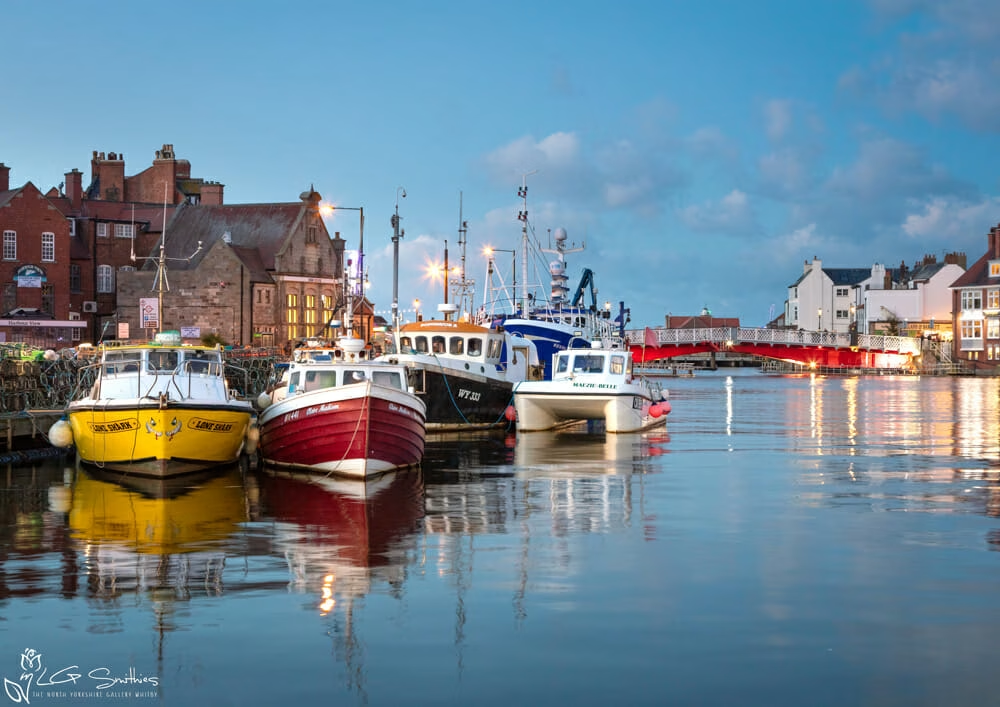
Although spring doesn't offer the same dramatic sunrise and sunset opportunities as other times of the year, it more than makes up for it with beautiful conditions for night photography. On a calm spring evening or in the early hours of the morning, the harbour often becomes wonderfully still, creating perfect reflections that transform the Swing Bridge into an entirely different subject. It's proof that you don't always need colourful skies to produce a memorable photograph.
The photograph below was taken from beneath Endeavour Wharf, looking across the calm harbour towards Whitby Swing Bridge. To the left, the fishing boats lie peacefully moored alongside the harbour near the Angel Hotel, while the illuminated Swing Bridge sits to the right of the frame. The still water mirrors the lights from the bridge and surrounding buildings, creating beautiful reflections that add depth and atmosphere to the scene. It's one of my favourite ways to photograph the Swing Bridge and demonstrates just how rewarding Whitby can be on a quiet, calm spring night.
Whitby Regatta and Fireworks Photography
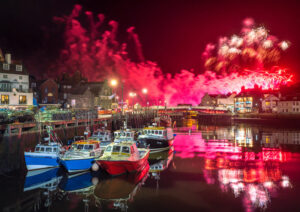
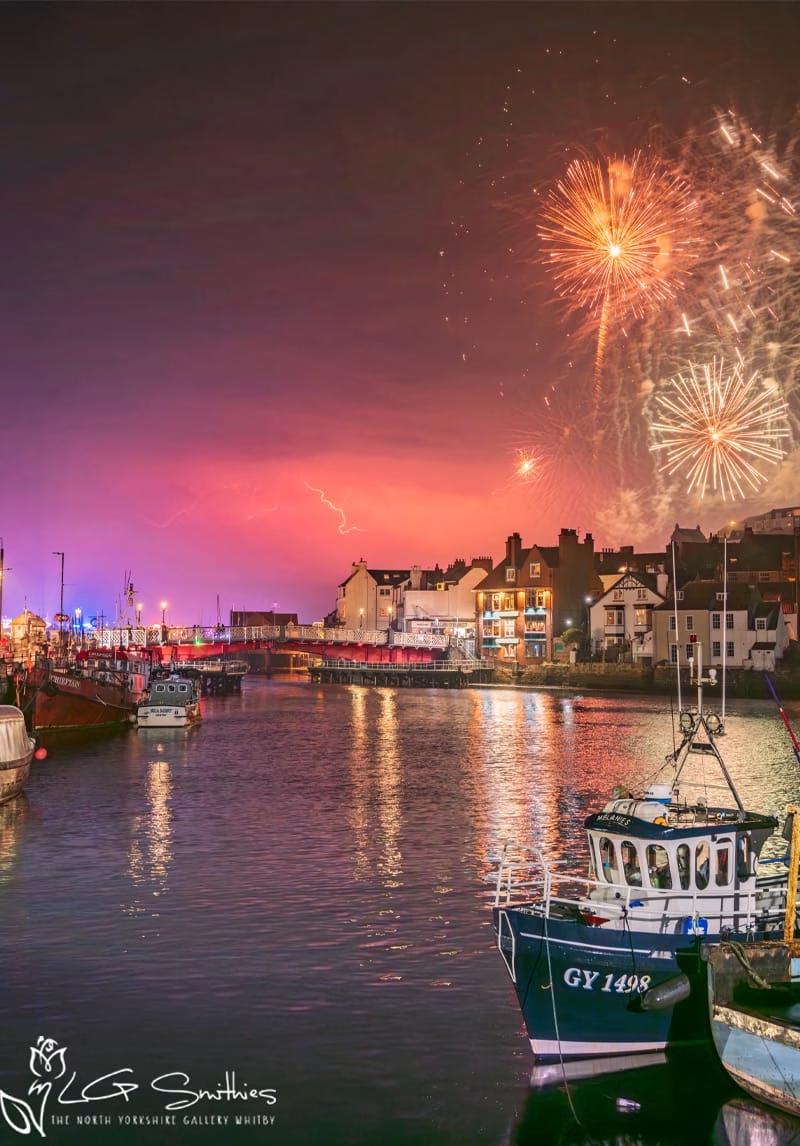
One of the highlights of Whitby's summer calendar is the famous Whitby Regatta. Every August, the harbour comes alive with thousands of visitors enjoying sailing events, entertainment and the spectacular evening fireworks display. For photographers, it's one of the best opportunities of the year to capture Whitby Swing Bridge alongside colourful fireworks reflected in the calm waters of the harbour.
The photograph below captures a particularly memorable Whitby Regatta evening, with the fireworks exploding above the harbour while Whitby Swing Bridge and the fishing boats provide a perfect foreground. What made this image even more extraordinary was the arrival of a thunderstorm during the display, with lightning striking in the distance as the fireworks lit up the night sky. It was one of those rare occasions where careful planning put me in the right place, but sheer good fortune created a photograph that simply couldn't be repeated. Moments like this are a reminder that, while preparation is essential in photography, sometimes the most unforgettable images are the ones nature creates for you.
Autumn Evening Photography of Whitby Swing Bridge
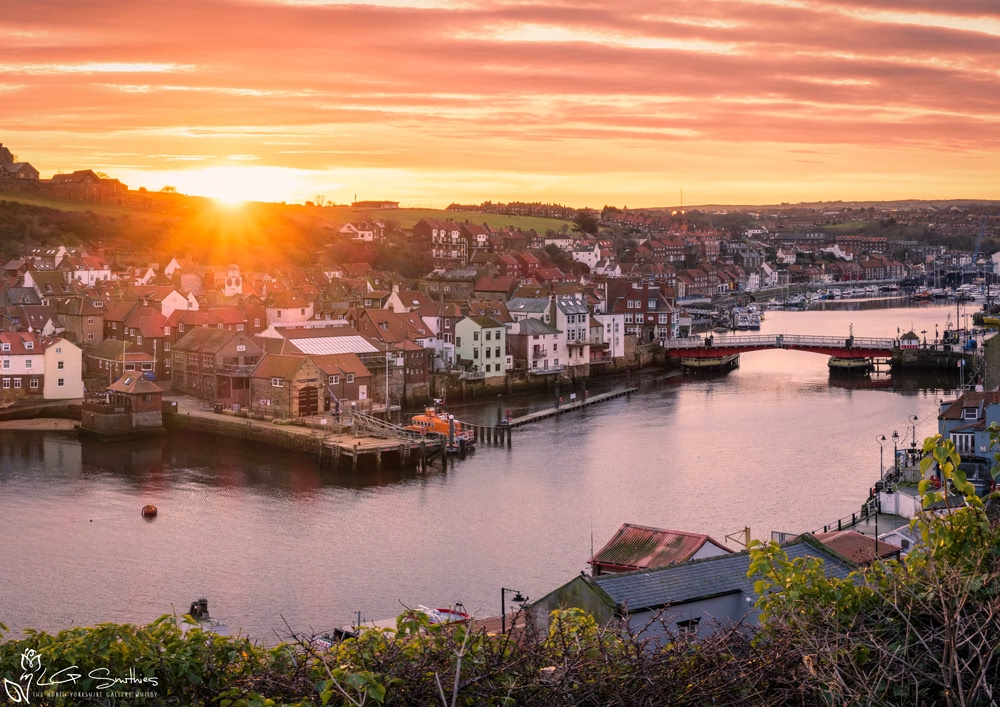
My favourite viewpoint for photographing Whitby Swing Bridge is from the Khyber Pass, looking down across the harbour towards the bridge. During late summer and into autumn, many photographers naturally concentrate on photographing in the direction of the setting sun, assuming that's where all the best colour will be. While that's often true, it's always worth turning around and checking the sky behind you. Quite often, the most spectacular colours appear on the opposite side of the sky, illuminated by the setting sun from beyond the horizon.
The photograph below is a perfect example of this. Taken from the Khyber Pass on a calm autumn evening, the setting sun was actually behind me, yet it illuminated the opposite side of Whitby with beautiful purple and pink tones that filled the sky above the Swing Bridge. The calm harbour reflected these colours perfectly, creating one of my favourite photographs of the bridge. One of the best pieces of advice I can give is never to assume there's nothing to photograph just because the sun isn't directly in front of you. Some of the most beautiful colours often appear behind you, so always keep looking around and let the light guide your composition.
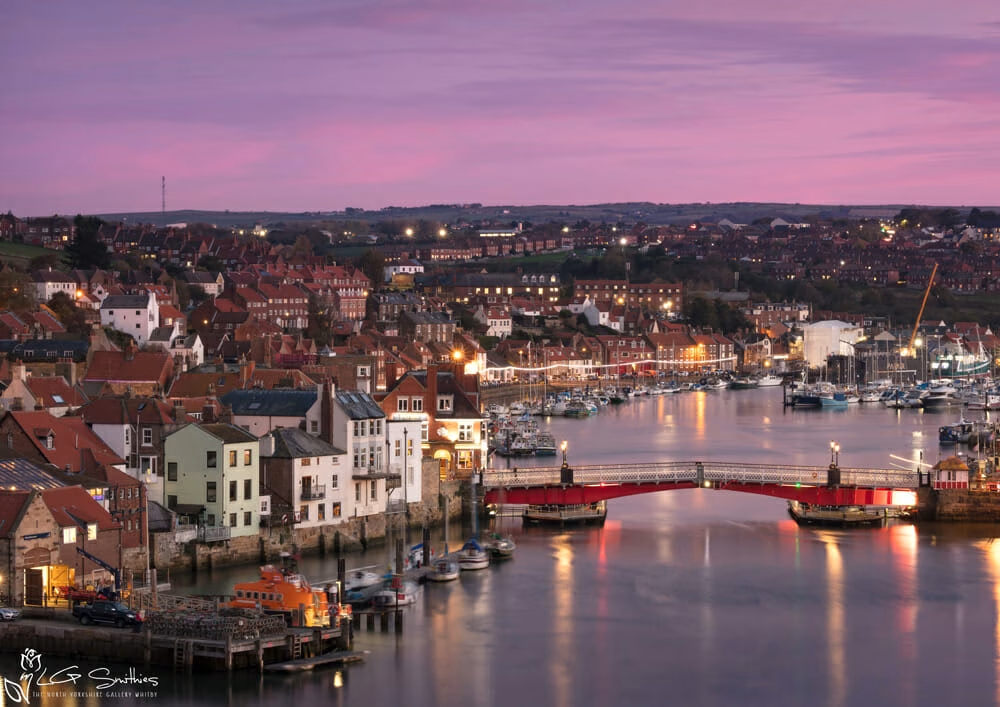
📷 Photographer's Tip
Don't always point your camera towards the sun. Some of the most spectacular colours appear in the sky behind you, especially around sunrise and sunset. While everyone is focused on photographing the sun itself, it's often worth turning around to see what the light is doing elsewhere. This photograph of Whitby's Swing Bridge, with its rich purple sky, is a perfect example of why it's always worth looking in every direction before packing your camera away.
Whitby Swing Bridge in Winter Snow
Winter is always a rewarding time to photograph Whitby, particularly when fresh snow arrives. Snowfall on the Yorkshire Coast is never guaranteed and rarely lasts for long, so whenever the opportunity presents itself, I always make the most of it. A fresh covering of snow transforms the harbour into a completely different scene, giving familiar landmarks a timeless, peaceful atmosphere that's impossible to recreate at any other time of year.
The photograph below was taken from the Khyber Pass, looking back across Whitby towards the Swing Bridge after a fresh fall of snow. The town is blanketed in white, with the Swing Bridge providing the focal point as it sits amongst the snow-covered rooftops and harbour. I've photographed this scene on several occasions over the years, but for this particular image I chose a black and white treatment to enhance its nostalgic feel. I think monochrome suits winter scenes beautifully, giving the photograph the appearance of a classic Whitby image from years gone by while emphasising the textures, contrast and atmosphere created by the fresh snowfall.
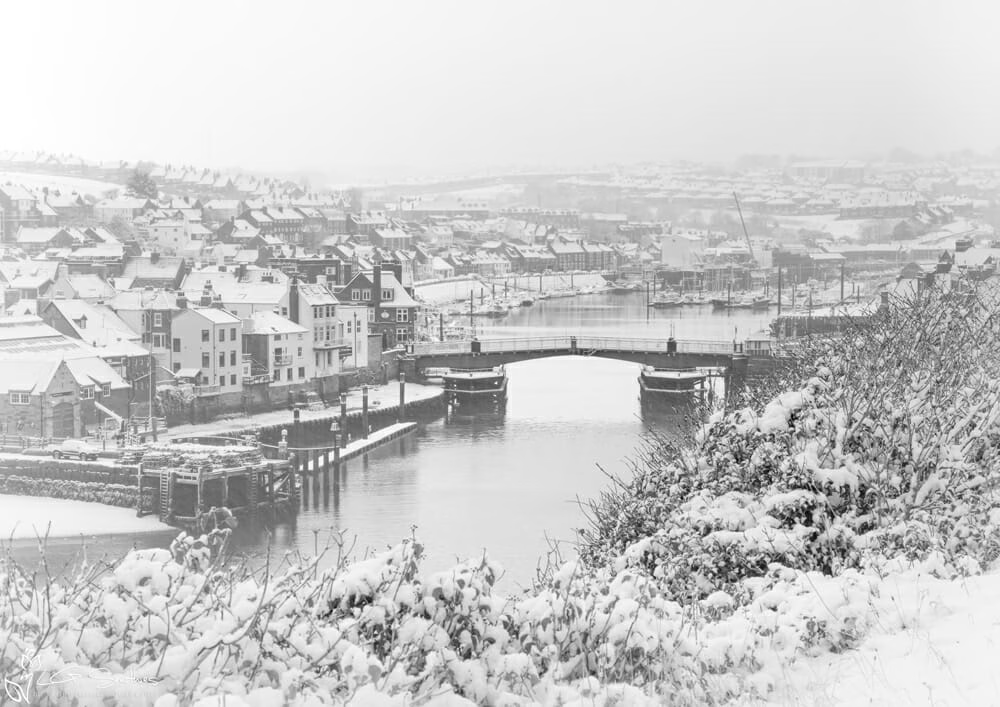
Moonrise Over Whitby Swing Bridge
I thought this would be the perfect photograph to finish my guide to photographing Whitby Swing Bridge. It demonstrates that some of the most memorable images come from planning ahead and understanding how the moon moves throughout the year. Unlike the sun, the moon doesn't rise in the same place every time, so a little preparation is needed to work out where it will appear and to position yourself accordingly.
The photograph below was taken from the Khyber Pass, looking down across Whitby Harbour towards the Swing Bridge as the full moon rose above the town. On this occasion, everything came together perfectly, with the moon aligning beautifully above the harbour to create a striking night-time composition. Combined with the lights reflecting across the calm water, it produced one of my favourite photographs of Whitby Swing Bridge and a fitting reminder that some of the best images are captured long after the sun has gone down.
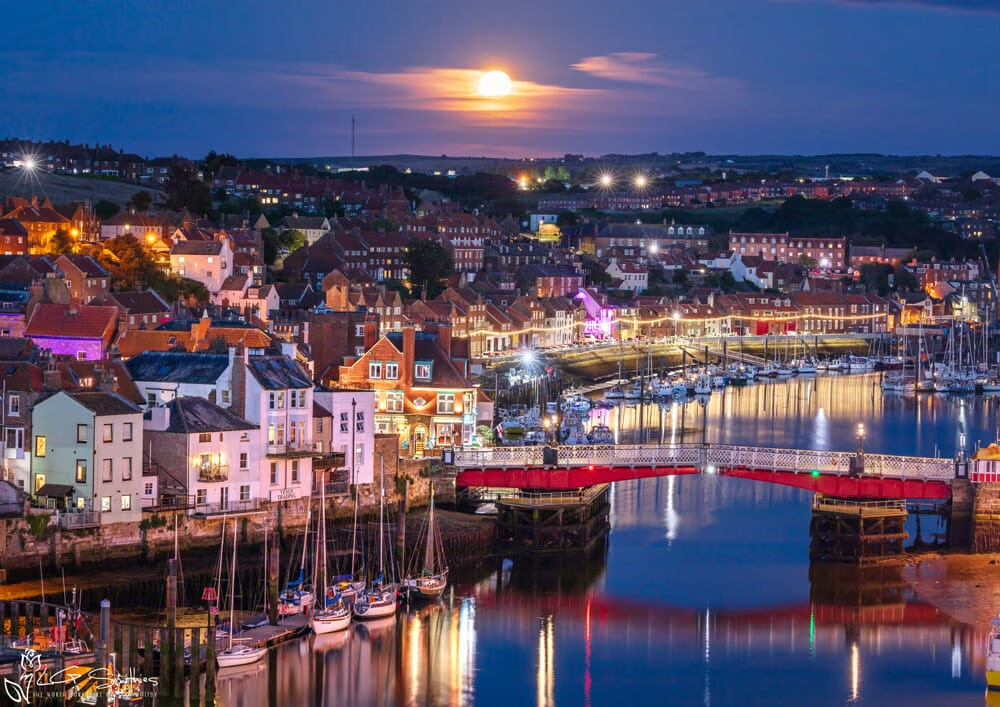
Whitby Swing Bridge Prints and Canvases
Every photograph featured in this Whitby Swing Bridge photography guide has been taken by me over almost 20 years of photographing Whitby. My collection includes colourful sunrises, peaceful moonrises, dramatic winter snow scenes, fireworks during Whitby Regatta, atmospheric night photography and panoramic views from some of the town's finest viewpoints. Whether you're looking for a premium canvas print, framed print, photographic print, panoramic print, wall art or one of our Yorkshire gifts, you'll find a wide selection celebrating one of Whitby's most iconic landmarks.
Browse our Whitby Swing Bridge collection below and discover your favourite view of this famous bridge, available as beautifully handcrafted wall art to enjoy for years to come.
Discover our collection of Whitby Swing Bridge canvas prints, framed prints, panoramic prints and photographic prints below, and bring one of Whitby's most iconic landmarks into your home.
Frequently Asked Questions About Whitby Swing Bridge Photography
Why is Whitby Swing Bridge so famous?
Whitby Swing Bridge is one of the town's most recognisable landmarks. It opens to allow fishing boats, yachts and other vessels to pass between Whitby Harbour and the marina before closing again to allow traffic and pedestrians to cross. Watching the bridge open has become one of Whitby's most popular attractions and makes it a favourite subject for photographers.
Where is the best place to photograph Whitby Swing Bridge?
For me, there are two outstanding viewpoints. My favourite is from the Khyber Pass, looking down across Whitby Harbour towards the bridge. The second is from Endeavour Wharf, where you can capture the bridge alongside the fishing boats and harbour. There are plenty of other good viewpoints around Whitby, but these are the two locations I return to time and time again.
When is the best time to photograph Whitby Swing Bridge?
The best time depends on the type of photograph you're looking for. During the winter months, I prefer photographing from the Khyber Pass, where the sunrise produces beautiful colours behind Whitby Harbour. During the summer, I enjoy photographing from Endeavour Wharf, where the early morning light creates wonderful colours beyond the harbour. Every season offers something different, from colourful dawns and sunsets to snow, moonrises and fireworks.
Can you photograph sunrise at Whitby Swing Bridge?
Yes. One of my favourite sunrise photographs is taken during the winter from the Khyber Pass. Around the winter solstice, the rising sun fills the sky with beautiful colours behind Whitby Harbour, creating one of the finest sunrise compositions of the Swing Bridge.
Can you photograph Whitby Swing Bridge at night?
Absolutely. Whitby Swing Bridge is an excellent subject for night photography. Calm evenings produce beautiful reflections in the harbour, while the bridge itself is illuminated, creating striking photographs throughout the year. Special events such as Whitby Regatta and the Whitby Abbey Illuminations provide even more opportunities for memorable night photographs.
Can you photograph moonrises over Whitby Swing Bridge?
Yes. With careful planning, it's possible to photograph the moon rising above Whitby Swing Bridge. Because the moon doesn't rise in the same position every month, it's worth checking its direction in advance. When everything aligns, it creates one of the most rewarding night photographs in Whitby.
Is Whitby Swing Bridge good for long-exposure photography?
Yes, it's an excellent location for long-exposure photography. Just bear in mind that boats moored in the harbour naturally move with the tide, so they may appear slightly blurred during longer exposures. That's all part of photographing an active harbour and can often add character to the image.
What camera lens is best for photographing Whitby Swing Bridge?
A reasonably wide-angle lens is my preferred choice, particularly from Endeavour Wharf, as it allows you to capture not only the Swing Bridge but also the surrounding harbour, fishing boats and waterfront. The wider scene often tells a much better story than photographing the bridge on its own.
Can you photograph Whitby Swing Bridge during Whitby Regatta?
Yes. Whitby Regatta provides one of the best opportunities of the year to photograph the Swing Bridge. The evening fireworks exploding above the harbour create spectacular images, especially when they're reflected in the calm water around the bridge.
Can you photograph Whitby Swing Bridge in the snow?
Definitely. Fresh snowfall transforms Whitby Harbour, and the Swing Bridge looks particularly beautiful when viewed from the Khyber Pass or Endeavour Wharf. Snow-covered rooftops, boats and reflections combine to create some of my favourite winter photographs.
Where can I park to photograph Whitby Swing Bridge?
For the Endeavour Wharf viewpoint, parking is available nearby in the Co-op car park. If you're photographing from the Khyber Pass, parking is available on West Cliff. Both locations are within a short walk of their respective viewpoints. Parking charges may apply, so it's always worth checking the signs before leaving your vehicle.
Where can I buy photographs of Whitby Swing Bridge?
You can purchase my Whitby Swing Bridge photographs directly from this website or by visiting the North Yorkshire Gallery on Church Street in Whitby. The collection includes sunrise, sunset, moonrise, snowfall and night photographs, available as premium canvas prints, framed prints, photographic prints, panoramic prints, wall art and a wide range of Yorkshire gifts.
Whitby Harbour Photography
Whitby Harbour is the heart of the town and one of the most rewarding places to photograph on the Yorkshire Coast. Surrounded by historic buildings, fishing boats, the famous Swing Bridge and the East and West Piers, the harbour offers an endless variety of photographic opportunities throughout the year. Whether you're interested in peaceful reflections on calm mornings, colourful sunrises, dramatic sunsets, bustling fishing boats or atmospheric night photography, Whitby Harbour always has something different to offer.
Throughout this guide I've already covered a number of photographs that feature Whitby Harbour because, quite simply, it's impossible to photograph Whitby without including it. The harbour forms the centrepiece of many of the town's most iconic views. In this section, I'd like to focus a little more on the harbour itself, highlighting some of my favourite viewpoints and sharing a few photographs that I haven't discussed elsewhere. I'll explain why I like each location, the best times of year to photograph it and the conditions that help create some of my favourite images.
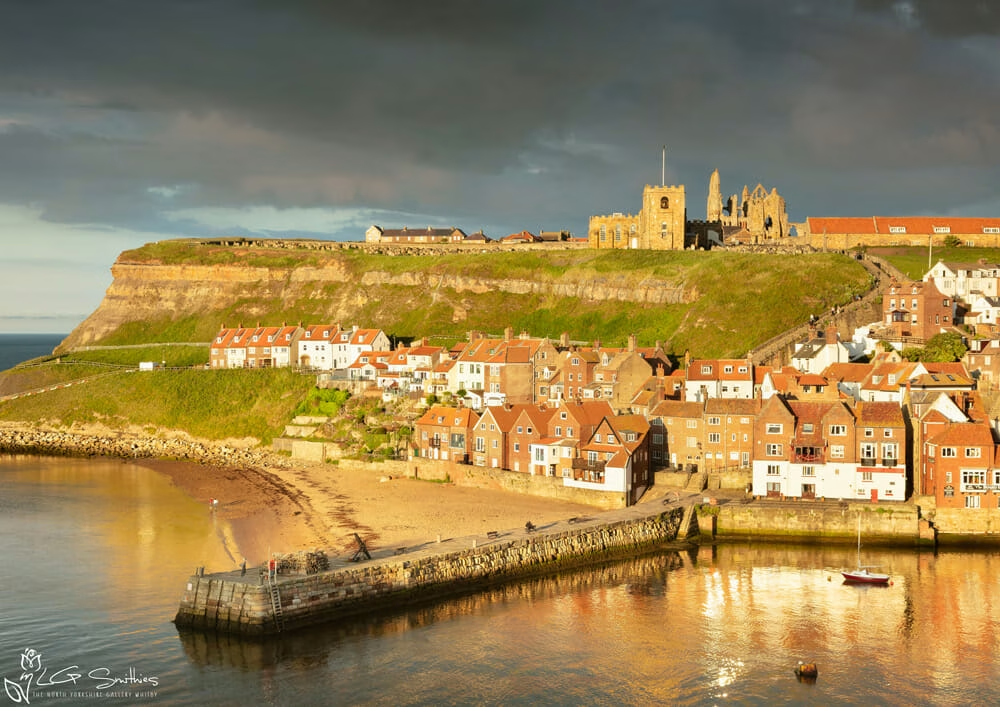
Every photograph featured below is available to purchase as a premium canvas print, framed print, photographic print, panoramic print, wall art and a range of Yorkshire gifts from the North Yorkshire Gallery.
Spring Sunrise Over Whitby Harbour
One of my favourite spring photography locations overlooking Whitby Harbour is from the West Cliff, looking across the Khyber Pass towards Tate Hill Beach, the 199 Steps and Whitby Abbey. As spring progresses, the rising sun appears over the East Cliff, filling the sky with beautiful morning colours while illuminating some of Whitby's most iconic landmarks. From this elevated viewpoint, it's possible to capture much of the harbour in a single photograph, making it one of the finest sunrise locations in the town.
The photograph below captures this beautiful spring sunrise as the first light of the day spreads across Whitby Harbour. Looking over the Khyber Pass, you can see Tate Hill Beach, the harbour, the 199 Steps and Whitby Abbey all bathed in the warm glow of the early morning sun. It's a classic Whitby composition that showcases just how spectacular the harbour can look when the conditions come together on a calm spring morning.
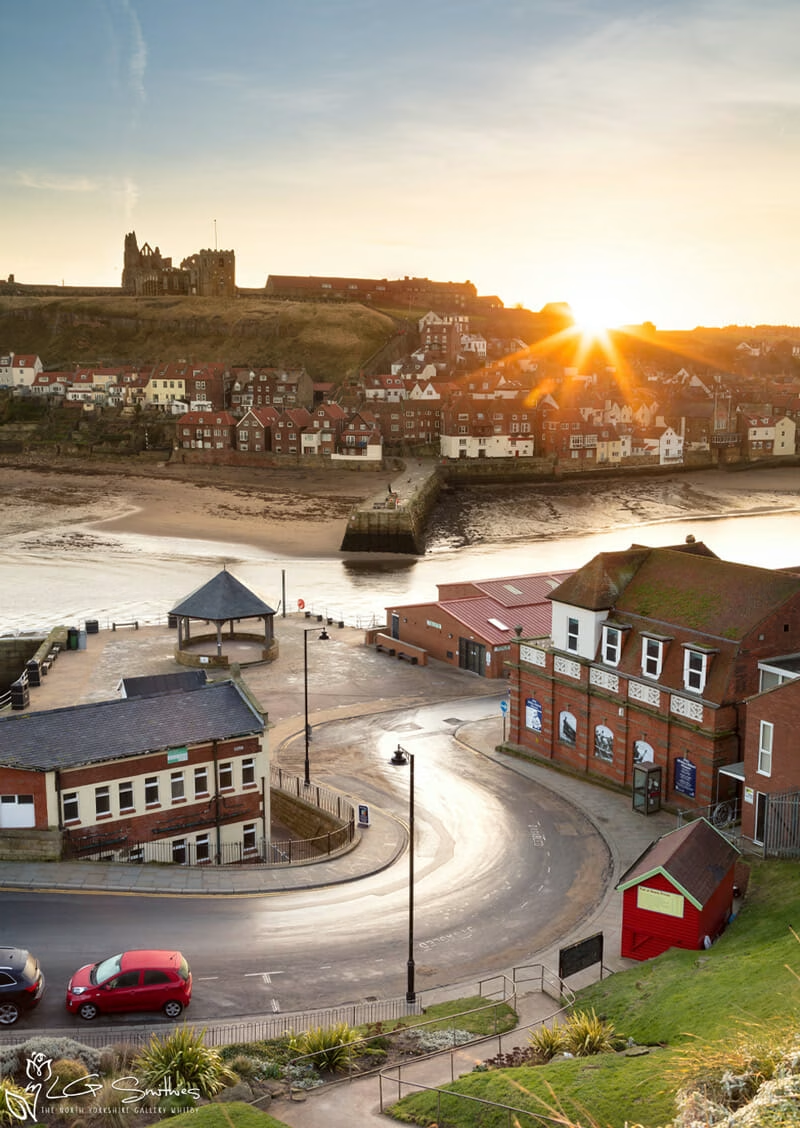
Summer Sunset at Whitby Harbour Mouth
Another beautiful summer photograph to look out for is Whitby Harbour Mouth, where the River Esk meets the North Sea between the East and West Piers. One of my favourite viewpoints is from the East Cliff, near the 199 Steps, looking across the harbour entrance towards the piers. During the summer months, the setting sun can produce wonderful colours over the sea, creating a spectacular backdrop to one of Whitby's most recognisable views.
The photograph below captures a perfect summer evening, with the East and West Piers naturally framing the harbour entrance beneath a colourful sunset sky. Returning to the lifeboat station is the famous Whitby lifeboat, making its way back along the River Esk after being at sea. The combination of the glowing sky, the harbour mouth, the two piers and the RNLI lifeboat creates a photograph that perfectly captures the character and maritime heritage of Whitby Harbour.
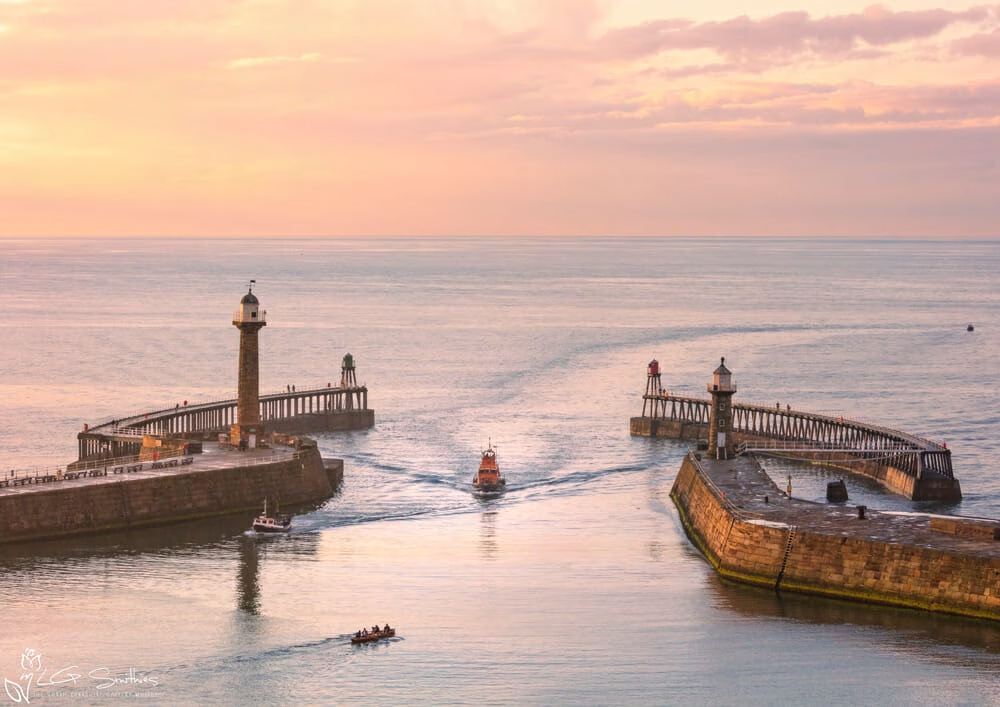
Whitby Harbour Celebrations at Night
This is another of my favourite locations for photographing Whitby Harbour and one that really comes alive during the town's celebrations throughout the summer. Taken from Endeavour Wharf, this viewpoint looks across the harbour towards the fishing boats, historic buildings and the heart of Whitby, making it an excellent location for photographing special events and evening festivities.
The photograph below shows just what's possible from this viewpoint during one of Whitby's celebrations. Fireworks burst above the harbour, their colours reflected beautifully in the calm waters below, creating a spectacular night-time scene. Combined with the moored fishing boats and the lights of the harbour, it captures the atmosphere of Whitby at its very best and demonstrates why Endeavour Wharf remains one of my favourite places to photograph Whitby Harbour after dark
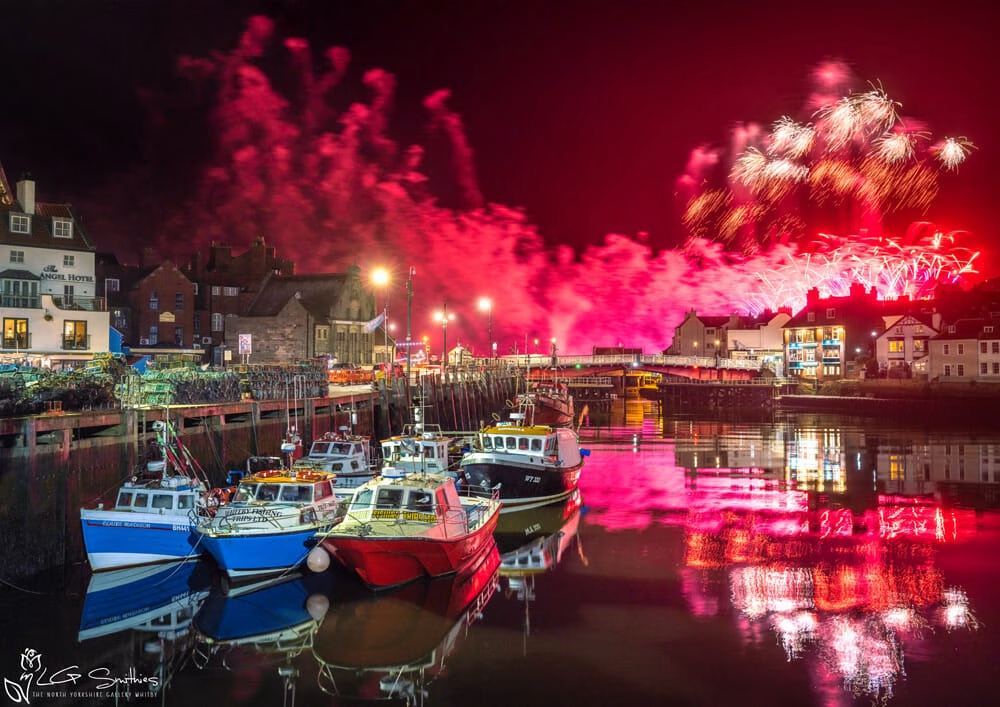
Whitby Harbour and the Abbey Illuminations
Another of my favourite autumn viewpoints overlooking Whitby Harbour is from the New Bridge, looking down across Whitby Marina and the River Esk. This elevated position provides a wonderful view over the boats moored in the marina, and during the autumn it becomes even more special when the famous Whitby Abbey Illuminations take place.
The photograph below captures one of the best reasons to visit this viewpoint during the autumn months. The floodlit Whitby Abbey glows above the town while its colourful reflections shimmer across the calm waters of the River Esk and the marina below. Combined with the moored boats and the lights around the harbour, it creates a beautiful night-time scene and one of my favourite photographs of Whitby Harbour. If you're visiting during the Abbey Illuminations, this is a viewpoint that's well worth adding to your photography list.
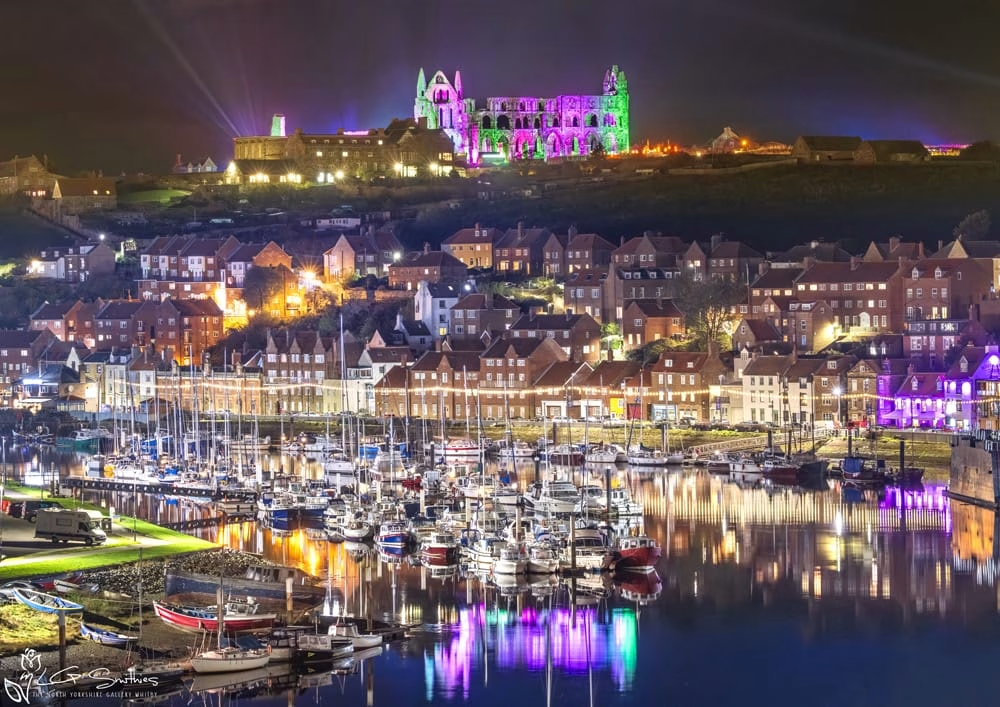
The Northern Lights Over Whitby Harbour
Another wonderful autumn photography opportunity comes as the nights begin to draw in. With longer hours of darkness, your chances of seeing the Northern Lights increase, making autumn one of the most exciting times of year to photograph Whitby Harbour after dark. Strong aurora displays are never guaranteed, but when the conditions are right they can produce some truly unforgettable photographs.
The photograph below was taken during an exceptionally strong solar storm over Whitby Harbour. While the Northern Lights are often seen towards the north or north-west, on this remarkable evening the aurora stretched right across the sky, forming an incredible arc from west to east above Whitby. It was one of the strongest displays I've ever witnessed, more like something you'd expect to see in Norway than on the Yorkshire Coast. Combined with the calm waters of the harbour and the lights of Whitby reflected below, it created one of the most spectacular photographs I've ever taken. It just goes to show what can be achieved with a little planning, a lot of patience and being in the right place when nature puts on an extraordinary display.

📷 Photographer's Tip
Don't rely solely on your eyes when searching for the Northern Lights. On many occasions, the aurora can be too faint to see clearly with the naked eye, even though your camera can capture it. A simple trick is to use your mobile phone's camera and slowly scan the sky. Your phone will often reveal the Northern Lights much more clearly than your eyes, making it much easier to see where the display is strongest and where to point your camera. It's a technique I've used many times and one that can make all the difference when you're trying to find a faint aurora.
Whitby Harbour in Winter Snow
I thought there was no better way to finish this guide to photographing Whitby Harbour than with one of my all-time favourite photographs of Whitby. It's a panoramic image that has become one of my most popular and sought-after photographs over the years and, personally, I believe it's one of the finest images I've ever captured of the town. Fresh snowfall completely transformed the harbour, creating a scene that only comes together on the rare occasions when snow settles across the Yorkshire Coast.
The photograph below captures almost the entire length of Whitby Harbour beneath a blanket of fresh snow, stretching from the harbour entrance and the East and West Piers right through to the New Bridge. Within the panorama you'll find Endeavour Wharf, parts of the marina, the snow-covered fishing boats, Whitby's famous Swing Bridge, Tate Hill with people enjoying the fresh snowfall, the RNLI lifeboat station and the calm waters of the River Esk reflecting the beautiful winter scene. For me, this photograph captures everything that makes Whitby Harbour so special. It brings together the town's maritime heritage, its iconic landmarks and the magic of a rare winter snowfall in a single image, and I still consider it to be one of the best photographs of Whitby I've ever taken.
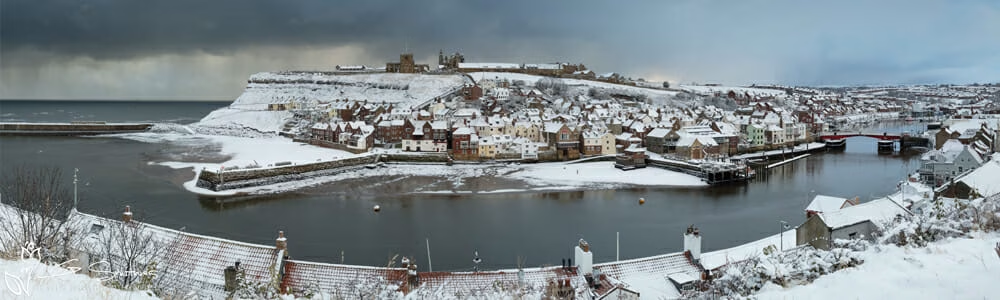
Whitby Harbour Prints and Canvases
Every photograph featured in this Whitby Harbour photography guide has been taken by me over almost 20 years of photographing Whitby and is available to purchase from the North Yorkshire Gallery. Our collection includes stunning sunrise and sunset photographs, dramatic winter snow scenes, colourful autumn images, peaceful harbour reflections, panoramic views and atmospheric night photography. Whether you're looking for a premium canvas print, framed print, photographic print, panoramic print, wall art or one of our Yorkshire gifts, you'll find a wide selection celebrating one of Britain's most beautiful harbours.
Browse our Whitby Harbour collection below and discover your favourite view of this iconic Yorkshire destination, available as a beautifully crafted piece of wall art to enjoy for years to come.
Discover our collection of Whitby Harbour canvas prints, framed prints, panoramic prints and photographic prints below, and bring one of Yorkshire's most iconic harbours into your home.
Frequently Asked Questions About Whitby Harbour Photography
What are the best places to photograph Whitby Harbour?
Whitby Harbour can be photographed from a wide variety of locations, each offering a different perspective. Some of my favourite viewpoints are West Cliff, the Khyber Pass, Whitby Swing Bridge, the 199 Steps, the footpath near St Mary's Church and both the East and West Piers. Each location comes into its own at different times of the year, which is why Whitby Harbour is such a rewarding place to photograph.
When is the best time to photograph Whitby Harbour?
There isn't one perfect time to photograph Whitby Harbour because every season offers something different. Spring brings beautiful sunrises over the harbour, summer offers colourful sunsets and long evenings, autumn is ideal for the Whitby Abbey Illuminations and the Northern Lights, while winter can produce magical snow scenes and dramatic low light. As the photographs throughout this guide demonstrate, Whitby Harbour is rewarding to photograph throughout the year.
Where can I photograph sunrise over Whitby Harbour?
One of my favourite sunrise viewpoints is from the Khyber Pass, looking across Whitby Harbour towards the old town. During the winter months, the sun rises over the East Cliff near Whitby Abbey, creating beautiful dawn colours above the harbour. Summer also offers excellent sunrise opportunities, particularly from Endeavour Wharf looking across the marina and harbour.
Where can I photograph sunset over Whitby Harbour?
Some of my favourite sunset photographs are taken during the summer from the East Cliff near St Mary's Church, looking across the harbour mouth towards the East and West Piers as the sun sets over the North Sea. The warm evening light and colourful skies make this one of Whitby's finest summer photography locations.
Can you photograph the Northern Lights over Whitby Harbour?
Yes. Whitby Harbour is an excellent location for photographing the Northern Lights when strong solar activity occurs. Many photographers choose to photograph from the piers looking out to sea, but as I've shown in this guide, it is also possible to capture the aurora above Whitby Harbour itself from locations such as Tate Hill and the surrounding viewpoints when the display is particularly strong.
Where is the best place to photograph Whitby Harbour in the snow?
Fresh snowfall transforms Whitby Harbour into one of the most beautiful winter scenes on the Yorkshire Coast. My favourite viewpoint is from the Khyber Pass, where you can capture almost the entire harbour beneath a blanket of snow. The New Bridge also provides an excellent elevated view across the marina and River Esk during snowy conditions.
Where can I photograph panoramic views of Whitby Harbour?
For panoramic photographs, I believe the Khyber Pass offers the finest viewpoint. From here, you can capture the harbour entrance, East and West Piers, Swing Bridge, fishing boats, Endeavour Wharf, the marina and the River Esk in one sweeping composition.
Where can I photograph reflections on Whitby Harbour?
Some of the best reflections can be found from the Khyber Pass overlooking the harbour or from the New Bridge looking down across the marina and River Esk. Calm mornings and still evenings often produce beautiful mirror-like reflections that make Whitby Harbour especially photogenic.
What camera lens is best for photographing Whitby Harbour?
There isn't one perfect lens for Whitby Harbour. Wide-angle lenses are ideal for capturing panoramic scenes and the harbour as a whole, while telephoto lenses work well for picking out details, boats and distant compositions. The best choice depends entirely on the type of photograph you're hoping to create.
Do you have any photography tips for Whitby Harbour?
One useful tip is to be aware of vibrations if you're photographing from the New Bridge. Heavy goods vehicles and larger traffic can cause slight movement through the bridge, which may affect long-exposure photographs if your tripod is set up there. If possible, photograph during quieter periods or wait for traffic to pass before making your exposure.
Where can I park to photograph Whitby Harbour?
There are numerous car parks around Whitby Harbour, making it easy to access different viewpoints on foot. Parking arrangements change depending on the location and time of year, so it's always worth checking the signs before leaving your vehicle. Parking enforcement in Whitby is well known for being strict, so taking a moment to confirm the restrictions is always worthwhile.
Where can I buy photographs of Whitby Harbour?
Every Whitby Harbour photograph featured in this guide has been taken by me over almost 20 years of photographing Whitby. They are available to purchase directly from this website as premium canvas prints, framed prints, photographic prints, panoramic prints, wall art and a range of Yorkshire gifts.
If you're visiting Whitby, you're also very welcome to visit the North Yorkshire Gallery on Church Street in Whitby's historic old town. It's just a short walk from the harbour, where you can view many of my Whitby Harbour photographs in person.
Khyber Pass Photography
Khyber Pass is, in my opinion, the finest photography viewpoint in Whitby. If I could only photograph Whitby from one location, this would be it. Sitting high above the harbour, it provides an unrivalled panorama across many of the town's most famous landmarks, making it an essential stop for anyone interested in landscape photography.
From Khyber Pass, you can photograph Whitby Harbour, the famous Swing Bridge, Tate Hill Beach, the 199 Steps, Whitby Abbey and even the East and West Piers, all from a single elevated viewpoint. Throughout this guide you've already seen many photographs taken from here, simply because so many of Whitby's classic compositions begin at Khyber Pass. It is also, in my opinion, the best location in Whitby for panoramic photography, allowing you to capture the scale, character and beauty of the town in a single image.
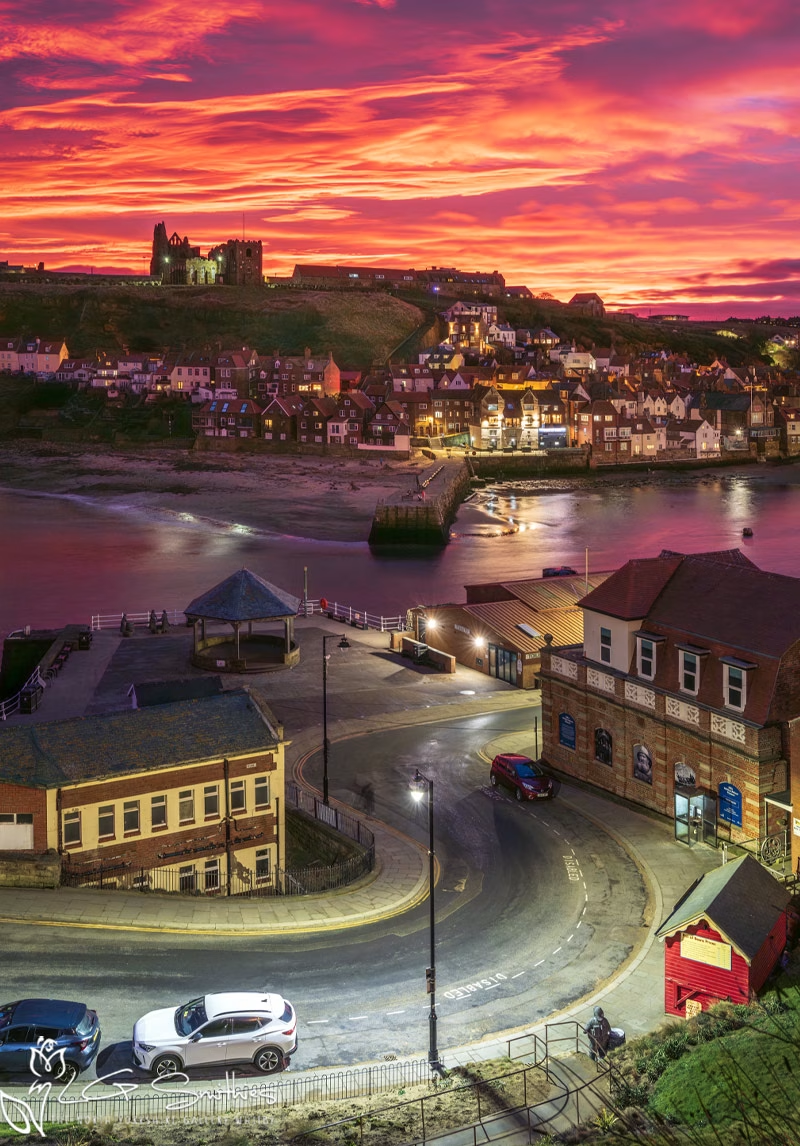
In this section, I'll share some of my favourite photographs taken from Khyber Pass and explain why this viewpoint has become my favourite place to photograph Whitby over the past two decades. I'll also show how the changing seasons, different weather conditions and varying light completely transform the scene, creating fresh photographic opportunities throughout the year.
The Khyber Pass Tunnel (The Screaming Tunnel)
Probably the most famous photograph taken from the Khyber Pass is from the historic tunnel, known locally as the Screaming Tunnel. This unique viewpoint naturally frames the scene, drawing your eye through the tunnel towards Tate Hill on the opposite side of the harbour. Above Tate Hill sit the famous 199 Steps and Whitby Abbey, creating one of Whitby's most iconic and instantly recognisable views.
The photograph below captures this classic composition during fresh snowfall, giving the scene a completely different atmosphere. The snow-covered rooftops of Tate Hill, together with the white blanket surrounding the 199 Steps and Whitby Abbey, create a peaceful winter landscape framed perfectly by the tunnel entrance. It's a photograph that immediately captures the character of Whitby in winter and, in my opinion, remains the most famous and recognisable image taken from the Khyber Pass.
Winter Sunrise Through the Screaming Tunnel
Night photography is always a fantastic option from the Screaming Tunnel, whatever the time of year. However, the winter months offer something even more special. As I've mentioned elsewhere in this guide, around the winter solstice the sun rises behind Whitby Abbey, producing some spectacular dawn colours above the East Cliff. The Screaming Tunnel gives you another opportunity to make the most of this seasonal light.
The photograph below captures the classic view through the tunnel towards Tate Hill, the 199 Steps and Whitby Abbey, but this time with the winter sunrise illuminating the sky above the Abbey. The rich dawn colours add another dimension to this already iconic composition, making it quite different from the more familiar daytime version. While exceptional skies can happen at any time of year, this particular combination of viewpoint and sunrise is most reliable during the winter months, making it one of my favourite seasonal photographs from the Khyber Pass.
Winter Sunrise Over Tate Hill from the Khyber Pass
Another of my favourite photographs taken from the Khyber Pass looks across to Tate Hill on the opposite side of Whitby Harbour. From this elevated viewpoint, it's possible to capture several of Whitby's most famous landmarks in a single composition, including Tate Hill, St Mary's Church, the 199 Steps and Whitby Abbey. It perfectly demonstrates why the Khyber Pass is one of the finest photography locations in the town.
The photograph below was taken during the winter months, when the rising sun appears behind Whitby Abbey. As dawn breaks, the sky fills with beautiful colour above the Abbey and East Cliff, adding warmth and atmosphere to the scene below. The combination of Tate Hill, St Mary's Church, the 199 Steps and Whitby Abbey beneath a colourful winter sunrise creates one of Whitby's classic views and is a composition I never tire of photographing.
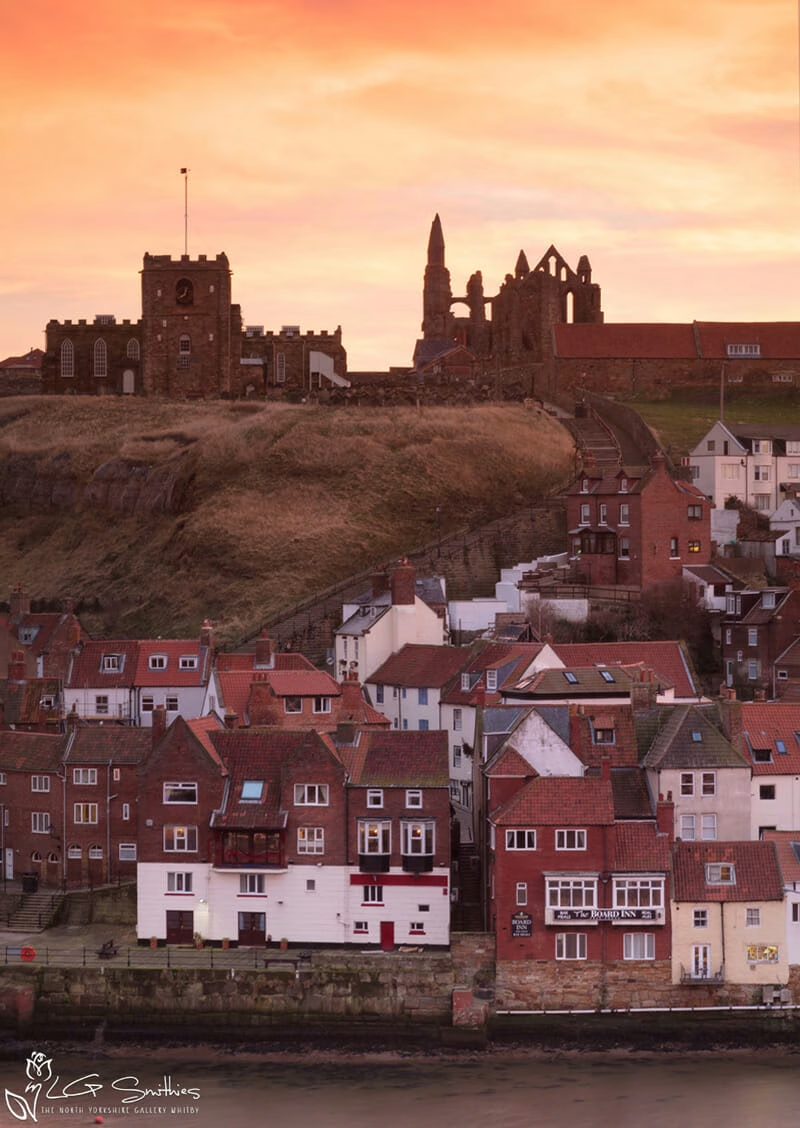
Spring Sunrise from the Khyber Pass
The next photograph below is a similar composition, this time taken in landscape format, and captures what I think of as the classic view across Whitby's historic old town from the Khyber Pass. Looking across the harbour, the scene includes Tate Hill, Tate Hill Beach, the famous 199 Steps and Whitby Abbey, all brought together in one sweeping panorama. It perfectly showcases why the Khyber Pass is regarded as one of Whitby's finest photography viewpoints.
As the seasons progress into spring, the sunrise position changes dramatically. Instead of rising behind Whitby Abbey as it does during the winter months, the sun begins to rise over the North Sea beyond the East Cliff. This creates a completely different photograph, with the early morning light and colourful dawn sky appearing over the sea while still illuminating Whitby's most famous landmarks. The photograph below captures this beautiful spring sunrise, demonstrating how the changing seasons continually create fresh photographic opportunities from the same location.
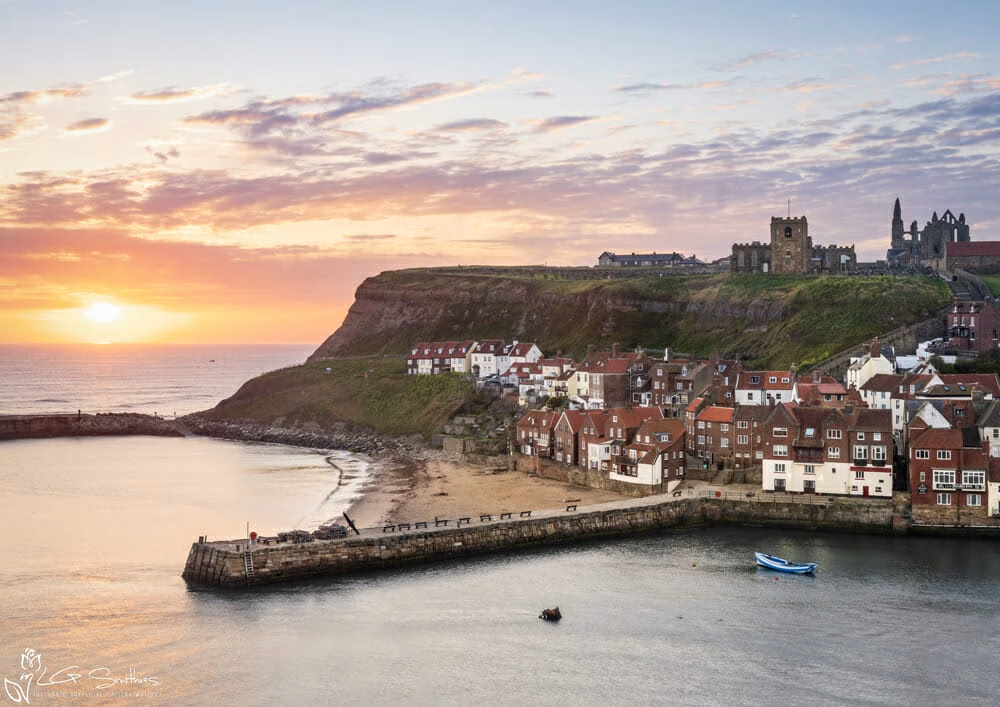
Summer Sunrise Over Whitby's Piers from the Khyber Pass
Early summer is another wonderful time to photograph Whitby from the Khyber Pass. As the seasons change, the sunrise moves further out towards the North Sea, creating an entirely different composition from the winter photographs. Instead of the first light appearing behind Whitby Abbey, the rising sun now emerges over the sea beyond the harbour entrance, producing beautiful warm colours across the coastline.
The photograph below captures this spectacular early summer sunrise, looking across the East and West Piers as the sun rises above the North Sea. From the Khyber Pass, this elevated viewpoint allows you to include the harbour entrance and the famous pier extensions beneath a sky filled with rich morning colour. It's a peaceful and rewarding scene that perfectly demonstrates how the changing position of the sunrise transforms the photographic opportunities from the Khyber Pass throughout the year.
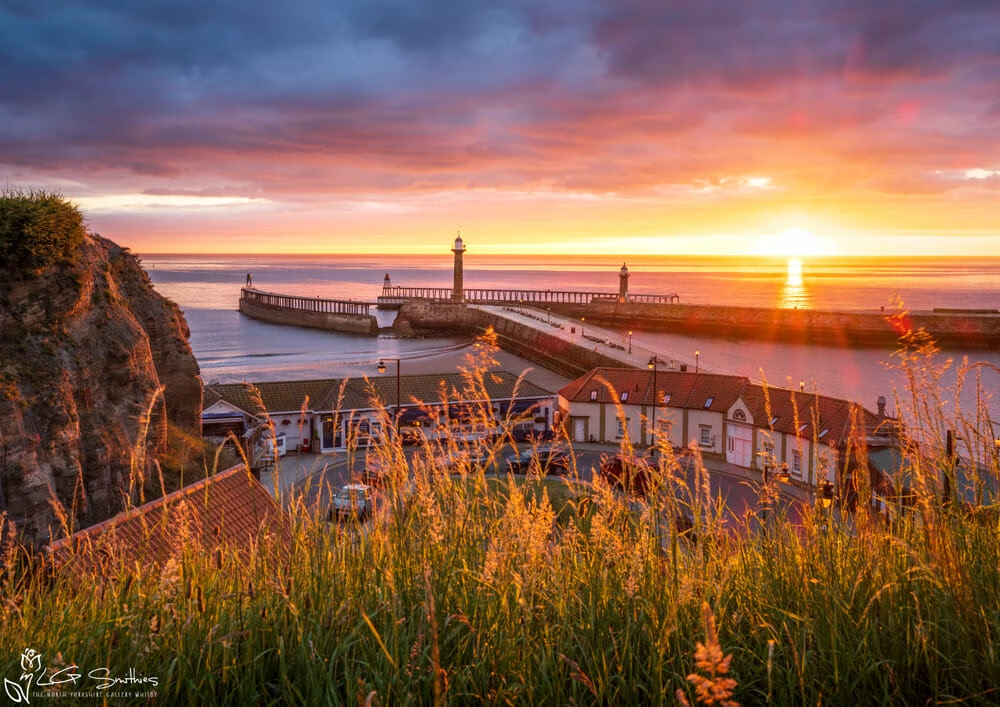
The Northern Lights from the Khyber Pass
As I've mentioned earlier in this guide, strong solar storms can produce some truly unforgettable photographs around Whitby. The Khyber Pass is another excellent location for photographing the Northern Lights because its elevated position provides an uninterrupted view across the harbour towards the North Sea. During most aurora displays, the lights are generally strongest towards the north, but every solar storm is different.
The photograph below shows one of the most remarkable aurora displays I've witnessed from the Khyber Pass. Looking down the winding road as it descends towards Whitby, the view stretches across the rooftops of the old town and out towards the East and West Piers. On this occasion, the solar storm was so intense that the Northern Lights were visible far beyond their usual position, extending right across the sky and even appearing towards the west. It was an extraordinary display and one of those rare nights that reminds you why patience and persistence are so important in landscape photography.
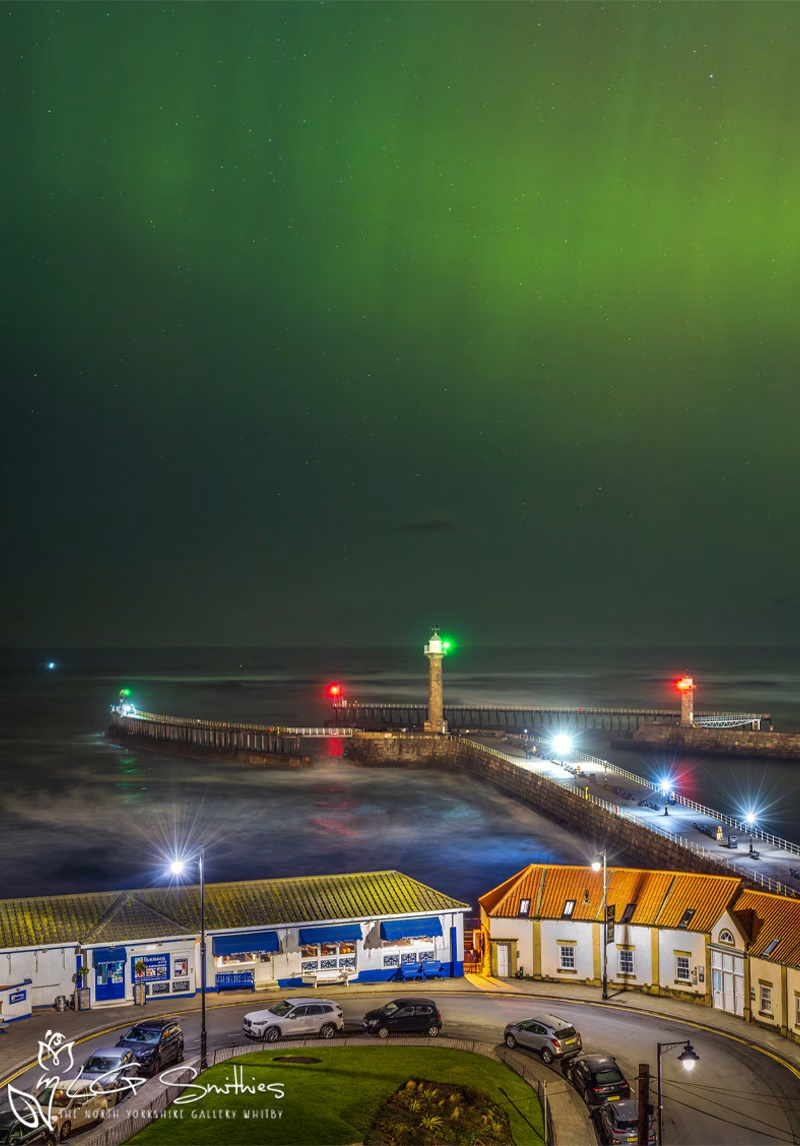
A Winter Panorama from the Khyber Pass
This next photograph is one of my personal favourites and perfectly demonstrates why I believe the Khyber Pass is the finest location in Whitby for panoramic photography. Its elevated position provides an unrivalled view across the town, allowing you to capture many of Whitby's best-known landmarks in a single sweeping image. If you're looking for one viewpoint that truly showcases the character of Whitby, this is it.
The panoramic photograph below was taken during the winter after fresh snowfall and captures almost the entire historic harbour beneath a blanket of snow. From the East and West Piers through to Whitby Harbour, the fishing boats, Swing Bridge, Tate Hill and the old town, the scene stretches across to the New Bridge, with every rooftop covered in white. It's a rare photograph that brings together so much of Whitby in one frame and, for me, it's one of the finest panoramic views the town has to offer.
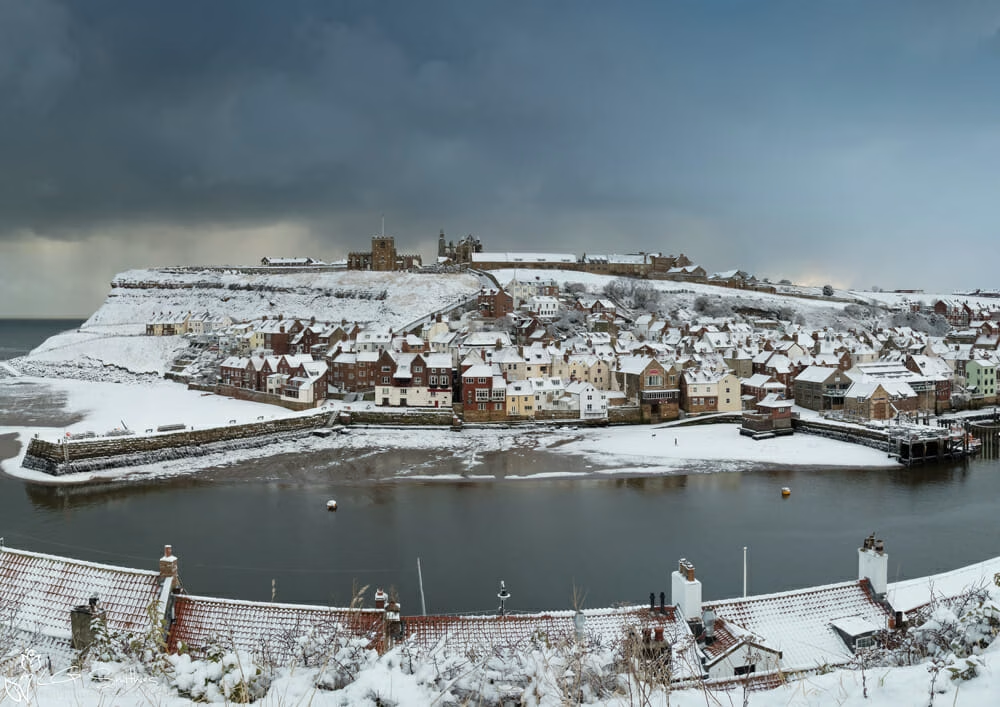
Tate Hill in Winter from the Khyber Pass
Another beautiful winter photograph that can be taken from the Khyber Pass looks across the River Esk towards Tate Hill and Tate Hill Beach. The elevated viewpoint allows you to look over the harbour and capture one of Whitby's most picturesque waterfront scenes, particularly after fresh snowfall when the town takes on a completely different character.
The photograph below was taken following a fresh fall of snow, with the bushes and vegetation along the Khyber Pass providing a natural foreground to the composition. Beyond them, Tate Hill and Tate Hill Beach are covered in a blanket of snow, creating a peaceful winter scene on the opposite side of the harbour. It's another example of how the Khyber Pass offers a constantly changing selection of photographs throughout the seasons and why it remains one of my favourite places to photograph Whitby.
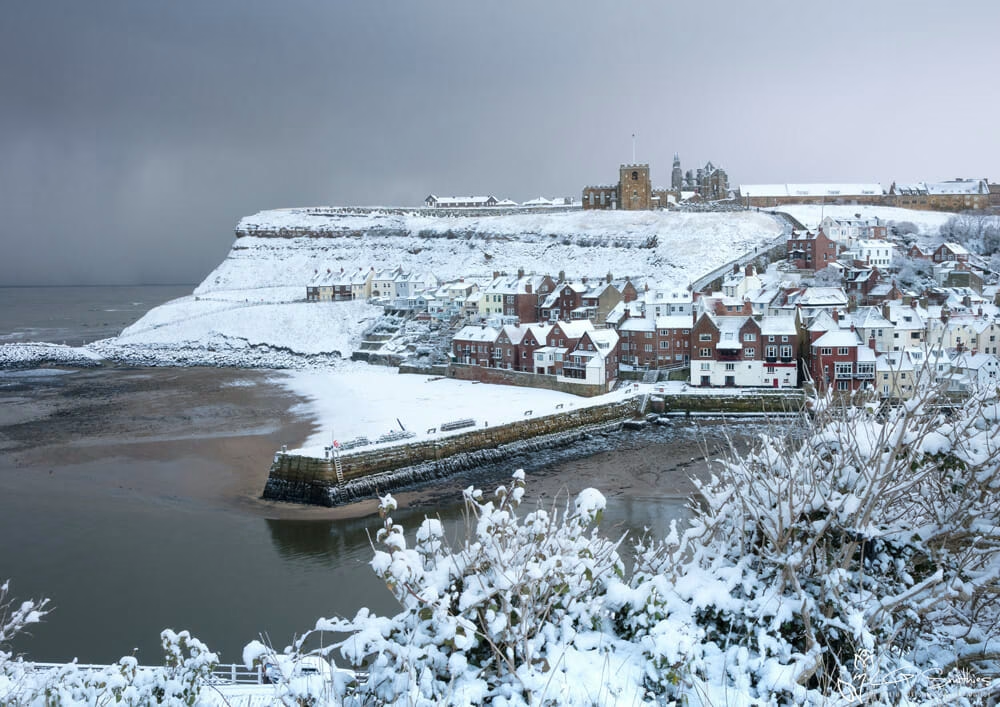
Whitby Swing Bridge in Winter from the Khyber Pass
I've already explained why the Khyber Pass is my favourite location for photographing Whitby Swing Bridge, and the photograph below is a perfect example of why. The elevated viewpoint provides a wonderful perspective across Whitby Harbour, allowing the Swing Bridge to become the focal point while still capturing the surrounding harbour and historic waterfront.
This classic winter photograph was taken after fresh snowfall, with Whitby Harbour and the famous Swing Bridge blanketed in white. The snow transforms the familiar scene into something altogether different, softening the rooftops, boats and quaysides while adding contrast to the bridge itself. It's one of my favourite winter compositions from the Khyber Pass and perfectly illustrates why this viewpoint produces some of Whitby's most memorable photographs.
A Panoramic Winter Sunrise from the Khyber Pass
I thought this would be the perfect photograph to finish my guide to photographing the Khyber Pass, as it perfectly demonstrates why I believe it is the finest panoramic viewpoint in Whitby. From this elevated position, you can capture much of the town in a single frame, and during the winter months the conditions often come together to produce truly spectacular sunrises. As I've mentioned earlier in this guide, at this time of year the sun rises behind Whitby Abbey, illuminating the morning sky while the East Cliff is silhouetted against the colourful dawn.
The panoramic photograph below captures exactly those conditions. The first light of the day fills the sky behind Whitby Abbey, casting beautiful colour across the horizon and creating a dramatic silhouette of the eastern side of Whitby. It's a photograph that took a great deal of patience to achieve. I remember making the journey to Khyber Pass on perhaps 15 or 20 different mornings before everything finally came together. That's one of the biggest lessons landscape photography has taught me: perseverance. Keep returning to the same location, learn how the light changes throughout the seasons, and eventually you'll be rewarded with the conditions you've been waiting for.
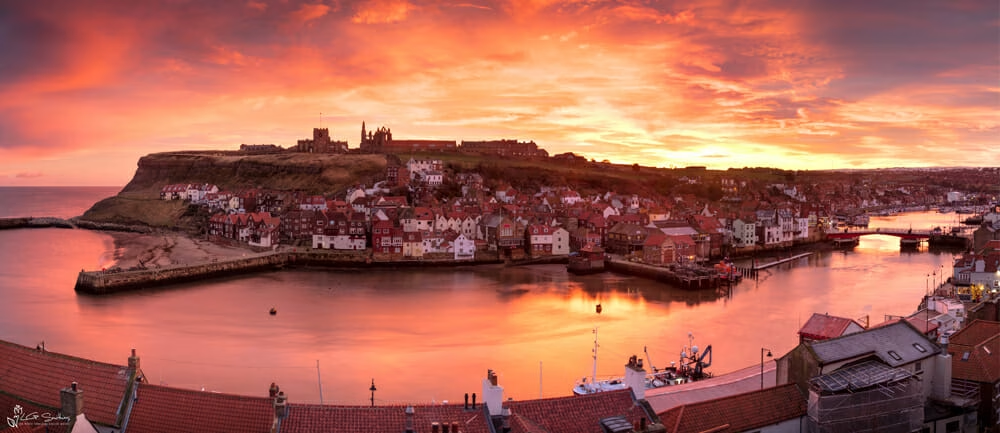
📷 Photographer's Tip
Don't be discouraged if you don't get the photograph you want on your first visit. Landscape photography is often about patience and perseverance. I must have returned to this location around 15 times before everything finally came together—the right light, the right weather and the right conditions. Keep going back, learn from each visit and, sooner or later, you'll capture the photograph you've been waiting for.
Khyber Pass Prints and Wall Art
Many of the photographs featured throughout this guide were taken from the Khyber Pass, simply because it offers some of the most spectacular views anywhere in Whitby. From sweeping panoramic landscapes and colourful winter sunrises to snow-covered harbour scenes, Whitby Abbey, the 199 Steps, Tate Hill, the Swing Bridge and the East and West Piers, this remarkable viewpoint provides an ever-changing perspective across the town in every season.
If one of these views has caught your eye, you'll find the photographs available in a wide choice of handcrafted products. Choose from premium canvas prints, professionally framed prints, photographic prints, panoramic wall art and a growing selection of Yorkshire gifts, all produced using my original photography. Whether you're looking for a striking centrepiece or a reminder of your favourite Whitby viewpoint, there's something to suit every home.
Explore the Khyber Pass collection below and discover panoramic photographs, dramatic winter scenes and iconic views across Whitby, available as premium wall art and gifts from the North Yorkshire Gallery.
Frequently Asked Questions About Khyber Pass Photography
Where is the Khyber Pass in Whitby?
The Khyber Pass is located on the western side of Whitby, between West Cliff and the River Esk. It forms a picturesque route linking the West Cliff with the harbour below and is a popular walk for visitors heading between the Whalebone Arch, Captain Cook statue and Whitby's historic old town.
Why is the Khyber Pass so famous?
The Khyber Pass is famous for its spectacular views across Whitby. It is also home to the historic Screaming Tunnel, which creates one of the town's most recognisable photographic compositions. From this single location, you can enjoy sweeping views across Whitby Harbour, Tate Hill, the 199 Steps, Whitby Abbey, the Swing Bridge and the East and West Piers.
Why is the Khyber Pass one of the best photography locations in Whitby?
If I could only choose one place to photograph Whitby, it would be the Khyber Pass. Nowhere else offers such a wide variety of compositions throughout the year. From here, you can photograph colourful spring sunrises, dramatic winter mornings, moonrises, panoramic harbour scenes, snow-covered rooftops, Whitby Abbey, the Swing Bridge, the 199 Steps, Tate Hill and the famous piers, all from one viewpoint.
Where is the best viewpoint on the Khyber Pass?
There are several excellent viewpoints along the Khyber Pass, but my favourite panoramic position is just above and slightly to the right of the Screaming Tunnel. From there, you can capture almost the entire eastern side of Whitby in one photograph.
What is the Screaming Tunnel?
The Screaming Tunnel is the historic pedestrian tunnel located about halfway along the Khyber Pass. Looking through the tunnel creates a natural frame towards Tate Hill, the 199 Steps and Whitby Abbey, producing one of Whitby's most dramatic and instantly recognisable photographs.
Why is the Screaming Tunnel so popular with photographers?
The tunnel acts like a natural frame, drawing the viewer's eye directly towards Whitby Abbey and the East Cliff beyond. The composition has an almost eerie atmosphere, particularly during winter or after snowfall, which is why it has become one of the classic Whitby photographs.
When is the best time to photograph the Khyber Pass?
The beauty of the Khyber Pass is that every season offers something different. Spring provides wonderful sunrises over the North Sea, summer brings excellent light across Tate Hill and Whitby Abbey, autumn can produce colourful skies and occasional displays of the Northern Lights, while winter offers spectacular snow scenes and dramatic dawns behind Whitby Abbey.
Can you photograph sunrise from the Khyber Pass?
Yes. My favourite sunrise is probably in early spring, when the sun rises over the North Sea while the foreground includes Tate Hill, Tate Hill Beach, St Mary's Church, the 199 Steps and Whitby Abbey. Winter also provides outstanding sunrise opportunities, with colourful dawn skies forming behind Whitby Abbey.
Can you photograph sunset from the Khyber Pass?
The Khyber Pass isn't really a classic sunset location. Instead of photographing directly towards the setting sun, I always recommend looking behind you. Quite often the sunset colours illuminate the eastern sky above Whitby, creating beautiful light over the town even though the sun itself is setting in the opposite direction. It's one of those locations where patience and experience really pay off.
Can you photograph Whitby Abbey from the Khyber Pass?
Absolutely. The Khyber Pass offers one of the finest elevated views of Whitby Abbey. Looking across the River Esk, you can photograph the Abbey alongside Tate Hill, the 199 Steps and St Mary's Church, creating one of Whitby's most complete landscape compositions.
Can you photograph Whitby Harbour from the Khyber Pass?
Yes. The Khyber Pass overlooks much of Whitby Harbour and provides a fantastic elevated perspective across the River Esk, the harbour entrance, the fishing boats and the surrounding historic buildings. Early morning light often produces particularly rewarding photographs.
Can you photograph Whitby Swing Bridge from the Khyber Pass?
Without question. In my opinion, the Khyber Pass offers the finest overall view of Whitby Swing Bridge. The elevated angle allows you to include the bridge within the wider harbour scene, making it one of my favourite places to photograph this famous landmark.
Can you photograph Tate Hill from the Khyber Pass?
Yes. The Khyber Pass gives what I believe is the best overall view of Tate Hill and Tate Hill Beach. From here you can capture the historic houses, beach, harbour and Whitby Abbey all within the same composition.
Can you photograph Whitby's piers from the Khyber Pass?
Yes. The Khyber Pass provides excellent views towards both Whitby Piers, particularly during the summer months when the sunrise moves out over the North Sea beyond the harbour entrance.
Is the Khyber Pass the best place to take panoramic photographs of Whitby?
For me, yes. It offers the widest uninterrupted view across Whitby, stretching from the harbour entrance and East and West Piers through Whitby Harbour, the old town, the Swing Bridge and beyond. I don't believe there's a better panoramic viewpoint anywhere in Whitby.
Can you photograph the Northern Lights from the Khyber Pass?
Yes. During strong solar storms, the Khyber Pass becomes one of Whitby's finest locations for photographing the Northern Lights. Its elevated position gives uninterrupted views across the town and out towards the coast, making it ideal for capturing the aurora when conditions are favourable.
Can you photograph the Khyber Pass in the snow?
Definitely. Snow completely transforms the viewpoint, with Whitby's rooftops, harbour and surrounding hills covered in white. Some of my favourite winter photographs have been taken from the Khyber Pass after fresh snowfall.
What camera lens is best for photographing the Khyber Pass?
For most photographs, I favour a moderately wide-angle lens that captures the scene naturally without introducing excessive distortion. For panoramas, I actually recommend avoiding ultra-wide lenses. Instead, photograph the scene in portrait orientation, overlap each frame by around a third, and stitch the images together afterwards. The results are usually much sharper and more natural-looking than using a single very wide lens.
Where can I park to photograph the Khyber Pass?
Parking is available on Whitby's West Cliff, only a short walk from the Khyber Pass viewpoints. As always in Whitby, check the parking restrictions carefully before leaving your vehicle, as enforcement is known to be very strict.
Is the Khyber Pass easy to access?
Yes. The Khyber Pass is easy to reach on foot from West Cliff and is one of Whitby's most accessible photography locations. The viewpoints are only a short walk from the nearby parking areas and are suitable for photographers of all experience levels.
Where can I buy photographs taken from the Khyber Pass?
Every photograph featured in this guide has been taken by me over almost 20 years of photographing Whitby. You can order Khyber Pass photographs directly from this website or visit the North Yorkshire Gallery on Church Street in Whitby, where you'll find a wide selection available as premium canvas prints, framed prints, photographic prints, panoramic wall art and Yorkshire gifts.
Whitby Beach Huts Photography
Whitby's colourful beach huts have become one of the town's most photographed landmarks and are well worth adding to any photography itinerary. Standing proudly along the West Cliff overlooking Whitby Beach, they provide a vibrant foreground against the dramatic Yorkshire coastline and can be photographed in a variety of weather conditions throughout the year. While there are opportunities in every season, I believe the finest photographs are taken during the summer months when the longer evenings and favourable position of the setting sun produce the most rewarding light.
For me, the best time to photograph the beach huts is around the summer solstice. At this time of year, the sun sets out over the North Sea beyond Sandsend and Kettleness, often producing beautiful evening colours that complement the bright beach huts perfectly. If you're fortunate enough to catch a colourful sunset, the results can be spectacular, and I'll show a few examples of those photographs below.
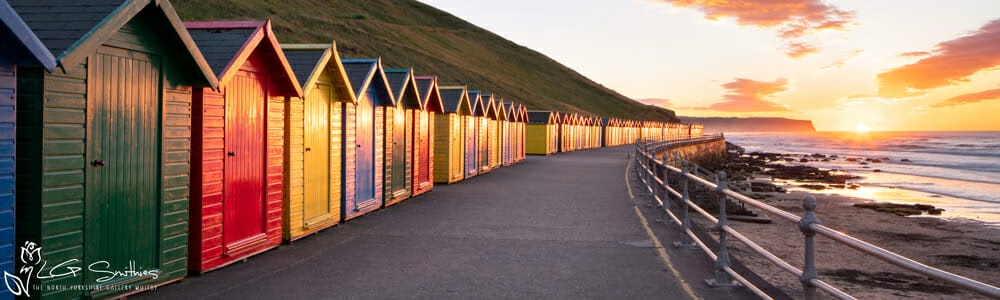
The beach huts also make an excellent subject during rough weather. I've seen some wonderful photographs of waves crashing over the sea wall in front of them, creating dramatic coastal scenes. However, it's important to remember that no photograph is worth risking your safety. I would never recommend standing on the sea wall during heavy seas. A much safer approach is to photograph from behind the beach huts, allowing you to capture the waves breaking beyond them while remaining well away from the danger. The images can be every bit as striking while keeping you in a safe position.
Summer Sunset at Whitby Beach Huts
The photograph below captures what I consider to be the classic view of Whitby's famous beach huts. Taken around the summer solstice, it shows why this is my favourite time of year to photograph them. As the sun sinks towards the horizon beyond the coastline, the warm evening light sweeps across the fronts of the beach huts, bringing their colourful doors to life and creating a wonderfully vibrant scene.
Around midsummer, the setting sun moves far enough out over the North Sea to produce some beautiful sunset photographs from this location. On the right evening, the sky is filled with rich golden, orange and pink tones while the final rays of sunlight illuminate the brightly coloured beach huts below. It's one of those classic Whitby summer photographs that perfectly captures the relaxed atmosphere of an evening on the Yorkshire coast.
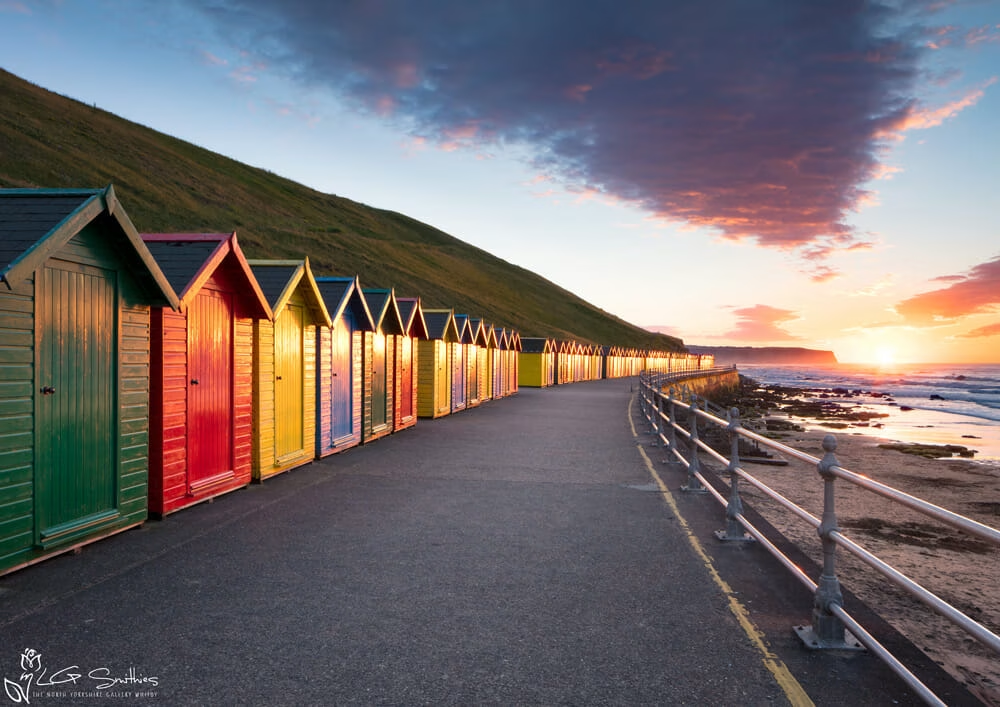
Whitby Beach Huts at Dusk
The photograph below was taken from exactly the same viewpoint, but a little later in the evening after the sun had disappeared below the horizon. While the direct sunlight has gone, this is often when some of the most beautiful colours appear. As dusk settles over the Yorkshire coast, the sky can glow with rich pinks, oranges and purples, creating a completely different atmosphere from the earlier sunset photograph.
This image demonstrates why it's always worth staying a little longer after the sun has set. Many photographers pack their equipment away too early, but the period immediately after sunset often produces the most dramatic skies. Against these vibrant dusk colours, Whitby's colourful beach huts provide a striking foreground, creating one of my favourite summer evening photographs from this location.
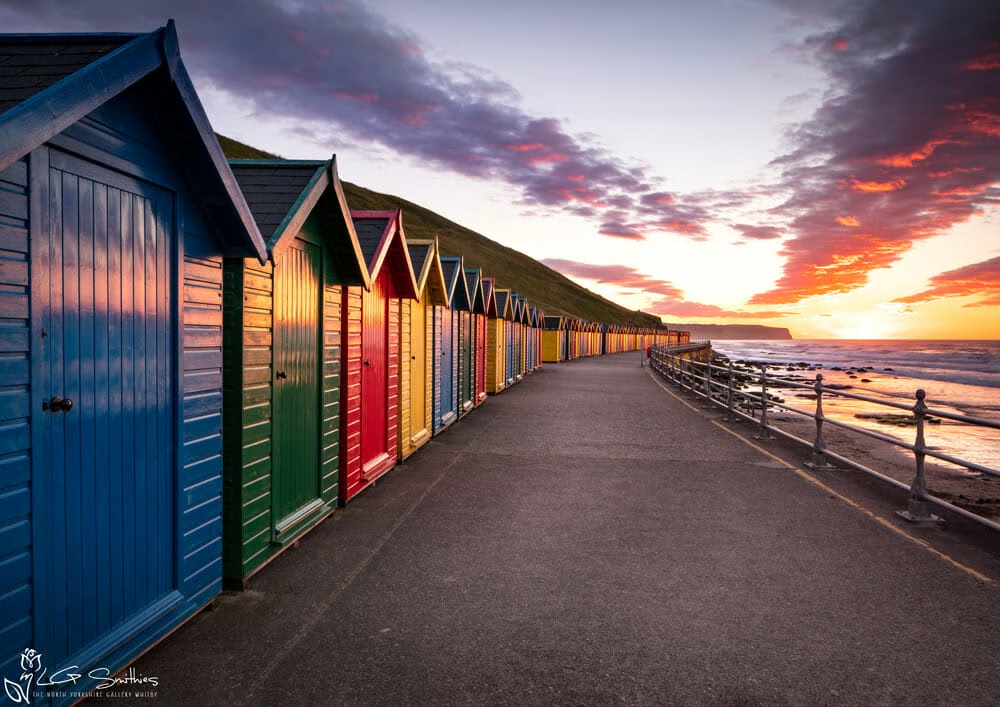
Whitby Beach Hut Prints
The colourful beach huts on Whitby's West Cliff have become one of the town's most recognisable coastal scenes and make wonderful wall art for any home. My collection includes photographs taken during warm summer sunsets, colourful dusk skies and changing coastal conditions, capturing the character of these much-loved beach huts from some of the best times of the year. Each image is available as a premium canvas print, professionally framed print, photographic print or panoramic wall art, together with a selection of Yorkshire-inspired gifts featuring my original photography.
If you'd like to bring a little of Whitby's coastline into your home, browse the Whitby Beach Huts collection below and discover handcrafted wall art celebrating one of the town's most colourful seaside landmarks.
Frequently Asked Questions About Whitby Beach Huts Photography
Where are Whitby's beach huts?
Whitby's beach huts are located beneath the North Promenade on West Cliff, close to the Whitby Pavilion. They overlook Whitby Beach and stretch towards Sandsend, making them one of the most colourful and recognisable parts of the town's seafront.
Why are Whitby's beach huts so popular?
The beach huts are a favourite with both visitors and local families, particularly during the summer months. Many are hired for the day, providing the perfect base to enjoy Whitby Beach, while their bright colours and superb coastal setting have also made them one of Whitby's most photographed attractions.
When is the best time to photograph Whitby's beach huts?
Without doubt, my favourite time is around the summer solstice. At this time of year, the setting sun moves out over the North Sea beyond Sandsend, producing beautiful evening light and colourful skies that perfectly complement the brightly painted beach huts.
What is the best viewpoint for photographing Whitby's beach huts?
My favourite viewpoint is from the Whitby end of the beach huts, where the coastline begins to curve towards Sandsend. From here, the huts naturally lead the eye into the photograph while the sunset develops over the sea beyond, creating one of Whitby's classic summer compositions.
Can you photograph Whitby's beach huts at sunset?
Absolutely. Summer sunsets produce some of the finest photographs of the beach huts. As the last rays of sunshine illuminate the colourful doors and fronts of the huts, the combination of warm light and coastal scenery creates a beautiful evening photograph.
Can you photograph Whitby's beach huts at dusk?
Yes. It's always worth staying after the sun has disappeared below the horizon. Dusk often brings rich pink, orange and purple colours to the sky, creating a completely different mood while the beach huts remain an eye-catching foreground.
Can you photograph rough seas at Whitby's beach huts?
Yes, rough seas can make for some very dramatic photographs, especially when waves crash against the sea wall. Stormy conditions create a striking contrast to the colourful beach huts and show a completely different side of Whitby's coastline.
Is it safe to photograph waves around Whitby's beach huts?
Always put safety first. I would never recommend standing on the sea wall during rough seas, as waves can arrive unexpectedly and with tremendous force. A much safer option is to photograph from behind the beach huts on the embankment, allowing you to capture the waves breaking against the sea wall while remaining well away from the water.
What camera lens is best for photographing Whitby's beach huts?
A moderately wide-angle lens is ideal. It allows you to include the colourful row of beach huts, the coastline and the evening sky in a balanced composition without introducing excessive distortion.
Where can I park to photograph Whitby's beach huts?
Parking is available on Whitby's West Cliff, from where it's only a short walk down to the beach huts. They can also be reached easily on foot from the North Promenade and the surrounding cliff-top paths.
Where can I buy photographs of Whitby's beach huts?
If you'd like to own one of these colourful coastal scenes, my Whitby Beach Hut photographs are available to purchase directly from this website or by visiting the North Yorkshire Gallery on Church Street in Whitby. They are available as premium canvas prints, framed prints, photographic prints and a selection of Yorkshire gifts.
Saltwick Bay Photography
Just a short distance east of Whitby lies Saltwick Bay, one of the most spectacular coastal photography locations anywhere on the Yorkshire Coast. Nestled beneath the dramatic cliffs below Whitby Abbey, this beautiful bay is renowned for its rugged shoreline, fascinating rock formations and the iconic Saltwick Nab, a striking sea stack that has become one of the area's best-known natural landmarks.
The Cleveland Way follows the clifftop above Saltwick Bay, offering breathtaking views along the coastline before descending towards the beach. Whether you're exploring the coastal path or making the walk down to the shore, it's easy to see why this location is so popular with photographers, walkers and nature lovers alike.
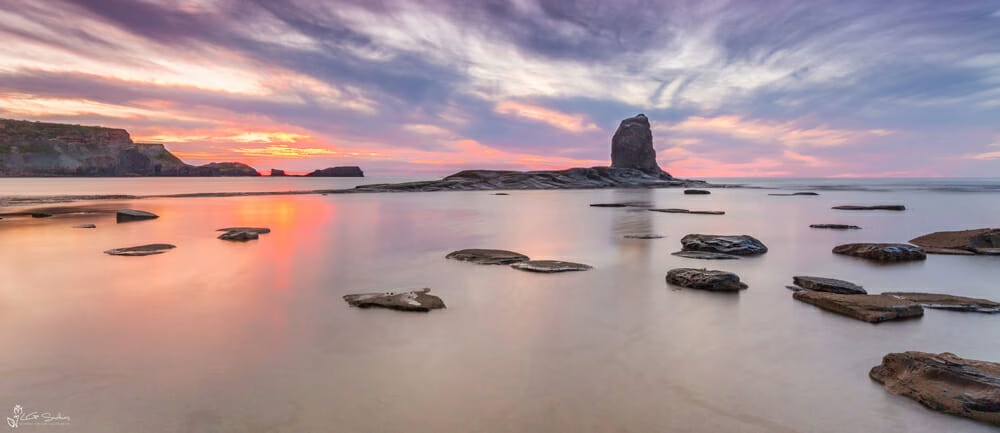
For landscape photographers, Saltwick Bay rewards careful planning. While it can be photographed throughout the year, I believe it is at its finest around sunset. As the evening light sweeps across the bay, the sandstone rocks, rock pools and Saltwick Nab take on warm golden tones, creating outstanding foreground interest against the North Sea. Combined with colourful skies and an outgoing tide exposing the intricate patterns in the rocks, it offers some of the most rewarding coastal photography anywhere around Whitby.
In this section, I'll share some of my favourite photographs from Saltwick Bay, explain when I think the conditions are at their best, and offer practical advice to help you make the most of this remarkable stretch of coastline.
Sunrise at Saltwick Nab
One of my favourite photographs from Saltwick Bay is taken from the beach during early spring. As the seasons begin to change, the position of the sunrise creates a wonderful opportunity to photograph the iconic Saltwick Nab with the sun rising directly behind it. It's a classic Yorkshire Coast composition and one that's well worth getting up early for.
The photograph below captures this beautiful moment, with the first rays of the day emerging over the North Sea behind Saltwick Nab. The warm morning light reflects across the beach and surrounding rocks, creating a peaceful atmosphere and perfectly highlighting one of Whitby's most famous natural landmarks. On the right morning, it's a truly spectacular scene and one of the finest sunrise photographs that can be taken at Saltwick Bay.
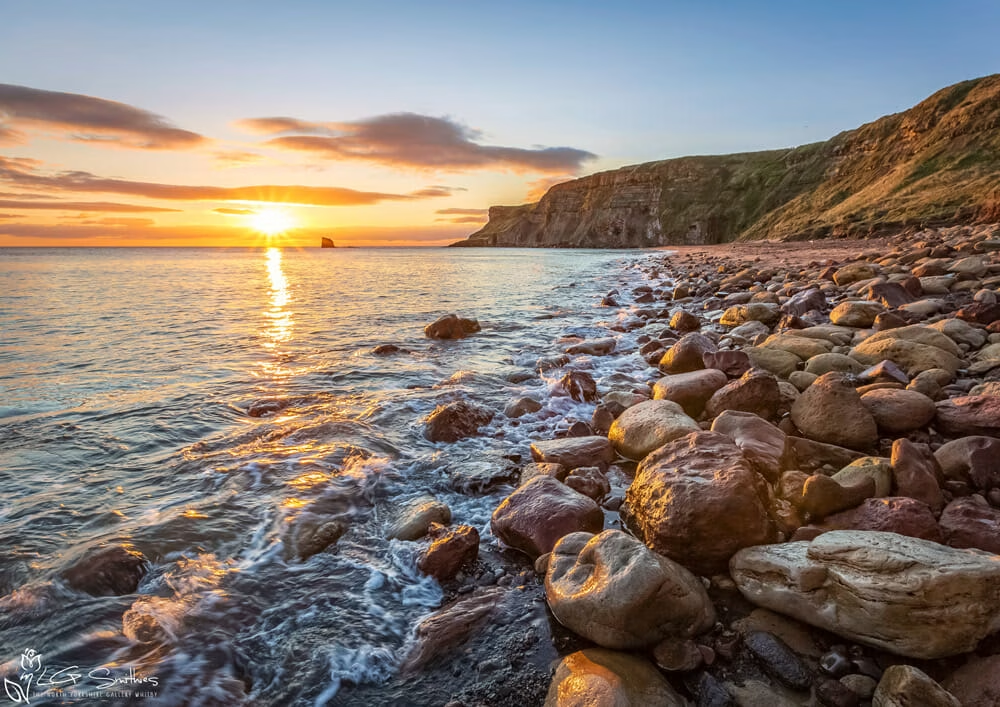
Sunset Over Saltwick Bay and the Admiral von Tromp Wreck
Another of Saltwick Bay's classic photographs can be taken around the summer solstice, when the setting sun moves out over the North Sea and produces some magnificent evening light across the bay. From this viewpoint, it's possible to capture the iconic Saltwick Nab together with the remains of the Admiral von Tromp shipwreck, creating a composition that combines the area's natural beauty with an important piece of Whitby's maritime history.
The photograph below captures this memorable scene as the sun sets beyond the coastline, bathing Saltwick Bay in warm evening light. The silhouette of Saltwick Nab, the colourful sky and the remains of the Admiral von Tromp make for a striking photograph. While the wreck tells the story of a tragic loss at sea, today it forms part of one of the most atmospheric and rewarding coastal landscapes to photograph anywhere on the Yorkshire Coast.
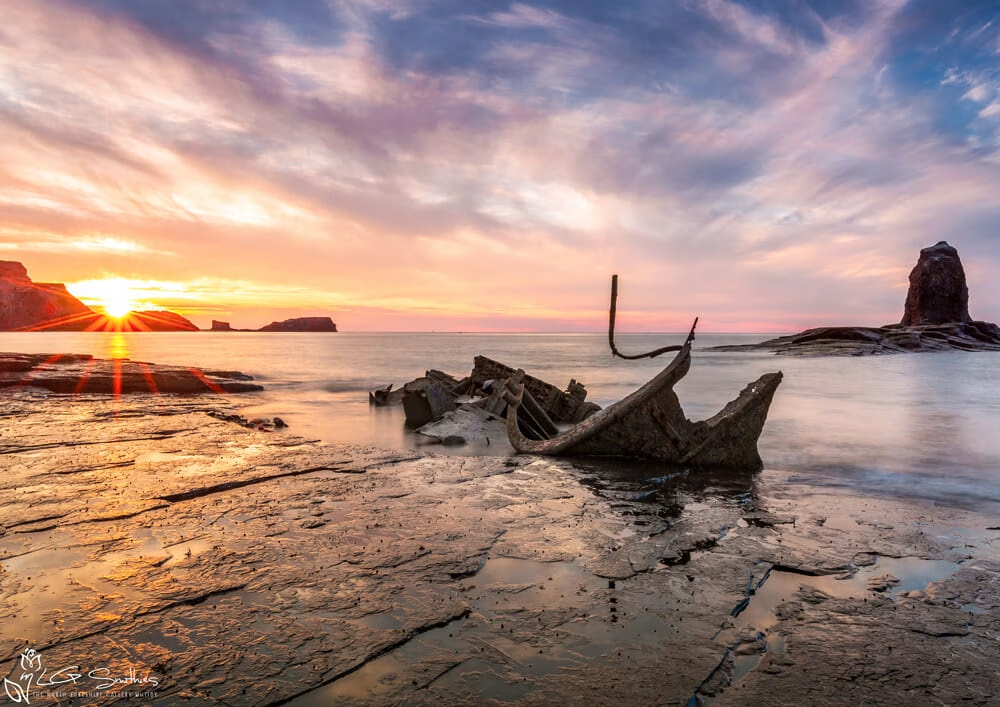
Reflections at Saltwick Nab
This photograph is probably my favourite image I've ever taken at Saltwick Bay. Captured at sunset during the summer months, it shows Saltwick Nab standing proudly beyond the shoreline while the receding tide has left a series of rock pools across the beach. These pools provide beautiful reflections of the colourful evening sky, while the exposed rocks rise from the water to add depth and texture to the composition.
The panoramic photograph below perfectly demonstrates why Saltwick Bay is such a rewarding place to visit at sunset. The combination of Saltwick Nab, the reflective rock pools and the warm colours spreading across the sky creates a scene that's both peaceful and dramatic. I think this image works especially well as a panoramic photograph, allowing the full beauty of the bay and its remarkable coastal landscape to be appreciated in a single sweeping view.
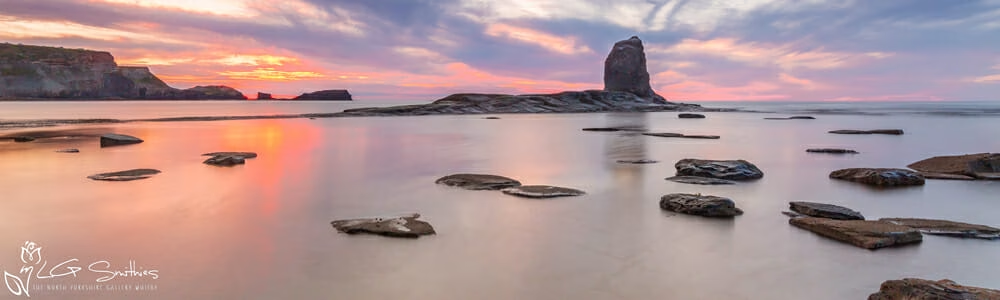
📷 Photographer's Tip
Always check the tide times before heading to the coast. This photograph of Saltwick Bay would have been impossible to capture at high tide, as the viewpoint would have been underwater. Understanding the tides is just as important as understanding the light, and careful planning can make the difference between getting the photograph and going home empty-handed.
Saltwick Bay Prints and Wall Art
The dramatic coastline of Saltwick Bay has inspired some of my favourite photographs along the Yorkshire Coast. From peaceful spring sunrises behind Saltwick Nab to glowing summer sunsets, reflective rock pools and the remains of the Admiral von Tromp, this collection celebrates one of Whitby's most striking natural landscapes. Every image is available as a premium canvas print, professionally framed print, fine art photographic print or panoramic wall art, all produced from my original photography and carefully handcrafted to order.
Discover our collection of Saltwick Bay canvas prints, framed prints, panoramic prints and fine art photographic prints below, and bring one of the Yorkshire Coast's most breathtaking landscapes into your home.
Frequently Asked Questions About Saltwick Bay Photography
Where is Saltwick Bay?
Saltwick Bay is located just east of Whitby, beneath the dramatic cliffs below Whitby Abbey. It's one of the Yorkshire Coast's most beautiful beaches and can easily be reached on foot from Whitby or via the Cleveland Way, which passes along the clifftops above the bay.
Why is Saltwick Bay so famous?
Saltwick Bay is famous for its rugged coastline, fascinating rock formations, the iconic Saltwick Nab sea stack and the remains of the Admiral von Tromp shipwreck. Together, they create one of the most spectacular and photographed coastal landscapes in North Yorkshire.
When is the best time to photograph Saltwick Bay?
For me, the two best opportunities are early spring at sunrise and around the summer solstice at sunset. Spring offers the chance to photograph the sun rising directly behind Saltwick Nab, while the long summer evenings often produce beautiful sunset colours across the bay and its rock pools.
Where is the best viewpoint at Saltwick Bay?
My favourite viewpoint is from the beach itself. From there, you can compose photographs using Saltwick Nab, the rock pools and the surrounding sandstone formations. The Cleveland Way above the bay also offers magnificent elevated views of the coastline.
Can you photograph sunrise at Saltwick Bay?
Yes. Early spring provides one of the finest sunrise opportunities on the Yorkshire Coast. At this time of year, the rising sun aligns beautifully with Saltwick Nab, creating a striking silhouette as the first light appears above the North Sea.
Can you photograph sunset at Saltwick Bay?
Absolutely. Around the summer solstice, the setting sun moves out over the North Sea beyond the coastline, creating colourful skies that complement Saltwick Nab, the rock pools and the remains of the Admiral von Tromp. It's one of my favourite places around Whitby to photograph a summer sunset.
What is the best subject to photograph at Saltwick Bay?
Saltwick Nab is undoubtedly the bay's most recognisable feature, but the exposed rock pools, sandstone formations and the remains of the Admiral von Tromp all make excellent photographic subjects. Together they provide endless opportunities for creative landscape photography.
Is Saltwick Bay good for panoramic photography?
Yes. The wide-open coastline makes Saltwick Bay an excellent location for panoramic photographs. I particularly like panoramic images taken at sunset, where the colourful sky, Saltwick Nab and reflective rock pools combine to create a sweeping coastal landscape.
What camera lens is best for photographing Saltwick Bay?
A moderately wide-angle lens is my preferred choice, allowing you to include the dramatic foreground rocks, Saltwick Nab and the expansive sky without excessive distortion. A short telephoto lens can also work well if you want to isolate the sea stack or compress the perspective.
What should I know before photographing Saltwick Bay?
One of the biggest factors when photographing Saltwick Bay is the tide. For the classic spring sunrise photograph of Saltwick Nab, I would recommend visiting around high tide. Having the sea right up to the beach creates a much stronger composition, with the water leading naturally towards Saltwick Nab and the rising sun beyond.
For the classic summer sunset photographs around the summer solstice, I actually prefer a mid to low tide. At high tide, some of the best viewpoints around Saltwick Nab can be underwater, making them difficult or impossible to reach safely. A lower tide also exposes the rock pools, allowing you to use their reflections as a foreground, which I think creates some of the bay's most striking photographs.
Before setting off, always check the tide times and be aware of how quickly the water can rise around the rocks. It's very easy to become focused on your photography and lose track of the incoming tide, so always make sure you have a safe route back to the beach. A little planning beforehand will not only keep you safe but also give you the best chance of coming home with the photograph you were hoping for.
Where can I park for Saltwick Bay?
Parking is available close to Saltwick Bay, and the beach can also be reached on foot from Whitby. Many visitors combine a walk along the Cleveland Way with a visit to the bay, enjoying the spectacular cliff-top scenery along the way.
Where can I buy photographs of Saltwick Bay?
You can purchase my Saltwick Bay photographs directly from this website or visit the North Yorkshire Gallery on Church Street in Whitby. My collection includes sunrise, sunset and panoramic photographs, available as premium canvas prints, professionally framed prints, fine art photographic prints and a wide range of Yorkshire gifts.
Larpool Viaduct Photography
Larpool Viaduct is one of Whitby's greatest Victorian engineering achievements and, in my opinion, one of the town's most impressive structures after Whitby Abbey itself. Built from millions of bricks, the magnificent viaduct spans the River Esk on the eastern side of Whitby and has become one of the area's most recognisable landmarks. Its elegant arches dominate the valley, making it a wonderful subject for photographers throughout the year.
The viaduct was opened in 1885 as part of the Scarborough to Whitby railway, carrying trains high above the River Esk for more than 80 years. Although the Scarborough to Whitby line closed in 1965 as part of the Beeching cuts, the impressive structure remains and is now a popular walking and cycling route. Beneath the viaduct, the Esk Valley Railway continues to operate between Whitby and Middlesbrough, creating fantastic opportunities to photograph modern trains and visiting steam locomotives passing beneath the historic arches.
I've always enjoyed photographing Larpool Viaduct because it combines Whitby's rich railway heritage with its beautiful surrounding landscape. Whether it's colourful autumn mornings, misty winter scenes or steam locomotives working along the Esk Valley line below, the viaduct provides a dramatic backdrop and some unique photographic opportunities. In this section, I'll share some of my favourite viewpoints and explain when I think Larpool Viaduct is at its most photogenic.
Eric Treacy Passing Beneath Larpool Viaduct
The photograph below captures one of my favourite railway scenes at Larpool Viaduct. It shows the historic steam locomotive Eric Treacy leaving Whitby and beginning its journey towards Grosmont, where the Esk Valley Railway meets the North Yorkshire Moors Railway. Working hard as it climbs away from the town, the locomotive produces a wonderful plume of steam as it approaches the magnificent brick arches of Larpool Viaduct.
The combination of the steam locomotive and the imposing Victorian viaduct makes for a timeless railway photograph. The great arches frame the train beautifully, while the rising steam adds movement and atmosphere to the scene. It's a wonderful reminder that, although the old Whitby to Scarborough railway no longer crosses the viaduct itself, the Esk Valley line running beneath it continues to provide fantastic opportunities to photograph both heritage and modern trains in one of Whitby's most historic railway locations.

Larpool Viaduct in the Spring
The photograph below shows a wider view of the same scene, allowing you to appreciate not only the magnificent Larpool Viaduct but also the beautiful landscape that surrounds it. Rather than concentrating solely on the train, this composition captures more of the River Esk as it winds through the valley, showing how naturally the great Victorian viaduct sits within the Esk Valley.
Taken on a beautiful spring day, the scene is illuminated by warm seasonal light beneath a colourful sky as Eric Treacy steams away from Whitby towards Grosmont. The wider composition tells much more of the story, combining the historic railway, the River Esk and the surrounding countryside into a single photograph. I particularly like this viewpoint because it demonstrates that Larpool Viaduct is not just an impressive engineering structure, but an integral part of Whitby's landscape.

📷 Photographer's Tip
If you're photographing steam locomotives, try to capture them when they're working hard. Steam engines climbing a gradient produce far more steam than those coasting downhill, creating much more dramatic photographs. Cooler weather also helps, as the steam remains visible for much longer. As a general rule, I find the best steam photographs are usually taken on colder days, particularly when temperatures are below around 10°C. Combining a working locomotive with cool conditions will almost always produce the most impressive results.
Autumn Colours from Larpool Viaduct
Although trains no longer cross Larpool Viaduct itself, one of its greatest attractions today is that you can still walk across it and enjoy some of the finest views in Whitby. The photograph below was taken from the viaduct looking back towards the town, and it's a viewpoint I would highly recommend to anyone with an interest in landscape photography.
Captured on an autumn afternoon, the River Esk winds gracefully through the valley below, bordered by trees displaying vibrant autumn colours. Beyond them, Whitby Abbey stands proudly on the East Cliff, rising above the surrounding landscape and completing the composition. The combination of the colourful woodland, the sweeping curve of the River Esk and the Abbey overlooking the town makes this one of Whitby's most distinctive autumn photographs. It's a viewpoint that's often overlooked by visitors, but one that rewards photographers with a truly memorable scene.
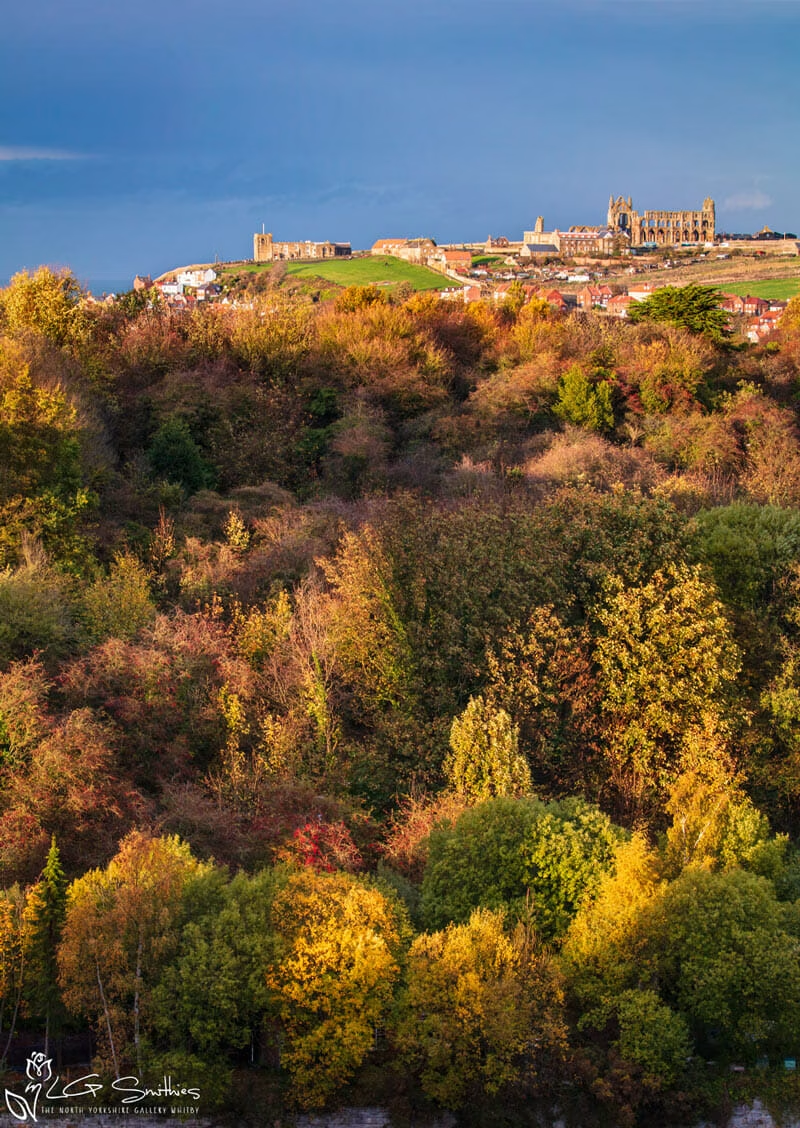
Larpool Viaduct Prints and Railway Photography
Larpool Viaduct is one of Whitby's most impressive Victorian landmarks, and my collection reflects both its remarkable architecture and its place within the beautiful Esk Valley. From steam locomotives working beneath the arches to peaceful views across the River Esk and colourful autumn landscapes looking back towards Whitby Abbey, these photographs celebrate one of the town's most overlooked viewpoints. Each image is available as a handcrafted canvas, framed print, fine art print, panoramic display or a selection of Yorkshire-inspired gifts.
Browse the Larpool Viaduct collection below and discover photographs showcasing Whitby's railway heritage, the magnificent River Esk and one of the town's finest Victorian structures, all available as premium wall art and gifts from the North Yorkshire Gallery.
Frequently Asked Questions About Larpool Viaduct Photography
Where is Larpool Viaduct?
Larpool Viaduct is located just outside Whitby town centre on the road towards Ruswarp, spanning the River Esk. It enjoys a commanding position above the valley and offers magnificent views back towards Whitby Abbey and the historic town.
Why was Larpool Viaduct built?
Larpool Viaduct was built to carry the Scarborough to Whitby railway across the River Esk. Opened during the Victorian era, it formed an important part of the railway network, allowing trains to travel directly between the two coastal towns.
How old is Larpool Viaduct?
Larpool Viaduct opened in 1885 and remains one of Whitby's finest examples of Victorian engineering. Constructed from millions of bricks, it continues to dominate the Esk Valley almost 140 years later.
Can you walk across Larpool Viaduct?
Yes. Although trains no longer run across the viaduct, it is now open to walkers and cyclists. Walking across the viaduct provides fantastic views over the River Esk, Whitby and the surrounding countryside, making it well worth the visit.
What railway used Larpool Viaduct?
The viaduct originally carried the Whitby to Scarborough railway. Sadly, the line was closed during the Beeching cuts in the 1960s, but the magnificent structure remains as an important part of Whitby's railway heritage.
Do trains still run over Larpool Viaduct?
No. Trains no longer cross the viaduct itself. However, the Esk Valley Railway still passes beneath it, carrying services between Whitby and Middlesbrough. This creates excellent opportunities to photograph both modern trains and visiting steam locomotives beneath the historic arches.
Can you photograph trains at Larpool Viaduct?
Absolutely. One of my favourite photographs from this location shows the steam locomotive Eric Treacy leaving Whitby and heading towards Grosmont, where the Esk Valley Railway meets the North Yorkshire Moors Railway. Steam locomotives framed beneath the towering brick arches make for some truly memorable railway photographs.
Where is the best place to photograph Larpool Viaduct?
For me, there are two outstanding viewpoints. If you want to photograph trains passing beneath the viaduct, my favourite location is from the open ground and footpath on the opposite side of the River Esk, where you can clearly see the locomotives working beneath the arches. If you're more interested in landscape photography, walk onto the viaduct itself and look back towards Whitby. From there you'll enjoy beautiful views of the River Esk winding through the valley, especially during autumn when the trees are full of colour and Whitby Abbey rises proudly above the East Cliff.
When is the best time to photograph Larpool Viaduct?
Larpool Viaduct is rewarding throughout the year, but I particularly enjoy photographing it during spring, when the valley is fresh and green, and in autumn, when the surrounding woodland turns vibrant shades of gold, orange and red. Visiting steam locomotives provide fantastic photographic opportunities whenever they're running.
What camera lens is best for photographing Larpool Viaduct?
A moderately wide-angle lens works well for capturing the viaduct within the surrounding landscape, while a short telephoto lens is useful if you're concentrating on trains passing beneath the arches. The choice depends on whether you're photographing the structure itself or the railway below.
Where can I park for Larpool Viaduct?
One of the most convenient places to park is on the eastern side of the River Esk. As you turn towards the housing estate that leads to the foot of Larpool Viaduct, there is a small free car park, providing easy access to the riverside footpaths and one of my favourite viewpoints for photographing trains beneath the viaduct.
Where can I buy photographs of Larpool Viaduct?
You can purchase my Larpool Viaduct photographs directly from this website or by visiting the North Yorkshire Gallery on Church Street in Whitby. The collection includes steam railway scenes, seasonal landscapes and panoramic views, available as premium canvas prints, professionally framed prints, fine art photographic prints and a range of Yorkshire gifts.
Whitby Photography from Lythe Bank
If someone asked me where the finest view in England was, I know exactly where I'd take them. Many people would point to Sutton Bank, famously described by James Herriot as "the finest view in England." It's certainly an incredible viewpoint, and I would never argue otherwise. But for me, there is one view that surpasses it.
That view is from Lythe Bank.
Standing high above the Yorkshire Coast, Lythe Bank offers a breathtaking panorama that perfectly captures everything I love about Whitby. Looking across the rolling fields towards Sandsend, your eye follows the sweeping coastline as it curves gracefully towards Whitby. Beyond, Whitby Harbour, the historic piers and the East Cliff rise proudly above the town, with Whitby Abbey dominating the skyline. On a clear day, it's a view that simply takes your breath away.
Having photographed Whitby for almost 20 years, I honestly believe this is one of the finest coastal viewpoints anywhere in Britain. Like all great photography locations, timing is everything. Different seasons and changing light completely transform the scene, and throughout the next few photographs I'll explain why certain times of year work better than others. Whether it's the warm light of a summer evening, colourful dawn skies or dramatic winter conditions, Lythe Bank never disappoints. In my opinion, it offers the greatest panoramic view of Whitby and one of the finest landscapes anywhere in England.
Winter Sunrise from Lythe Bank
This is one of my favourite photographs of Whitby and, for me, one of the finest views anywhere in England. Taken from Lythe Bank on a late winter sunrise, this image demonstrates why careful planning and the right choice of lens can make such a difference. Rather than using a wide-angle lens, I used a longer focal length to compress the landscape, bringing Whitby, the sea and the rising sun much closer together. The result is that the sun appears far larger than it would to the naked eye, creating a far more dramatic composition.
The photograph looks out from Lythe Bank across the fields towards Whitby, with the North Sea beyond and the sun rising just to the side of Whitby Abbey. It's a spectacular winter scene, but one detail often goes unnoticed. Some people have even accused me of adding elements to the image, yet if you look carefully, silhouetted against the rising sun is the morning ferry crossing the North Sea on its journey between North Shields and IJmuiden in the Netherlands. That tiny detail confirms the authenticity of the photograph and, for me, makes the image even more special. It perfectly captures a fleeting moment that could never be recreated in exactly the same way again.
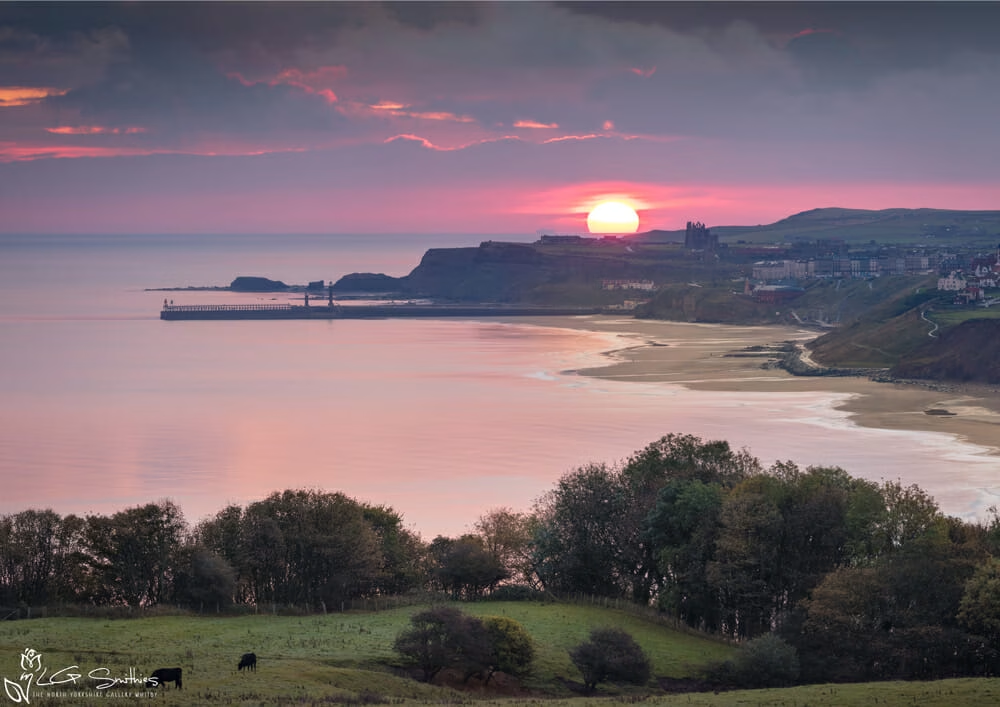
Spring Light from Lythe Bank
This photograph was taken from exactly the same viewpoint as the previous image, but with a slightly wider composition. Rather than zooming in as tightly, I've included more of the surrounding landscape to show why Lythe Bank is such a wonderful place to photograph Whitby. For me, this viewpoint is at its best during the spring and autumn, around a couple of hours before sunset, when the low evening sun beautifully illuminates the fields, hedgerows and trees leading down towards the coast.
Although the autumn colours can make this scene even more spectacular, I chose to capture it in the spring because of the lambs grazing in the foreground alongside their mothers. They add a real sense of Yorkshire countryside to the photograph, while the warm evening light brings the landscape to life. Beyond the fields, Whitby is perfectly lit in the distance, creating a wonderful contrast between the peaceful rural foreground and the historic coastal town beyond. It's one of my favourite examples of how Lythe Bank combines the best of both the Yorkshire countryside and coastline in a single photograph.
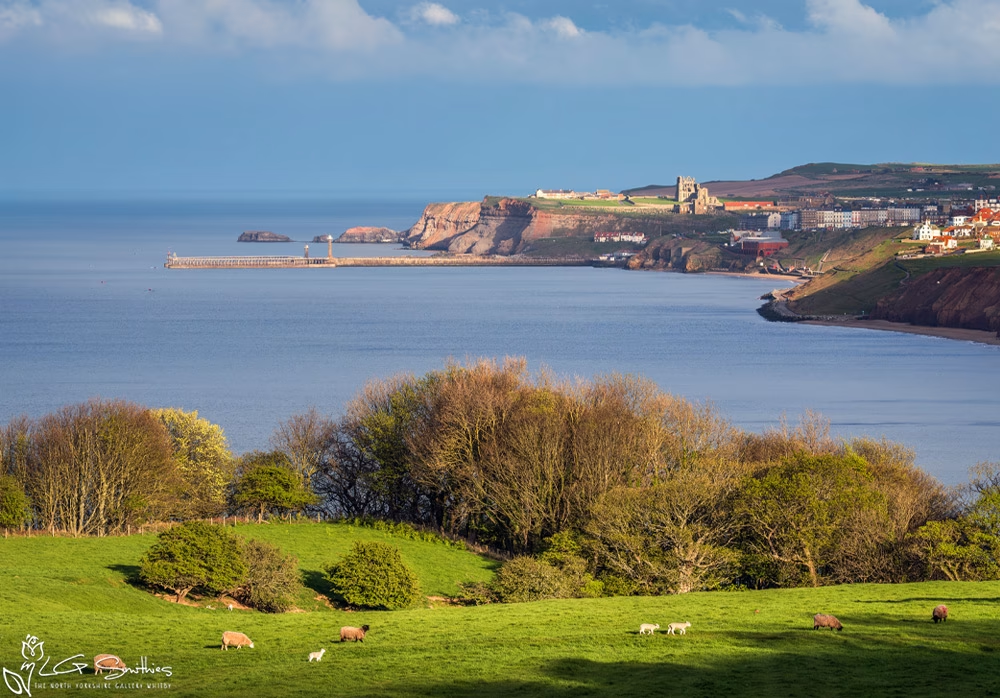
Autumn Colours from Lythe Bank
This photograph was taken from almost exactly the same viewpoint as the previous image, with the only real difference being the time of year. Instead of focusing on the spring lambs, this photograph is all about the rich autumn colours that transform the trees and surrounding countryside. It's another reminder of how the same location can produce completely different photographs simply by returning in a different season.
I'd also like you to notice the position of the shadows across the fields. In the previous spring photograph, I arrived a little earlier because it was important to me that the lambs in the foreground were still illuminated by the evening light. In this autumn image, however, my priorities were different. I was much more interested in the colourful trees and the atmosphere created by the lower sun, so I waited longer as the light faded. The longer shadows naturally darken much of the foreground, drawing your attention towards Whitby and the warm autumn colours beyond.
It's a good example of one of the biggest lessons I've learned over the years. Photography isn't just about finding a great location—it's about understanding how the light changes throughout the day and using it to emphasise the parts of the landscape that matter most in your composition.
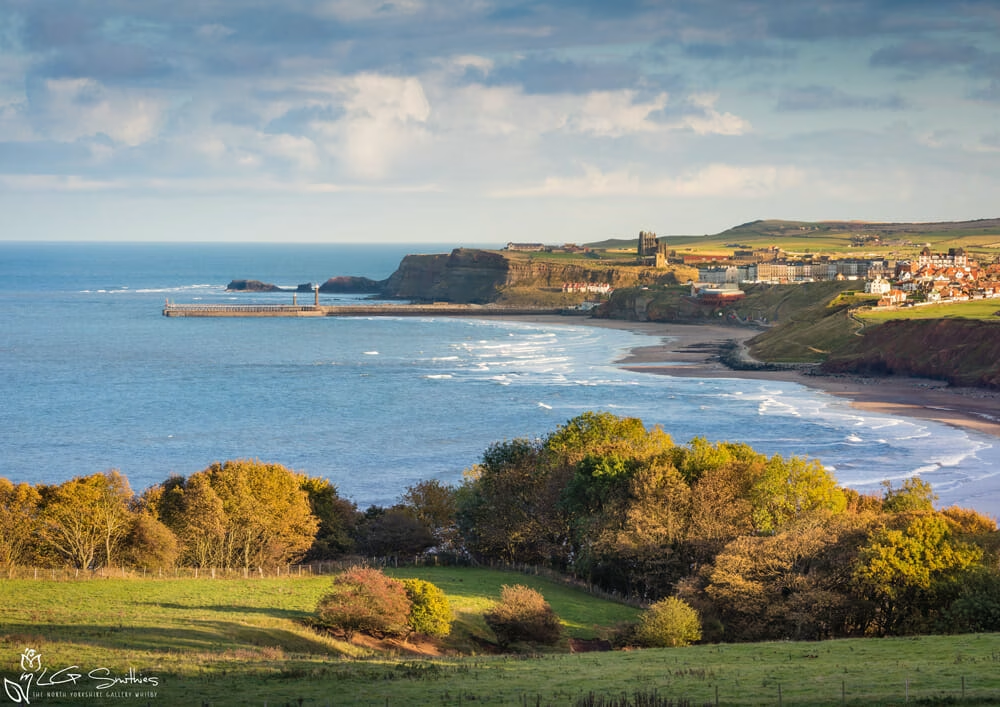
Winter Snow from Lythe Bank
This photograph was taken from almost the same viewpoint once again, but this time after the Beast from the East had transformed the landscape. Rather than concentrating on Whitby itself, I wanted to include much more of the surrounding countryside to show how the fresh snowfall had changed the scene. The ploughed fields in the foreground created beautiful leading lines, as the wind had blown the snow from the tops of the furrows, naturally guiding your eye towards Whitby. In the distance, Whitby Headland, the Abbey and the town are all blanketed in snow, making it a truly memorable winter landscape.
Looking back at this photograph now, it's also a good reminder that photography is a continual learning process. If I were taking this image today, I'd probably choose a slightly longer focal length and crop in tighter, as I did with my later photographs from Lythe Bank. In fact, I believe this was taken before my other photographs from this viewpoint, and it helped me realise that a tighter composition worked much better. That's one of the biggest lessons I've learned over the years—don't be afraid to return to the same location again and again. Every visit teaches you something new, and each photograph helps you improve the next one.
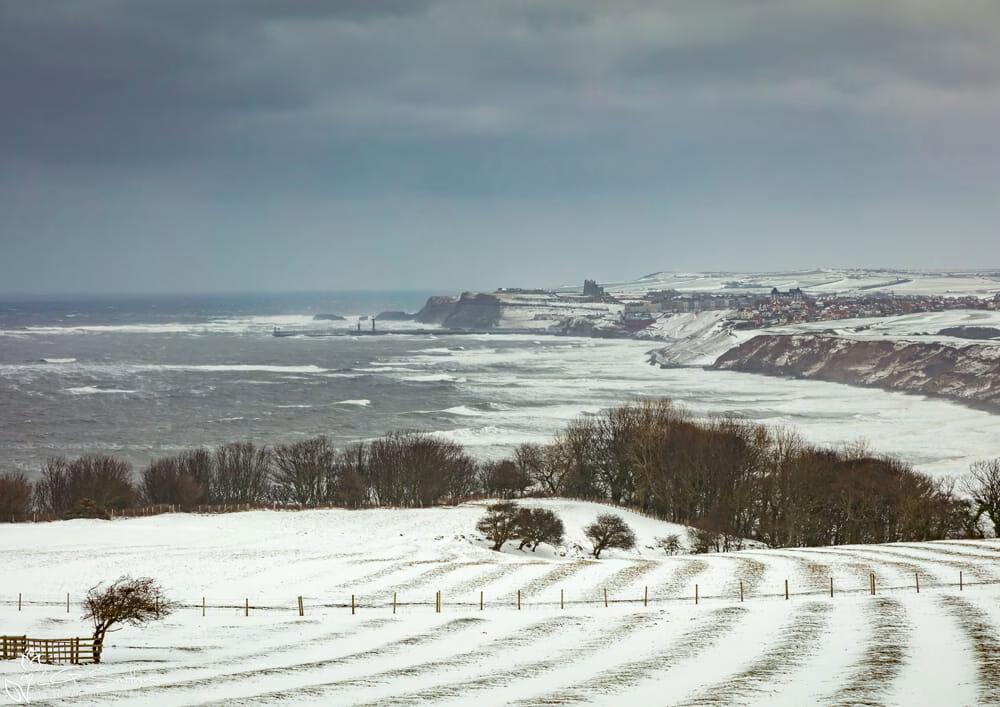
📷 Photographer's Tip
One of the best ways to improve your photography is to return to the same location and experiment. Looking back at this wider composition, I actually prefer the tighter crops shown in the previous photographs. By zooming in with a longer focal length, I was able to compress the scene, make Whitby appear much closer and create a stronger composition. Don't be afraid to revisit locations and refine your ideas—it's often how your best photographs are made.
Lythe Bank Prints and Wall Art
The views from Lythe Bank have produced some of my favourite photographs of Whitby, capturing everything from dramatic winter sunrises and snow-covered landscapes to golden autumn afternoons and peaceful spring evenings. Each image showcases this remarkable viewpoint in a different way and is professionally produced using my original photography. Whether you're looking for a statement canvas, an elegant framed print, a panoramic display or a fine art photographic print, you'll find a selection of Lythe Bank images to suit your home or workspace.
Explore the Lythe Bank collection below to discover one of Whitby's most spectacular viewpoints, with photographs available in a range of handcrafted wall art and print finishes, all made to order by the North Yorkshire Gallery.
Frequently Asked Questions About Lythe Bank Photography
Where is Lythe Bank?
Lythe Bank is located on the A174 between Whitby and Sandsend, just north of Whitby. As you climb out of the town towards Lythe, the road rises quickly and offers one of the finest panoramic viewpoints anywhere on the Yorkshire Coast.
Why is Lythe Bank famous?
Lythe Bank is well known for its breathtaking views across Whitby, the River Esk, Sandsend and the North Sea. For photographers, it provides one of the most spectacular elevated viewpoints of the town, allowing you to capture Whitby Abbey, the harbour, the piers and the surrounding countryside in a single frame.
Why do you think Lythe Bank is the best viewpoint in England?
Many people describe Sutton Bank as having the finest view in England, and it certainly is spectacular. However, in my opinion, Lythe Bank surpasses it. The combination of rolling Yorkshire fields, the dramatic coastline, Whitby Harbour, the piers and Whitby Abbey all coming together in one panorama makes this my favourite view anywhere in the country.
When is the best time to photograph Lythe Bank?
Lythe Bank offers opportunities throughout the year. I particularly enjoy late winter sunrises, when the rising sun appears beside Whitby Abbey, spring evenings with lambs in the fields, autumn afternoons when the trees turn golden and winter after fresh snowfall.
Where is the best viewpoint at Lythe Bank?
My favourite viewpoint is from the fields overlooking Whitby, where you can photograph the countryside leading naturally towards the town. From here you can include Whitby Abbey, the harbour, the piers and the coastline all within one composition.
Is Lythe Bank good for sunrise photography?
Yes. Late winter provides one of my favourite sunrise photographs anywhere in Yorkshire. At this time of year, the sun rises beside Whitby Abbey, creating beautiful morning colours over the town and North Sea.
Is Lythe Bank good for sunset photography?
Although Lythe Bank isn't a classic sunset location, it can produce beautiful photographs during the afternoon and early evening. In spring and autumn, the lower sun illuminates the fields and trees leading towards Whitby, creating wonderful light across the landscape before sunset.
Is Lythe Bank good in the snow?
Absolutely. Fresh snowfall completely transforms the landscape. The fields become covered in snow, Whitby Abbey and the East Cliff stand out beautifully, and the ploughed fields often create natural leading lines directing your eye towards the town.
What camera lens is best for photographing Lythe Bank?
I generally prefer using a short telephoto lens rather than a wide-angle lens. Compressing the scene makes Whitby appear much closer and creates a more dramatic composition. If you're producing panoramic photographs, I would recommend photographing in portrait orientation and stitching the images together afterwards, rather than using an ultra-wide lens, as this produces a much more natural-looking result with less distortion.
What have you learned from photographing Lythe Bank?
One of the biggest lessons Lythe Bank has taught me is that returning to the same location is invaluable. Some of my favourite photographs have taken years to achieve because I've waited for the right weather, the right season and the right light. Even comparing my own photographs from different years has taught me how changing the focal length or simply waiting another hour can completely transform the final image.
Where can I park for Lythe Bank?
There are several places to pull in safely along the A174 near the viewpoint, allowing easy access to the public footpaths overlooking Whitby. Always park considerately and make sure your vehicle is completely clear of the carriageway.
Where can I buy photographs of Lythe Bank?
You can purchase my Lythe Bank photographs directly from this website or visit the North Yorkshire Gallery on Church Street in Whitby. The collection includes panoramic landscapes, winter sunrises, autumn scenes and snow-covered views, available as premium canvas prints, framed prints, fine art photographic prints and a range of Yorkshire gifts.
Whitby Photography from Sandsend
Just a couple of miles north of Whitby, Sandsend offers a completely different perspective of the town and some of the most rewarding photography opportunities on the Yorkshire Coast. Rather than photographing Whitby's famous landmarks from close range, Sandsend allows you to look back towards the harbour, Whitby Abbey and the East Cliff from a distance, creating striking compositions that simply aren't possible from within the town itself.
Having photographed Whitby from Sandsend for many years, I've found that this location really comes into its own with a longer telephoto lens. Compressing the scene makes Whitby appear much closer, allowing the abbey, harbour and dramatic coastline to dominate the landscape. It's also a fantastic place to photograph rough seas, colourful sunrises and dramatic weather rolling along the coast. Whether you're looking back towards Whitby from Sandsend Beach or photographing the beach itself as waves crash ashore, there are superb opportunities throughout the year.
Below, I'll share some of my favourite photographs taken from Sandsend, explain why each image works, and offer practical advice on the best times, viewpoints and conditions to help you make the most of this beautiful stretch of the Yorkshire Coast.
Whitby from Sandsend in Winter
This photograph offers a completely different perspective of Whitby, taken with a long telephoto lens from Sandsend Beach. Using a longer focal length compresses the landscape, making Whitby appear much closer than it really is and creating a striking view of the town against the North Sea.
On this occasion, the conditions couldn't have been much better. A winter snowstorm had covered Whitby in fresh snow, with Whitby Abbey and the East Cliff standing out beautifully above the town. At the same time, rough seas were rolling into the Yorkshire coast, adding movement and drama to the foreground. It's a combination of conditions that doesn't happen very often, but when it does, Sandsend becomes one of the finest places to photograph Whitby from a distance. The contrast between the wild sea, the snow-covered town and the historic abbey makes this one of my favourite long-lens photographs of Whitby.
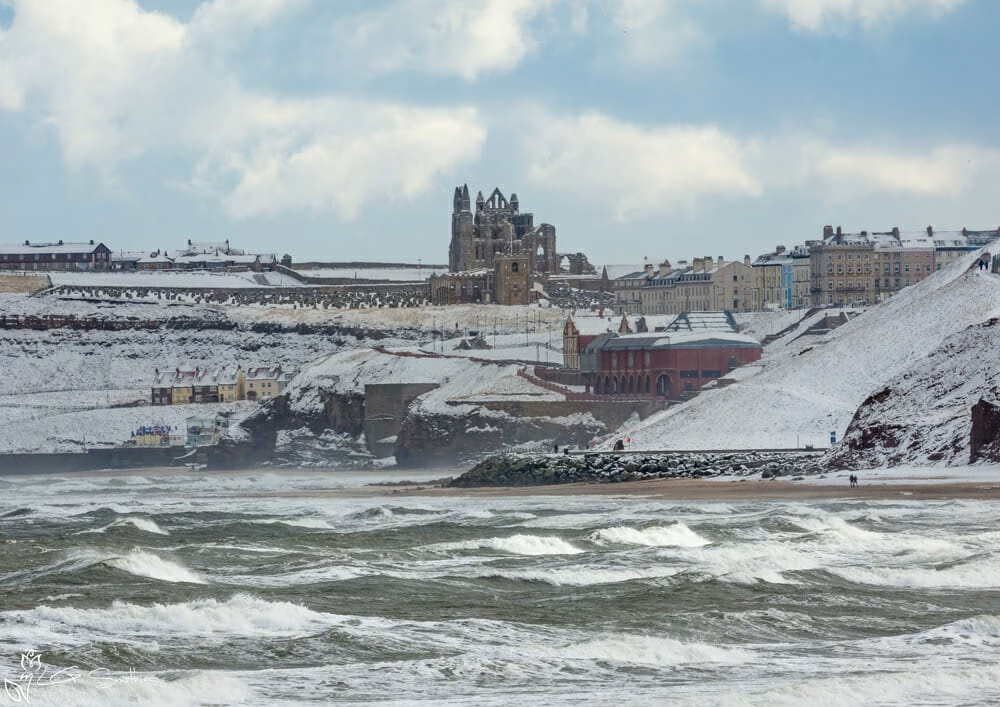
Whitby Abbey from Sandsend
This photograph was taken from Sandsend using a long telephoto lens, focusing tightly on Whitby Abbey, the dramatic cliffs and the wild North Sea below. It's a viewpoint that surprises many people because it shows Whitby from an angle that most visitors never experience. The longer focal length compresses the landscape, bringing the abbey and coastline together into a powerful composition that simply wouldn't be possible with a wide-angle lens.
The sea was particularly rough when I captured this image, and I chose to present it in black and white because I feel dramatic coastal scenes like this often have even greater impact without colour. The contrast between the crashing waves, the towering cliffs and the abbey creates a timeless photograph.
This image has always attracted plenty of attention when it's been displayed in the window of our gallery. I've enjoyed watching people stop and study it, often trying to work out exactly where it was taken. Some have even thought it must have been manipulated, simply because the perspective looks so unusual. One customer was so intrigued that she drove to Sandsend to see if the view really existed. When she found the exact viewpoint for herself, she came back to the gallery and bought the photograph. I always enjoy hearing stories like that because they show just how remarkable this viewpoint really is.
Winter Sunrise from Sandsend Beach
This is one of the classic photographs you can capture from Sandsend looking back towards Whitby. Although I've not spoken a great deal about Sandsend throughout this guide, I believe its finest photographs are produced either during rough seas or on winter mornings when the sun rises behind Whitby, just as this image demonstrates.
Taken during the winter months, this composition uses the wooden groynes on Sandsend Beach to lead your eye naturally through the foreground towards Whitby. As the waves crash against the groynes, they add movement and energy to the scene, while beyond them the first light of the day rises behind Whitby, silhouetting the town and filling the morning sky with beautiful colour. It's a composition that perfectly combines the beach, the sea and Whitby's famous skyline, and for me it's one of the very best winter sunrise photographs you can take from Sandsend.
One thing I particularly like about this image is the movement in the sea. This wasn't created using an extremely long exposure; in fact, the exposure was only around a second. That was enough to soften the water and show the energy of the waves without turning the sea into a completely smooth blur. Because the light was still low and the waves were moving so quickly, freezing every droplet would have required a much faster shutter speed and a considerably higher ISO, which I felt would have compromised the overall quality of the photograph. Instead, I chose an exposure that retained plenty of atmosphere while still showing the power of the sea.
If you're photographing from a sandy beach like this, there's one practical tip I'd always recommend. Long exposures of several seconds can easily be spoiled if your tripod slowly sinks into the sand during the exposure. Even sturdy tripods fitted with spikes can gradually settle, introducing just enough movement to soften what would otherwise be a perfectly sharp image. Whenever possible, try to position your tripod on firm ground. If that's not an option, placing a flat stone beneath each tripod foot can provide a much more stable base and help keep your photographs sharp.
If you're planning to photograph Whitby from Sandsend, this is definitely one of the scenes I'd recommend adding to your list.
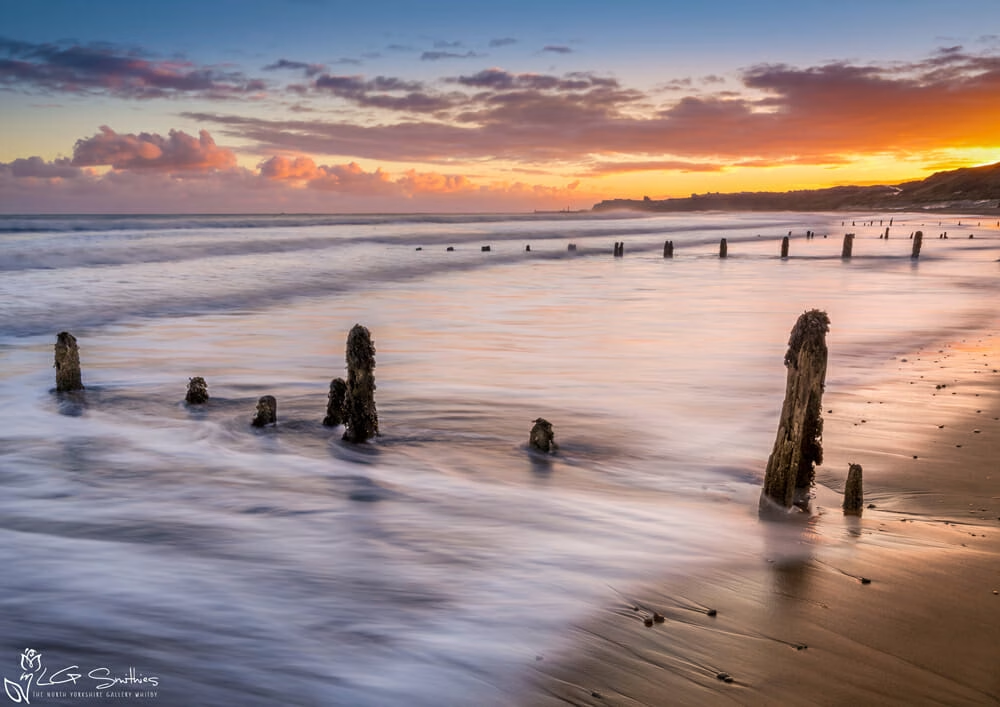
Winter Storm at Sandsend
This photograph was taken from the Sandsend car park, making it one of the easiest viewpoints to reach while still offering a spectacular view back towards Whitby. Using a slightly wider-angle lens allowed me to capture not only Whitby in the distance but also the power of the sea during a winter storm.
As the waves crashed against the seawall, huge plumes of spray were thrown across the road and against the seafront buildings, creating a dramatic foreground. Beyond the stormy sea, Whitby Harbour and the piers stretch out into the North Sea, while the first light of a winter sunrise begins to illuminate the town in the background. The contrast between the wild conditions at Sandsend and the peaceful colours developing behind Whitby makes this one of my favourite winter compositions from this location.
For me, the finest photographs of Whitby from Sandsend are usually taken during the winter months. The position of the rising sun, combined with dramatic weather and rough seas, often produces images with far more atmosphere than those taken at other times of the year. On the right morning, it's a viewpoint capable of producing some truly memorable photographs.
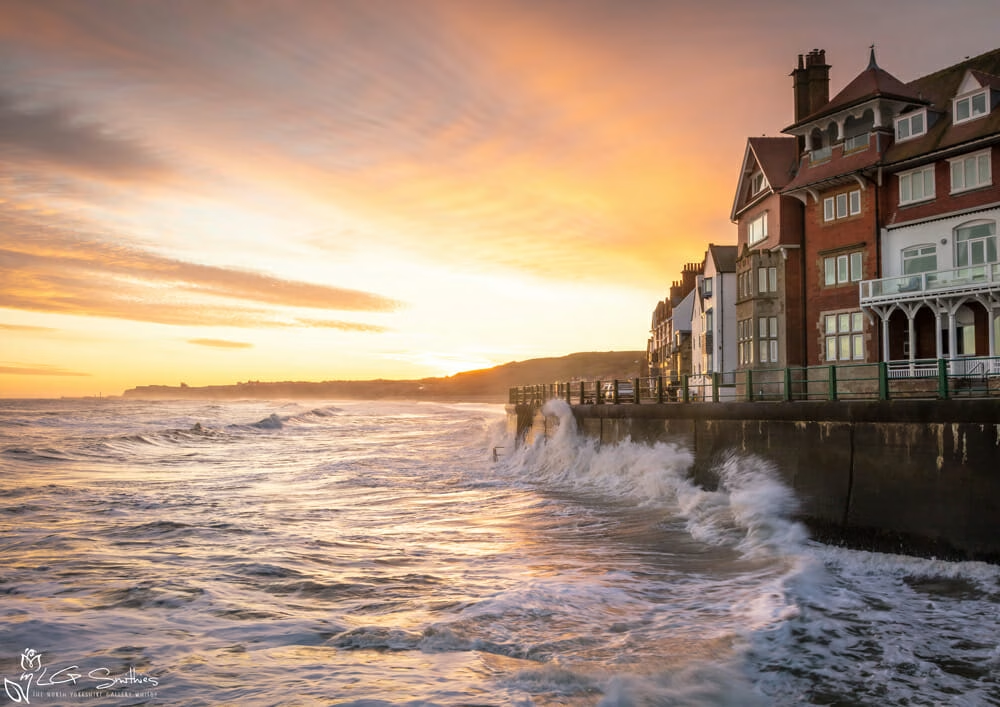
Whitby from Sandsend Prints and Wall Art
Some of my favourite long-distance views of Whitby have been photographed from Sandsend, capturing the town from a completely different perspective. From dramatic winter sunrises and rough seas to snow-covered landscapes and telephoto views of Whitby Abbey, this collection celebrates one of the Yorkshire Coast's finest viewpoints. Every photograph is available as a handcrafted canvas, professionally framed print, fine art photographic print or panoramic wall art, all produced using my original photography at the North Yorkshire Gallery.
Explore the Whitby from Sandsend collection below and discover a unique perspective of Whitby through my photography. Click below to view the full range of prints, canvases and panoramic wall art, all handmade by the North Yorkshire Gallery.
Frequently Asked Questions About Sandsend Photography
Where is Sandsend?
Sandsend is a picturesque coastal village just a couple of miles north of Whitby on the Yorkshire Coast. With its wide sandy beach, dramatic cliffs and outstanding views back towards Whitby, it's one of my favourite places to photograph along the coast.
Why is Sandsend a good place for photography?
Sandsend offers a completely different perspective of Whitby. From here you can photograph Whitby Abbey, the harbour, the piers and the East Cliff from a distance using a telephoto lens, while the beach, seawall and dramatic waves provide excellent foreground interest. It's also one of the best locations on the Yorkshire Coast for photographing rough seas.
Where is the best place to photograph Whitby from Sandsend?
In my opinion, the best viewpoint is from the public car park at Sandsend. From here you can photograph the seawall, the waves and the hotels of Sandsend with Whitby and the harbour in the background. Another excellent viewpoint is from the Cleveland Way above the village, where you can safely capture wider views looking back towards Whitby.
When is the best time to photograph Whitby from Sandsend?
For me, the best photographs are taken during the winter months. At this time of year, the sun rises behind Whitby, producing beautiful colours in the morning sky and creating much stronger compositions than at other times of the year.
Is Sandsend good for sunrise photography?
Absolutely. Winter sunrises are particularly rewarding because the sun rises behind Whitby, beautifully illuminating the town and the sky beyond. It's one of my favourite places to photograph Whitby during the colder months.
Is Sandsend good for rough sea photography?
Yes. I believe Sandsend is one of the very best locations on the Yorkshire Coast for photographing rough seas. The combination of the seawall, beach and Whitby in the background creates dramatic compositions when the waves are crashing ashore.
Can you photograph Whitby Abbey from Sandsend?
Yes. A telephoto lens allows you to capture Whitby Abbey from a completely different perspective, often with dramatic seas in the foreground. It's a viewpoint that surprises many people because it compresses the landscape and makes the abbey appear much closer than it really is.
What camera lens is best for photographing Whitby from Sandsend?
I generally prefer a telephoto lens for photographs looking back towards Whitby, as it compresses the landscape and creates much more dramatic compositions. A wider-angle lens works well when photographing the beach, seawall and the wider coastal scenery.
What shutter speed should I use when photographing rough seas?
That depends on the effect you're trying to achieve. If you want to freeze the power of the waves and capture every detail of the water, you'll need a fast shutter speed. Longer exposures create a softer, more atmospheric effect, but they won't freeze the action. Both approaches work well—it simply depends on the style of photograph you're aiming for.
Is Sandsend Beach good for long exposure photography?
Yes, it's an excellent location for long exposures. However, one thing many photographers overlook is that tripods can gradually sink into the sand during longer exposures. If you're exposing for several seconds or more, this slight movement can soften the entire image. Whenever possible, place your tripod on a firm surface or use flat stones beneath the tripod feet to provide a stable base.
Is Sandsend safe to photograph during storms?
Sandsend can produce spectacular storm photographs, but extra care is essential. Although the public car park offers excellent viewpoints, exceptionally large waves can break into the car park during severe weather. In these conditions, I would recommend photographing from the Cleveland Way above the village instead, where you can achieve similar compositions from a much safer position.
Where can I park for Sandsend photography?
The public car park at Sandsend provides excellent access to both the beach and some of the best photography locations. It's also one of my favourite places to photograph rough seas. However, during severe storms it's worth remembering that waves can reach the car park, so always assess the conditions carefully and move to higher ground if necessary.
Where can I buy photographs of Whitby from Sandsend?
You can purchase my Sandsend and Whitby photographs directly from this website or by visiting the North Yorkshire Gallery on Church Street in Whitby. The collection includes winter sunrises, dramatic storm scenes, telephoto views of Whitby Abbey and coastal panoramas, available as canvas prints, framed prints, fine art photographic prints and a wide range of Yorkshire gifts.
Final Thoughts
If you've made it this far, I'd like to sincerely thank you for taking the time to read my Whitby photography guide. I genuinely hope it's answered some of the questions that people regularly ask me and has helped you understand not only where to photograph Whitby, but also why certain locations work at different times of the year.
As many of you will already know, the North Yorkshire Gallery is a family-run business. While I'm usually the one behind the camera, the business wouldn't exist without the support of my wife Jemma, Jemma's mum, my dad, and our children, Bailey and Layla. Everyone plays their part in keeping the gallery running, producing your orders and welcoming visitors into our shop on Church Street. Because of that, I don't always get the opportunity to spend as much time in the gallery as I'd like, so writing this guide has allowed me to answer many of the questions that people often ask me when they visit.
Everything I've shared here comes from my own experiences of photographing Whitby over almost 20 years. There isn't a shortcut to great landscape photography. Many of the photographs you've seen in this guide took repeated visits, early starts, late finishes and a great deal of patience. Some happened on my very first visit, while others took years before the weather, tides, light and season all came together. That's one of the reasons I enjoy photography so much—you're always learning, and no two visits are ever quite the same.
If there's one thing I'd encourage you to take away from this guide, it's not to be discouraged if the conditions aren't perfect. Keep returning to the same places. Watch how the light changes throughout the year. Learn how the tides affect the coastline. Don't rush to pack your camera away after sunset, and don't assume today's conditions will be the same tomorrow. Some of my favourite photographs have been taken when I almost decided not to go out, or when I stayed just a little bit longer.
I've also tried to point out where extra care is needed. The Yorkshire Coast is a spectacular place to explore, but it can also be unpredictable. Whether it's rough seas, slippery rocks, fast-rising tides or winter weather, no photograph is ever worth risking your safety for. I hope the advice throughout this guide helps you enjoy these incredible locations while staying safe.
Photography has given me far more than a collection of pictures. It's given me a reason to get out of bed before sunrise, a reason to stay out after sunset, and more than once it's persuaded me to swap an evening in the pub for an evening watching the sky light up over Whitby. Standing on a cliff watching the first light of day appear over the North Sea or waiting patiently for the colours after sunset is something I never tire of. I genuinely believe photography is good for the mind and good for the soul. It encourages you to slow down, appreciate the world around you and forget about the pressures of everyday life for a while.
One of the greatest things about photography is that it encourages you to explore. I've discovered countless places that I'd probably never have visited if I hadn't taken a camera with me. Every walk becomes an adventure, every change in the weather creates a new opportunity, and every season transforms the landscape. You don't need the latest camera either. Some wonderful photographs are taken on mobile phones. What's important is getting outside, enjoying the experience and learning to appreciate the beauty that's all around us.
I've always believed Yorkshire earns its reputation as God's Own County. From the dramatic coastline around Whitby to the North York Moors, the Yorkshire Dales and the rolling countryside in between, we're incredibly fortunate to have such a diverse and beautiful landscape on our doorstep. Great photography helps celebrate that beauty. It inspires people to explore places they may never have visited before, supports local communities and businesses, and encourages others to discover why so many of us are proud to call Yorkshire home.
This certainly won't be the finished version of this guide. Whitby is always changing, the seasons are always different, and I never stop learning myself. As I discover new viewpoints, photograph new conditions and continue exploring this remarkable coastline, I'll keep updating this guide with new photographs, locations and advice. I hope it continues to help photographers, visitors and anyone who simply enjoys beautiful places.
Whether you're visiting Whitby for the first time, returning with your camera, looking for inspiration for your next painting or simply planning a day out, I hope this guide has helped in some small way. If it encourages even one person to get outside a little earlier for sunrise, stay a little later after sunset or discover a viewpoint they hadn't considered before, then writing it has been worthwhile.
If you ever visit the North Yorkshire Gallery, please don't hesitate to say hello. I always enjoy talking photography, hearing about other people's favourite locations and learning from photographers who know their own local areas as well as I know Whitby. Photography is something we're all continually learning, and I hope that through this guide I've been able to give something back.
Thank you once again for reading, and I hope to see you in Whitby soon.
Laurie Smithies
The North Yorkshire Gallery
Visit the North Yorkshire Gallery in Whitby
Over the years we've been incredibly fortunate to meet so many wonderful people through our photography. We spent almost 20 years attending shows, exhibitions and events around the country before opening the North Yorkshire Gallery in the heart of Whitby, and having our own gallery has been a real privilege.
If you're visiting Whitby, we'd be delighted to welcome you to our gallery on Church Street. It's home to a large collection of my Yorkshire photography, including Whitby, the North York Moors, the Yorkshire Coast, steam railways and many other locations across God's Own County. You'll also find a wide selection of framed prints, canvases, panoramic wall art and Yorkshire gifts, all produced from my original photography.
The gallery is exactly the kind of place that I enjoy discovering myself when I'm travelling. Whether I'm visiting the Lake District, Scotland or somewhere completely new, I always find myself drawn to independent galleries where you can take your time, appreciate the artwork and chat with the people behind it. That's the atmosphere I've tried to create at the North Yorkshire Gallery—a relaxed, friendly place where people can enjoy the photography and experience these Yorkshire landscapes properly printed rather than simply viewed on a screen.
The photographs throughout this guide have naturally been compressed for the website to ensure the pages load quickly and provide the best possible browsing experience. While they look great online, there's nothing quite like seeing them printed at their full resolution. Large canvases, panoramic prints and framed photographs reveal details, colours and textures that simply can't be appreciated on a computer or mobile phone.
If I happen to be in the gallery when you visit, please do come and say hello. I always enjoy talking photography, sharing the stories behind the photographs and helping people discover some of my favourite locations around Whitby and the Yorkshire Coast. Whether you're searching for a particular print, planning your own photography trip or simply enjoying a browse while you're exploring Whitby, you'll always receive a warm welcome.
Please see the map below to find the North Yorkshire Gallery on Whitby's historic Church Street. We look forward to welcoming you whenever you're next in Whitby.
About the Author
Hi, I'm Laurie, owner of the North Yorkshire Gallery in Whitby.
I've spent nearly 20 years photographing Whitby, the Yorkshire Coast and the North York Moors, building up a detailed understanding of the landscape, the changing seasons and those fleeting moments of light that only reveal themselves to photographers who keep returning. Much of what I've shared throughout this guide comes from first-hand experience, countless early mornings, late evenings and many hours spent waiting for the right conditions.
Over the years I've also been fortunate to learn from some exceptional photographers, particularly those who have spent decades photographing the North Yorkshire Moors Railway. Their knowledge of the railway, the locomotives and the changing light has been invaluable, and I'd like to say a sincere thank you to everyone who has helped me along the way. The North Yorkshire Moors Railway itself has now been welcoming visitors for over 50 years, and photographing it has been one of the great pleasures of my career.
As a family, we've been producing and selling our photography for many years at events and exhibitions throughout Yorkshire, and more recently we've been privileged to welcome visitors to our own gallery in the heart of Whitby. Meeting people from across the UK and around the world who share a love of Whitby and Yorkshire has been one of the most rewarding parts of the journey.
Photography has given me far more than just pictures. It's introduced me to remarkable places, lifelong friends and experiences I could never have imagined. My hope is that this guide helps you discover some of those places for yourself, whether you're visiting Whitby for the first time or returning once again with your camera. If it inspires you to get out a little earlier, stay out a little later, or simply look at the landscape in a different way, then it's done exactly what I hoped it would.
Thank you for taking the time to read my guide, and I hope to welcome you to the North Yorkshire Gallery in Whitby sometime soon.
Free UK Delivery
Wherever you are in the United Kingdom, you can enjoy free delivery across our entire range of Whitby photography and Yorkshire wall art. Every order is professionally produced using my original photography before being carefully packaged to ensure it arrives in excellent condition. From framed prints and panoramic photographs to statement canvases and many of our Yorkshire gifts, we'll deliver your order free of charge anywhere in the UK, allowing you to enjoy a little piece of Whitby in your own home.
International Delivery Available
Our photography has found homes all over the world, and we're always pleased to help customers outside the UK enjoy a piece of Yorkshire. We regularly send photographs, canvases and gifts overseas and will always do our very best to find the most suitable delivery option for your destination. If you're ordering from abroad or have any questions about international shipping, please get in touch and we'll be happy to help you choose the best way of getting your favourite Whitby photograph safely to your door.